Unproved Revenue Excerpts Cannot Base Property Title Claims: Punjab and Haryana HC
 Copy Link
 Share
Share Save
Save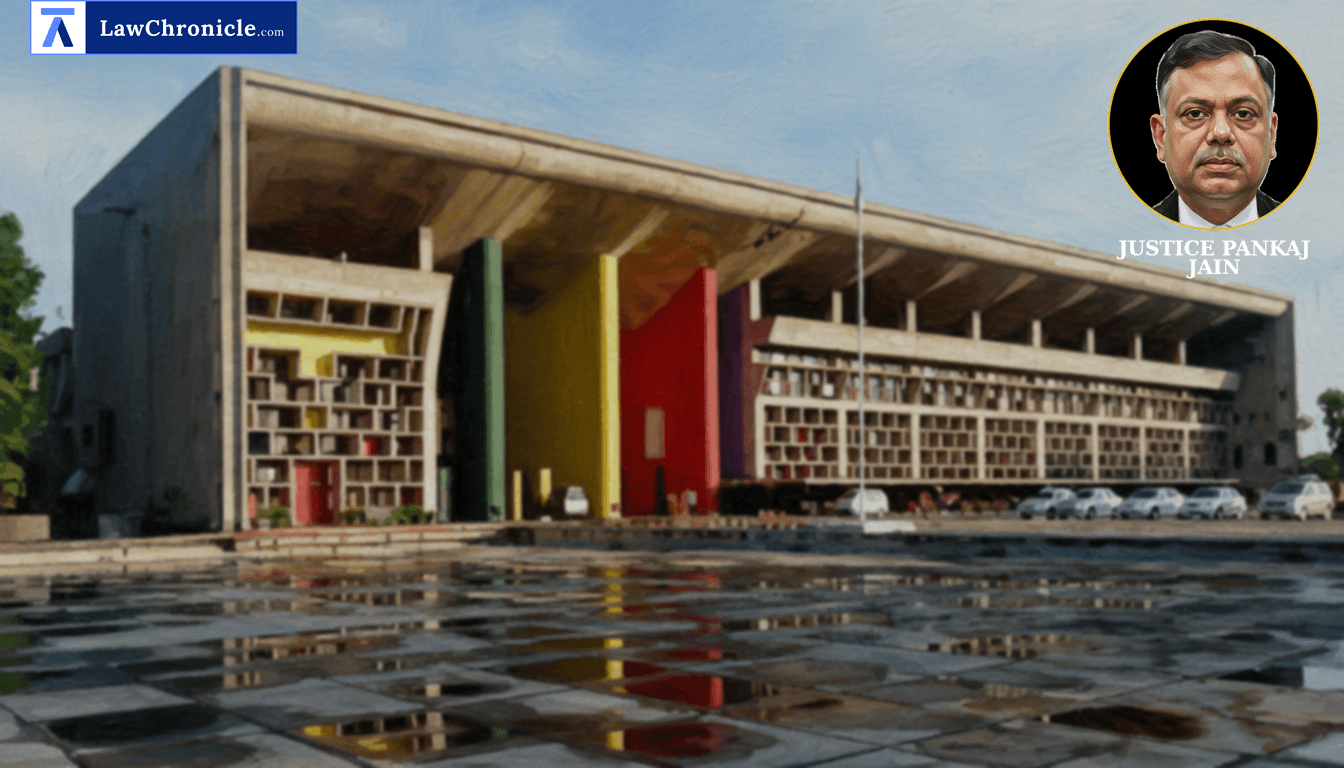
Property claims resting on centenarian inheritance mutations cannot succeed unless the underlying revenue excerpts are strictly proved as per High Court Rules, even if they were admitted without initial objection. The High Court has set aside a decree involving over 514 kanals of land, ruling that the failure to connect current landholdings to a 1906 estate through a competent witness is a fatal evidentiary gap.
Justice Pankaj Jain presided over this second appeal arising from a long-standing family dispute concerning the estate of one Ram Sahai, who passed away in 1906. The dispute centered on whether the land in village Kaliawas was wrongly mutated in favor of only some heirs, to the exclusion of others, over a century ago.
The Incompetence of Witness to Prove Urdu Excerpts
The High Court focused on the testimony of a Patwari Moharrir who prepared the crucial revenue excerpt but admitted in cross-examination that he could neither read nor write Urdu. The Court found that while the document was relevant, its mode of proof was fundamentally flawed.
The Court, in its reasoning, observed: "From the testimony of Ved Pal before the Court, it is evident that he admitted his inability to read or write Urdu. Excerpt PW-1/A when read in the light of testimony of its author PW-1, it is evident that the same remained unproved. The plea raised by senior counsel that the document was allowed to be tendered in evidence without any objection, cannot absolve the plaintiff of his duty to prove the document. Admissibility of document and mode of proof thereof are two different issues."
Mandatory Compliance with High Court Rules and Orders
The Court emphasized that Chapter 9 of High Court Rules and Orders Volume I provides a specific procedure for obtaining and proving revenue excerpts. It noted that an excerpt is not evidence unless it is proved by a witness who can verify it against original records.
The Court has the following directions:
"Accordingly, the judgment and decree passed by the Courts below are found to be unsustainable and are hereby set aside. Suit filed by the plaintiffs is ordered to be dismissed. Accordingly, the present regular second appeal is allowed."
Key Takeaways
Distinction Between Admissibility and Proof
Failing to object to a document's admission during trial does not prevent a party from challenging its lack of legal proof at the appellate stage.
Strict Proof for Revenue Excerpts
Revenue excerpts (Muntakhab) must be proved by witnesses capable of reading the original language of the records, particularly in historical cases involving Urdu documents.
Nexus Between Original Estate and Current Holdings
In suits for declaration after multiple consolidations and settlements, the onus lies heavily on the plaintiff to provide a clear paper trail connecting modern killa numbers to the ancestral estate.
Ratio
An excerpt from revenue records is not substantive evidence unless proved by the testimony of a competent witness who has compared it with the original records. Admissibility of a document is distinct from its mode of proof, and a document that remains unproved despite being relevant cannot form the basis for a judicial decree, especially when the statutory procedure under the High Court Rules and Orders for proving such records is not followed.
Background:
The plaintiffs, representing the branch of Mangal (one of the seven sons of Ram Sahai), filed a suit for a declaration that they were co-sharers in 514 kanals of land in village Kaliawas. They alleged that following Ram Sahai's death in 1906, the land was wrongly mutated in favor of only three branches of the family, excluding four others. The defendants contested the suit, citing it as barred by limitation after 100 years and claiming ownership through adverse possession and finality of proceedings under East Punjab Holdings (Consolidation and Prevention of Fragmentation) Act, 1948.
While the lower courts decreed in favor of the plaintiffs, the High Court found that the plaintiffs failed to discharge the burden of proving that the 514 kanals of land currently held were indeed the same land or allotted in lieu of the original 34 bighas left by Ram Sahai in 1906. The Court highlighted that reliance on an excerpt prepared by a Patwari who could not read the original Urdu records rendered the document unproved, leading to the dismissal of the suit.
Case Details:
Case No.: RSA-3541-2023 (O&M)
Case Title: Chander Singh (Deceased) through his LRs and others versus Balbir and others
Appearances:
For the Petitioner(s): Mr. B.R. Mahajan, Sr. Advocate; Mr. Akshay Kumar Jindal, Sr. Advocate
For the Respondent(s): Mr. Ritesh Tomar, Advocate; Mr. Kamal Sehgal, Sr. Advocate; Mr. Naveen S. Bhardwaj, Advocate
Source: 2026 CaseBase(PNH) 178
 Breaking News