


Abetment Charge Cannot Stand Without Basic Ingredients: Gujarat HC
 Copy Link
 Share
 Save
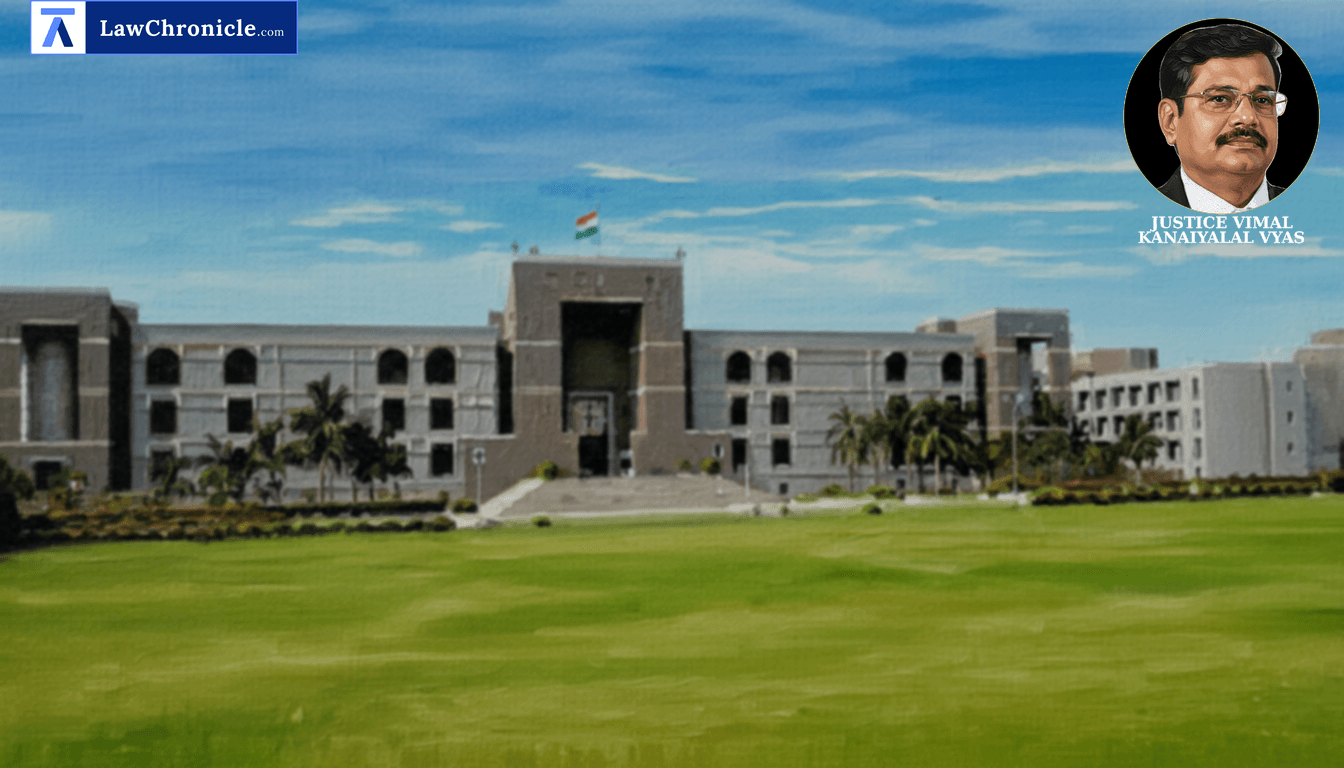
A bench of Honourable Mr. Justice Vimal K. Vyas heard applications under Section 528 of the Bharatiya Nagarik Suraksha Sanhita, 2023 filed by two accused seeking to quash an FIR and consequential orders passed in Sessions Case No.67 of 2022 by the 4th Additional Sessions Judge, Patan. The applicants challenged the order dated 03.09.2025 and the subsequent order dated 01.10.2025 that framed charge, and the FIR registered alleged offences under Sections 306, 506(1), 507 and 114 of the Indian Penal Code, 1860 as well as Sections 40 and 42 of the Gujarat Money-Lenders Act, 2011, with the prosecution also pointing to deposit of cheques and a pending complaint under Section 138 of the Negotiable Instruments Act, 1881.
The Court summarized its holding by concluding that, on the materials before it, the essential ingredients for abetment were not prima facie made out and that continuation of proceedings against the applicants would amount to an abuse of process. The Court, in its reasoning, observed: "Having carefully examined the materials on record, this Court finds that the panchnama carried out by the police did not disclose presence of any bottle or article containing poisonous substance at the scene of the offence or on the deceased's person. Moreover, there is no documentary evidence indicating that the deceased had purchased or possessed any poisonous substance. Apart from the phone call received by the complainant, there is no evidence on record to suggest that the applicants had enticed, instigated, provoked, or threatened the deceased to commit suicide. Admittedly, there is no phone call recording or CDR on record. Furthermore, the postmortem report suggests that the deceased had died due to cardiac arrest and the viscera report shows no sign of any poisonous substance. Even, the statements of the deceased’s wife, daughter, and other witnesses, namely, Dharamshibhai, Jairambhai, and Alkeshkumar, do not suggest any act of abetment by the present applicants-accused. Prima facie, it appears that the allegations levelled against the present applicants-accused that they were threatening the deceased to implicate him in cases under Section 138 of the Negotiable Instruments Act, 1881 are far from the truth as there is no corroborative piece of evidence on record. Considering the FIR on a demurrer and at its highest, it prima facie appears that the ingredients of Sections 306 and 107 of the Indian Penal Code, 1860 are not attracted."
Background
The dispute arose after the complainant, the son of the deceased, lodged an FIR following the death of his father on 07.04.2022. The prosecution alleged that the deceased had taken loans and was being threatened for recovery, and that such conduct by the accused led to suicide. The applicants contended that the matter stood settled between the parties and produced an affidavit from the complainant to that effect; they also asserted that the postmortem and viscera reports did not support poisoning and that no direct proximate act of instigation was pleaded. The State resisted quashment, pointing to a suicide note and claimed corroboration by call data and other material.
In examining the applications, the High Court addressed the test for prima facie satisfaction on a quashing petition under Section 528 of the Bharatiya Nagarik Suraksha Sanhita, 2023, scrutinized the factual matrix, and assessed whether the allegations disclosed the elements of abetment under the penal provision invoked in the FIR. The Court noted that the criminal case record showed cheques had been deposited earlier and a separate complaint under Section 138 of the Negotiable Instruments Act, 1881 was pending, but found no evidence of proximate instigation or mens rea to push the deceased to suicide. The Court expressly referred to and relied on Shenbagavalli and others vs. Inspector of Police, Kancheepuram District and another ( "2025 INSC 607": 2025 CaseBase(SC) 724) for the legal principle that merely insulting or demanding repayment, absent evidence of an intention to drive the deceased to suicide, did not satisfy the ingredients of abetment.
After considering submissions and material including the postmortem and witness statements, the High Court allowed the applications, quashed and set aside the impugned orders dated 03.09.2025 and 01.10.2025 insofar as they related to the present applicants, and directed that all consequential proceedings arising therefrom be quashed. The Court permitted direct service and made the rule absolute, while observing that the extraordinary power under Section 528 of the Bharatiya Nagarik Suraksha Sanhita, 2023 was to be exercised sparingly but could be exercised where the FIR failed to disclose the essential ingredients of the offence.
Case Details: Case No.: R/CR.MA/24488/2025 NeutralCitation: 2026:GUJHC:30508 Case Title: DHARAMSINHBHAI TALJABHAI DESAI Versus STATE OF GUJARAT & ANR. Appearances: For the Petitioner(s): MR MAHESH POOJARA for MR ASHISH M DAGLI(2203) For the Respondent(s): MS KRINA P.CALLA, APP for the Respondent(s) No. 1; MR ABHISHEK K KHUMAN(12902) for the Respondent(s) No. 2
Source: 2026 CaseBase(GUJ) 227
Similar Articles

 Breaking News


