Able-Bodied Father Cannot Evade Duty to Maintain Minor Daughter: Himachal Pradesh HC
 Copy Link
 Share
Share Save
Save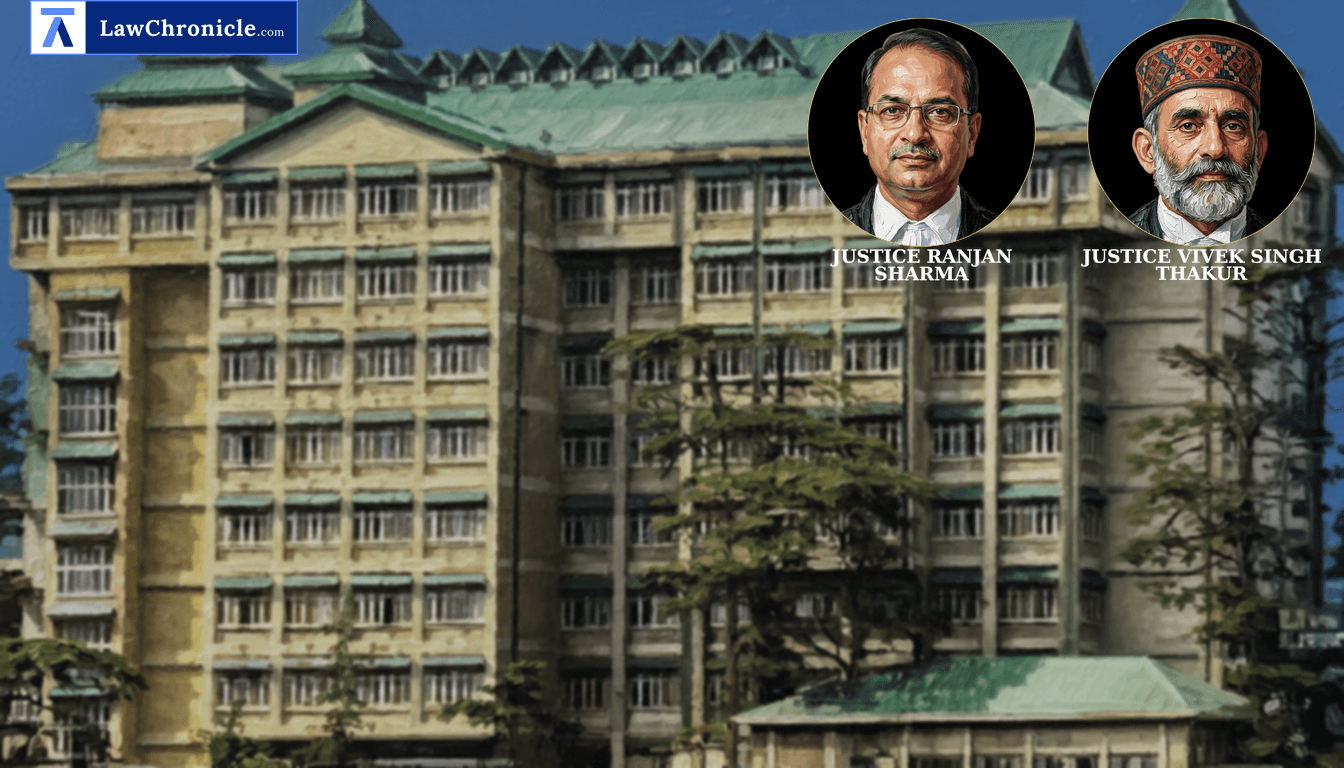
An able-bodied father cannot wriggle out of his statutory duty to maintain his minor child on the pretext of unemployment, as providing financial support to minor children is a sacrosanct obligation. The Himachal Pradesh High Court has affirmed that invoking revisional remedies to renege on explicit undertakings made during divorce proceedings constitutes a clear abuse of the judicial process.
A Division Bench comprising Justice Vivek Singh Thakur and Justice Ranjan Sharma dismissed a criminal revision petition filed by a father challenging an order of the Family Court that awarded monthly maintenance to his minor daughter. The Bench affirmed that financial constraints or lack of employment do not absolve an able-bodied father from ensuring his child's dignity and proper upbringing.
Key Takeaways
- Unemployment Is No Defense: An able-bodied father must earn through physical labor if necessary to satisfy child support obligations.
- Binding Nature of Consent Undertakings: Statements made by parents during mutual consent divorce proceedings regarding child maintenance are legally binding and cannot be resiled from.
- Scope of Revisional Power: Revisional jurisdiction under Section 19(4) of the Family Courts Act, 1984 cannot be exercised unless the lower court order displays manifest illegality or impropriety.
Father's Duty to Ensure Child Dignity and Upbringing
The High Court observed that denying maintenance to a growing minor child directly undermines the statutory intent of child support. The Court held that an able-bodied father is bound to make all efforts to earn, and unemployment alone cannot shield him from statutory obligations.
The Court, in its reasoning, observed: "Accepting the plea of the petitioner-father not to maintain his child shall defeat the intent and object of Section 125 Cr.P.C. and shall also violate the social purpose sought to be achieved by safeguarding the 'dignity of minor by providing proper child support' in growing age, so as to uplift her status and living with growing age of the Respondent-minor daughter herein."
Highlighting the precedent set in Anju Garg & Anr. vs Deepak Kumar Garg ( "2022 SCC Online SC 1314": 2022 CaseBase(SC) 568), the Court reinforced that it is the sacrosanct duty of an able-bodied husband and father to provide support, even if it requires manual labor.
Addressing the father's attempt to bypass his prior commitment, the Court noted that during mutual consent divorce proceedings under Section 13(B)(1) of the Hindu Marriage Act, 1955, the petitioner had explicitly agreed to abide by the decision of the Family Court in the Section 125 Code Of Criminal Procedure, 1973 proceedings. Resiling from such statements by filing revision petitions was frowned upon as an abuse of court process.
Furthermore, referencing Shamima Farooqui vs Shahid Khan ( "(2015) 5 SCC 705": 2015 CaseBase(SC) 366), the Bench noted that revisional jurisdiction under Section 19(4) of the Family Courts Act, 1984 is strictly limited to cases suffering from patent illegality, impropriety, or irregularity.
The Court issued the following directions:
"(i) Instant Petition i.e. Criminal Revision (FC) No. 89 of 2025, titled as Harish Bhardwaj versus Kumari Trisha, is dismissed;
(ii) The Impugned Order dated 14.10.2025 in case Registration No 86 of 2022, titled as Meenakshi Sharma & Anr versus Harish Bhardwaj, passed by Learned Additional Principal Judge, Family Court, Kinnaur at Rampur Bushehar, District Shimla (HP), is upheld;
(iii) Petitioner-husband [Harish Bhardwaj] is directed to release the amount of maintenance awarded in terms of the Impugned Order dated 14.10.2025 to the respondent-daughter [Kumari Trisha], after adjusting the amount granted in proceedings before Family Court Kinnaur or in any other proceedings; within six weeks from today; and
(iv) Parties to bear respective costs."
Ratio
An able-bodied father possesses a sacrosanct statutory obligation under Section 125 of the Code Of Criminal Procedure, 1973 to maintain his minor child, which cannot be avoided on grounds of unemployment. Furthermore, explicit undertakings furnished by a parent in judicial proceedings to provide maintenance are binding, and seeking to evade them via revisional remedies without demonstrating patent illegality constitutes an abuse of the court's process.
Background
The dispute originated when the mother, on behalf of her minor daughter, filed a petition under Section 125 of the Code Of Criminal Procedure, 1973 seeking monthly maintenance. The mother subsequently withdrew her personal claim against the husband, leaving the minor daughter as the sole claimant. The Family Court awarded Rs 10,000 per month as maintenance to the daughter, considering her educational expenses, food, clothing, medical care, and general inflationary costs.
The father challenged this order before the High Court, contending that he was unemployed since 2020, had no independent income or immovable property, and was burdened with supporting his aged parents. The respondent argued that unemployment cannot absolve a father of his legal duties, reliance being placed on the decree passed under Section 13-B of the Hindu Marriage Act, 1955 in Smt. Meenakshi Sharma vs Harish Bhardwaj where the father had undertaken to pay maintenance as determined by the Family Court.
The High Court analyzed the material, distinguished the precedents cited by the father including Anju Garg & Anr. vs Deepak Kumar Garg ( "2022 SCC Online SC 1314": 2022 CaseBase(SC) 568) and other rulings, and confirmed the Family Court's directions.
Case Details:
Case No.: Cr. Revision [FC] No. 89 of 2025
Neutral Citation: 2026:HHC:36927
Case Title: Harish Bhardwaj v. Kumari Trisha
Appearances:
For the Petitioner(s): Mr. Ramesh Sharma, Advocate.
For the Respondent(s): Mr. J.P. Sharma, Advocate.
Source: 2026 CaseBase(HP) 7969
 Breaking News