


Absence of Adverse Evidence Precludes Contributory Negligence Findings: Gujarat HC
 Copy Link
 Share
 Save
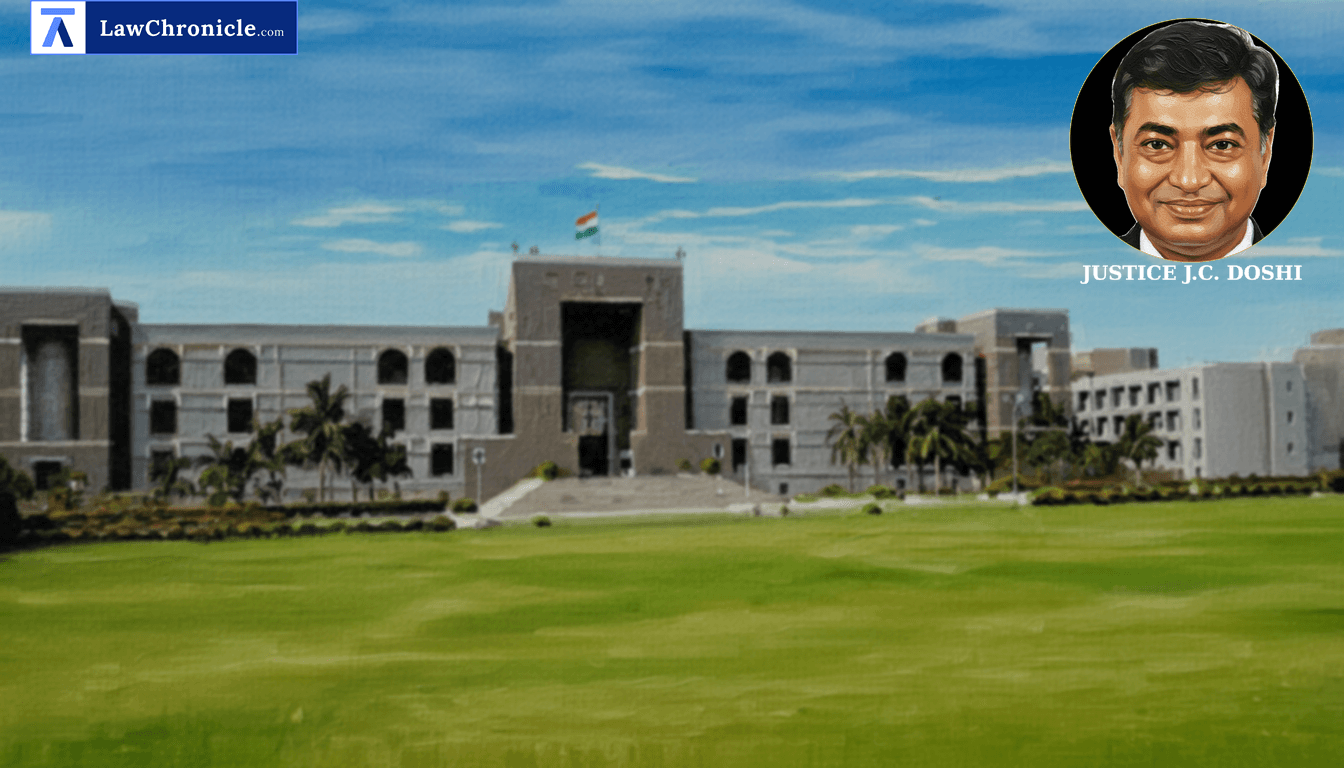
The Gujarat High Court has quashed a Motor Accident Claims Tribunal's finding of contributory negligence, ruling that such attributions cannot be made without concrete corroborative evidence or the testimony of the offending vehicle's driver. This decision reinforces the principle that insurance companies and vehicle owners must produce active evidence to contest liability rather than relying on the mere presence of multiple vehicles at an accident site.
A single-judge bench of Justice J. C. Doshi heard the appeal filed by the legal heirs of a deceased motorcyclist who were aggrieved by a 10% reduction in compensation due to alleged negligence. The Court scrutinized the Tribunal's decision-making process, highlighting the failure to draw adverse inferences when the primary tortfeasor stays away from the witness box.
Key Takeaways
- Adverse Inference Mandated: Failure of a driver to testify against a claim petition triggers a mandatory adverse inference under Section 114 of the Evidence Act.
- Negligence Requires Proof: The mere involvement of a motorcycle in a collision does not automatically justify a finding of contributory negligence without specific evidentiary support.
- Strict Adherence to Precedents: Damages for loss of consortium and estate must strictly follow the consumer price index-adjusted rates established by the Supreme Court.
- Beneficial Legislation Principle: The Motor Vehicles Act, 1988 must be interpreted liberally to ensure "just and fair" compensation rather than adopting a niggardly approach to life and limb.
Invalidity of Speculative Contributory Negligence
The High Court observed that the Tribunal had been "swayed away" by the simple fact that a motorcycle was involved in the accident. It noted that the FIR and charge sheet were filed exclusively against the tempo driver, and in the absence of the tempo driver’s testimony, there was no basis to blame the motorcyclist. The Court, in its reasoning, observed: "However, such finding recorded by the learned Tribunal in absence of any corroborative and concrete evidence is improper and erroneous. The learned Tribunal has sweyed away by the fact that the motorcycle is also involved in the road accident and therefore, the driver of the motorcycle was attributed contributory negligence to the extent of 10% in causing the road accident. This finding is disproved, more particularly, in view of the fact that the FIR and charge sheet are filed against the driver of the tempo. The driver of the tempo did not enter into the witness box to contest the claim petition and therefore, adverse inference is required to be drawn u/s 114 of the Evidence Act."
Application of Apex Court Precedents
In determining the negligence aspect, the Court relied on the principles in Oriental Insurance Company Limited Versus Kalu Ram ( "2026 INSC 653": 2026 CaseBase(SC) 614), which established that the issue of negligence must be examined in the totality of circumstances and that stationary or negligent vehicles without warning signs pose hazards where the primary fault lies with them. Furthermore, the Court updated the compensation quantum by applying National Insurance Company Ltd. Vs. Pranay Shethi ( "(2017) 16 SCC 680": 2017 CaseBase(SC) 551) for future prospects and United India Insurance Co. Ltd., versus Satinder Kaur @ Satwinder Kaur ( "(2021) 11 SCC 780": 2020 CaseBase(SC) 22) for the distribution of consortium to all four dependents.
Court Directions
The Court has following directions:
"8.2 The finding of the learned Tribunal attributing 10% negligency upon the driver of the motorcycle is hereby set aside.
8.3 The Insurance Company is directed to deposit the enhanced amount with interest as stated herein above within a period of six weeks from the date of receipt of this order.
8.4 The Tribunal shall disburse the entire awarded amount lying in the FDR and/or with the Tribunal, with accrued interest thereon, if any, to the claimants, by account payee cheque / NEFT / RTGS, after proper verification and after following due procedure.
8.5 While making the payment, the Tribunal shall deduct the courts fees, if not paid, in accordance with rules/law."
Ratio
In motor accident claims, the attribution of contributory negligence cannot be sustained based on the mere involvement of a vehicle or the "arithmetic" of the accident scene; it requires concrete evidence. Where the offending driver fails to enter the witness box to provide their version of events, an adverse inference must be drawn against them, and the claimants are entitled to full compensation if the police records (FIR/Charge-sheet) point solely to the negligence of the other party.
Background
The dispute originated from a road accident on January 31, 2016, involving a motorcycle and a tempo. The deceased, Ramsingbhai Koli, was riding a motorcycle when he was struck by a rashly driven tempo. While the Tribunal at Limkheda recognized the tempo driver's negligence, it attributed 10% contributory negligence to the deceased motorcycle driver without specific evidence. The claimants appealed to the High Court seeking enhancement and the removal of the 10% deduction. The High Court found the Tribunal's calculation of monthly income and non-pecuniary damages to be insufficient under the Motor Vehicles Act, 1988. Consequently, the Court enhanced the compensation by Rs. 12,47,540, totaling Rs. 20,36,300, and set aside the finding of contributory negligence.
Case Details:
Case No.: R/FIRST APPEAL NO. 4355 of 2025
Neutral Citation: 2026:GUJHC:60274
Case Title: SANGITABEN RAMSINGBHAI KOLI & ORS. Versus MO. SALIM MO. SHAFI SHAIKH & ORS.
Appearances:
For the Petitioner(s): MR MOHSIN M HAKIM
For the Respondent(s): MS KIRTI S PATHAK for Defendant No. 3
Source: 2026 CaseBase(GUJ) 24147
Similar Articles

 Breaking News


