


Absence of Arbitration Clause in LLP Agreement No Bar for Reference: Bombay HC
 Copy Link
 Share
 Save
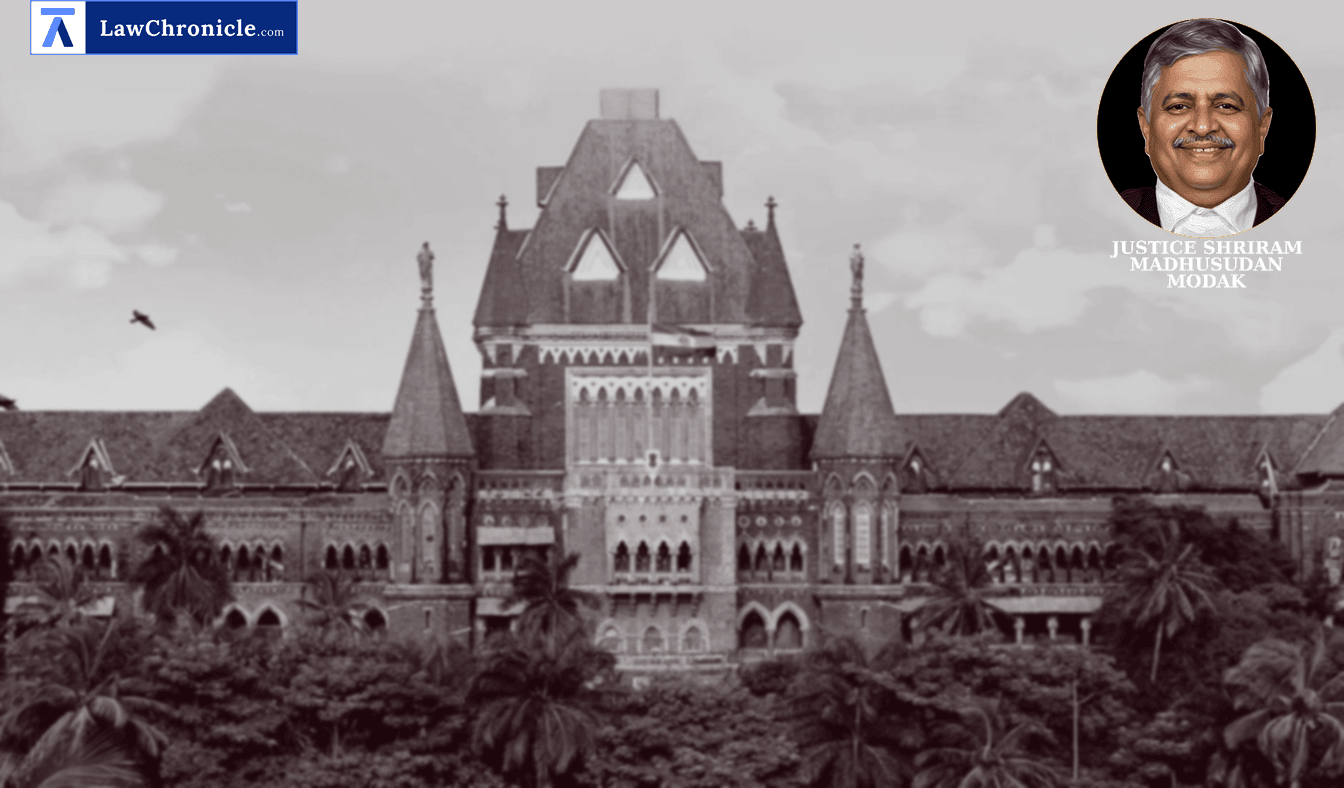
In a pivotal ruling for Limited Liability Partnerships, the Bombay High Court has declared that the absence of a specific arbitration clause in an LLP agreement does not preclude parties from seeking arbitration, as the statutory default provisions of the Limited Liability Partnership Act, 2008 automatically bridge the gap. The Court affirmed that the First Schedule of the Act serves as a mandatory safety net, ensuring that disputes 'arising out of the partnership' are referred to arbitration even when the contract remains silent on the mechanism for dispute resolution.
Justice S. M. Modak presided over the commercial arbitration petition filed under Section 11 (6) of the Arbitration and Conciliation Act, 1996. The Bench was tasked with determining whether an arbitrator could be appointed for a Limited Liability Partnership (LLP) where the underlying agreements lacked an express arbitration clause but contained a general jurisdiction clause favoring Mumbai Courts.
Key Takeaways
Statutory Default for Arbitration
Under Section 23(4) and Entry 14 of the First Schedule of the Limited Liability Partnership Act, 2008, arbitration is the default dispute resolution mechanism if the partnership agreement is silent.
Jurisdiction vs. Arbitration
A clause granting 'exclusive jurisdiction' to a specific court does not negate the statutory right to arbitration; rather, it identifies the court that will oversee the arbitration-related legal proceedings.
Inclusion of Non-Signatories
Arbitral tribunals are empowered to decide on the impleadment of non-signatories to an agreement based on the factual circumstances of the case, ensuring comprehensive dispute resolution.
Interpretation of the LLP Act and Jurisdiction Clauses
The Respondent No. 1 argued that the lack of a notice by one of the petitioners and the existence of a jurisdiction clause in the agreement dated 15.10.2019, which favored Mumbai Courts, should bar the appointment of an arbitrator. However, the Bombay High Court rejected these contentions. Relying on Indus Mobile Distribution Private Limited Vs. Datawind Innovations Private Limited and Others ( "2017 (7) SCC 678": 2017 CaseBase(SC) 917), the court noted that even when no cause of action arises in a specific city, parties may choose it as the seat of arbitration, and the jurisdiction clause defines which court handles interim measures or challenges to awards.
The Bombay High Court reasoned to observe that "If there is a dispute 'arising out of limited liability partnership agreement' and it cannot be decided 'in terms of the agreement', then it shall be referred to arbitration as per provisions of Arbitration and Conciliation Act, 1996. These twin conditions have to be satisfied... Jurisdiction Clause is to be interpreted as 'When there is an occasion to take recourse to the remedies as per provision of Arbitration and Conciliation Act, then it is the Mumbai Court who is having jurisdiction'."
The Bombay High Court in this case issued the following directions:
"A) Mr. R. D. Dhanuka, retired Judge of this Court is hereby appointed as the Sole Arbitrator to adjudicate upon the disputes and differences between the parties arising out and in connection with the matter referred above;
B) A copy of this Order will be communicated to the Learned Sole Arbitrator by the Advocates for the Petitioners within a period of three weeks from the date of uploading of this order. The petitioner shall provide the contact and communication particulars of the parties to the Arbitral Tribunal along with a copy of this Order;
C) The Learned Sole Arbitrator is requested to forward the statutory Statement of Disclosure under Section 11(8) read with Section 12(1) of the Act to the parties within a period of two weeks from receipt of a copy of this Order;
D) The parties shall appear before the Learned Sole Arbitrator on such date and at such place as indicated, to obtain appropriate directions with regard to conduct of the arbitration including fixing a schedule for pleadings, examination of witnesses, if any, schedule of hearings etc. At such meeting, the parties shall provide a valid and functional email address along with mobile and landline numbers of the respective Advocates of the parties to the Arbitral Tribunal. Communications to such email addresses shall constitute valid service of correspondence in connection with the arbitration;
E) All arbitral costs and fees of the Arbitral Tribunal shall be borne by the Petitioners and Respondent No. 1 equally and subject to final outcome of the award.
F) Place of sitting will be at Mumbai.
G) The Parties are at liberty to submit before the learned Arbitrator which are areas of the dispute and right and contentions of the parties are kept open."
Ratio
When a Limited Liability Partnership agreement is silent on dispute resolution, Section 23(4) read with Entry 14 of the First Schedule of the Limited Liability Partnership Act, 2008, creates a statutory mandate to refer disputes between partners to arbitration under the Arbitration and Conciliation Act, 1996. A general jurisdiction clause in such agreements does not supersede this statutory mandate but merely identifies the supervisory court.
Background
The dispute involved the partners of Avighnaa Infra Buildcon LLP. The Petitioners, Prashant and Nirmala Vaghasiya, sought the appointment of an arbitrator following disputes with Respondent No. 1, Vivekanand Jha. The Respondents raised several objections, including an alleged settlement agreement dated 07th December 2025. The Bombay High Court, citing SBI General Insurance Company Limited Vs. Krish Spinning ( "(2024) 7 S.C.R. 840": 2024 CaseBase(SC) 562), held that even if there is an allegation of accord or satisfaction, it does not bar arbitration as the dispute over the settlement's validity itself can be arbitrated.
Regarding the involvement of third parties and non-signatories (Respondent Nos. 2, 3, and 4), the Bombay High Court looked at the principles laid down in ASF Buildtech Private Limited Vs. Shampoorji Pallonji and Company Private Limited. It held that the referral court need not decide the impleadment of non-signatories at the Section 11 stage; instead, the Arbitral Tribunal is fully empowered to determine whether a non-signatory is bound by the arbitration agreement.
Case Details:
Case No.: COMMERCIAL ARBITRATION PETITION NO.37 OF 2026
Neutral Citation: 2026:BHC-AS:45211
Case Title: Mr. Prashant Vinod Vaghasiya & Anr. Vs. Mr. Vivekanand Dhaneshwar Jha & Ors.
Appearances:
For the Petitioner(s): Mr. Anil D’Souza a/w. Ernest Tuscano
For the Respondent(s): Ms. Shaila R. Pandey for R-1, Mr. Chetan Rathod i/b. Mr. Niraj K. Tripathi for R-4, Mr. Jitendra Singh for R-2 and R-3
Source: 2026 CaseBase(BOM) 7156
Similar Articles



 Breaking News


