


Absence of Blackening Around Gunshot Wound Negates Close-Range Theory: Allahabad HC
 Copy Link
 Share
 Save
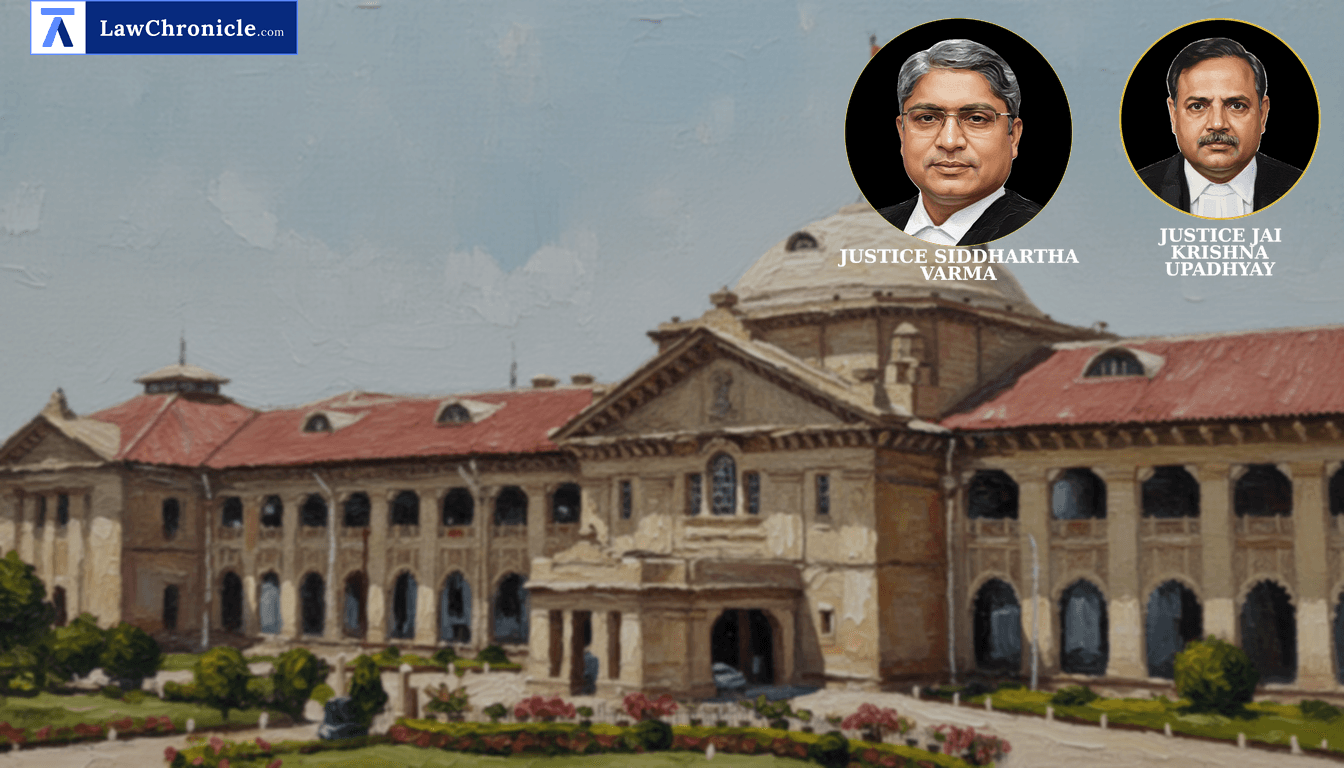
The Allahabad High Court has set aside the murder conviction of a man, ruling that irreconcilable contradictions between eyewitness testimony of a close-range shooting and medical evidence showing no blackening or tattooing around the wound must result in an acquittal. The Bench emphasized that when ocular accounts are physically impossible as per forensic findings, the fundamental defect in the prosecution case entitles the accused to the benefit of doubt.
In a hearing presided over by Justice Siddhartha Varma and Justice Jai Krishna Upadhyay, the Allahabad High Court dealt with an appeal challenging the 1987 conviction of the surviving appellant, Udai Bhan Singh. The case originated from a 1985 shooting incident allegedly motivated by long-standing land disputes between brothers.
Key Takeaways
Forensic Impossibility Trumps Ocular Evidence
When witnesses claim a point-blank shot, the absence of blackening, scorching, or tattooing in medical reports creates a fatal gap in the prosecution's narrative.
Adverse Inference for Withholding Witnesses
The failure to examine natural eyewitnesses present at the scene, such as family members, without reasonable explanation, warrants a presumption that their testimony would have been unfavorable to the State.
Unreliable Chance Witnesses
Statements of chance witnesses recorded after an unexplained delay, especially those providing unnatural justifications for their presence at the crime scene, cannot form the basis of a conviction.
Direct Conflict Between Ocular and Medical Evidence
The prosecution had relied heavily on the testimony of the informant, who claimed that the appellant fired a country-made pistol at the deceased's chest from close range. However, Medical Officer explicitly testified that blackening and tattooing were absent. The Allahabad High Court noted that in cases of close-range firing, these physical characteristics are essential. The Bench observed that "Where ocular evidence asserts a close-range shooting, but medical evidence positively rules out close firing due to the absence of blackening or tattooing, the testimony of the sole eye-witness becomes doubtful. Medical evidence here directly contradicts the core ocular version."
Invoking Ram Narain Singh v. State of Punjab ( "(1975) 4 SCC 497": 1975 CaseBase(SC) 364), the Bench noted that where prosecution evidence is totally inconsistent with medical evidence, it constitutes a fundamental defect. The Allahabad High Court further referred to Solanki Chimanbhai Ukabhai v. State of Gujarat ( "(1983) 2 SCC 174": 1983 CaseBase(SC) 309), stating that while medical evidence is usually corroborative, it can be used by the defense to prove that injuries could not possibly have been caused in the manner alleged.
Failure to Examine Material Eyewitnesses
The Allahabad High Court highlighted that the informant's mother and sister, who were allegedly sleeping right beside the deceased, were never examined. Referencing Habeeb Mohd. v. State of Hyderabad and State of U.P. v. Jaggo, the Bench reiterated that witnesses essential to the "unfolding of the narrative" must be called. In this instance, the prosecution offered no explanation for withholding these natural witnesses.
Ratio
Where ocular evidence is directly and irreconcilably in conflict with clear medical evidence, rendering the prosecution story physically improbable, the benefit of doubt must be extended to the accused. Furthermore, the unexplained non-examination of material, natural witnesses present at the scene of the crime creates a severe adverse inference against the prosecution case under Section 114 of the Evidence Act.
Background
The dispute arose from a 1985 incident where Dal Chand was shot dead in his enclosure. The primary motive attributed was an ongoing litigation over agricultural land under the U.P. Zamindari Abolition and Land Reforms (UP ZA & LR) Act. The prosecution alleged that the appellant, along with two others (who died during the pendency of the appeal), entered the premises and shot the deceased following an exhortation.
The Trial Court had convicted the appellants under Section 302 and Section 34 of the Indian Penal Code, 1860. During the appeal, the High Court scrutinized the Code Of Criminal Procedure, 1973 procedures followed by the Investigating Officer, specifically noting a five-day delay in recording the statement of a chance witness (PW-2). The Allahabad High Court found the narrative surrounding the delay in the FIR and the inconsistent claims of heavy rain while sleeping outdoors to be highly suspicious. Ultimately, the Bench found that the prosecution failed to establish the guilt of the surviving appellant beyond reasonable doubt.
Case Details:
Case No.: CRIMINAL APPEAL No. - 1554 of 1987
Case Title: Tej Singh And Others v. State of U.P.
Appearances:
For the Petitioner(s): A.B.L. Gour, Advocate; Yogesh Mishra, Advocate
For the Respondent(s): A.G.A.; Amit Sinha, AGA
Source: 2026 CaseBase(ALL) 1179
Similar Articles
 Breaking News


