


Absence of Caste Certificate Fatal to Prosecution Under SC/ST Act: Himachal Pradesh HC
 Copy Link
 Share
 Save
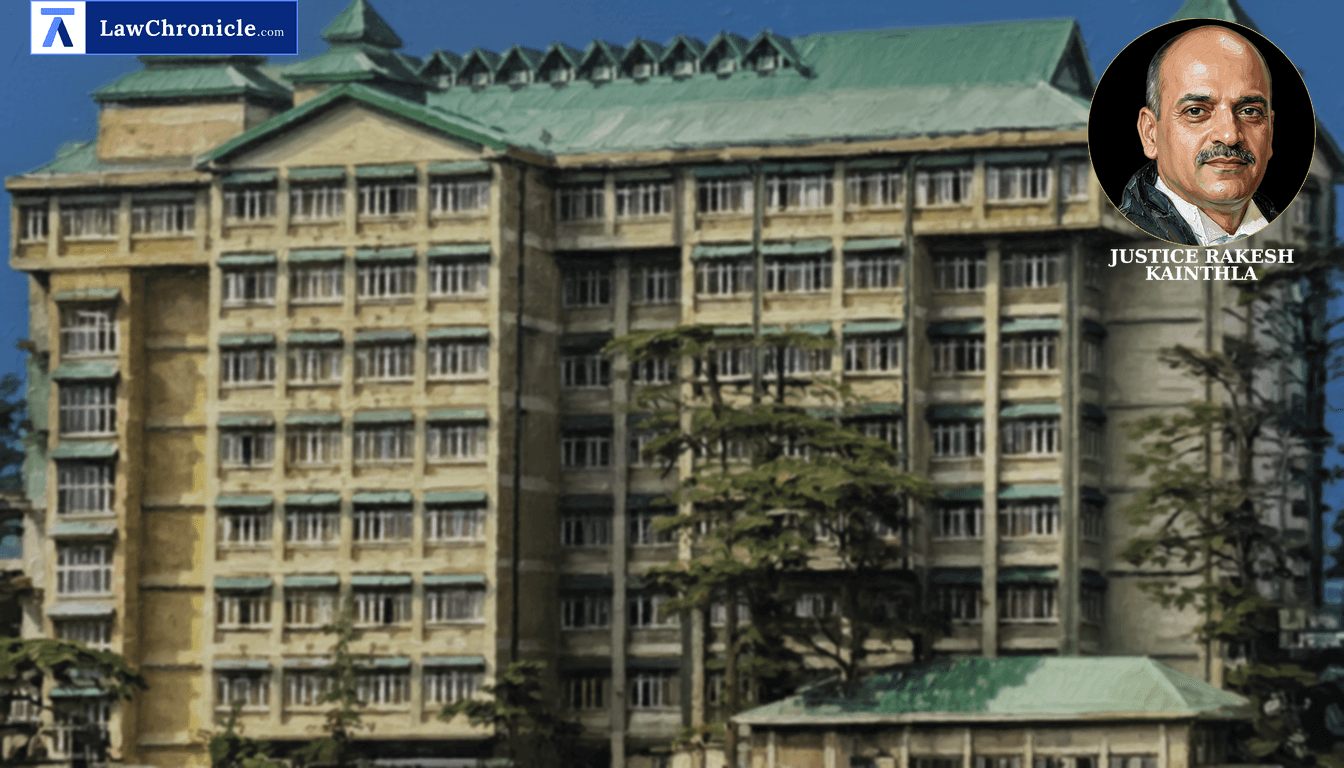
In a decisive affirmation of procedural rigor in social justice litigation, the Himachal Pradesh High Court has ruled that the failure to produce official caste certificates is a fatal blow to any prosecution under the Scheduled Castes and the Scheduled Tribes (Prevention of Atrocities) Act, 1989, rendering even grave allegations of untouchability and bonded labor legally unsustainable. The judgment underscores that while the law aims to protect vulnerable communities, the foundational requirement of proving protected status through specific documentation cannot be bypassed by oral testimonies alone.
Justice Rakesh Kainthla, sitting as a single judge bench, delivered this significant verdict while hearing two separate appeals challenging a trial court's acquittal of eleven individuals. The Court was tasked with determining whether the acquittal by the Special Judge, Sirmaur, was perverse or if the prosecution had indeed failed to establish its case beyond a reasonable doubt in a matter involving allegations of social boycott and caste-based violence.
Key Takeaways
Mandatory Caste Certification
Proving membership in a protected class via official certification is a non-negotiable prerequisite for maintaining charges under the Scheduled Castes and the Scheduled Tribes (Prevention of Atrocities) Act, 1989.
Spontaneity of First Information
Unexplained delays in reporting atrocities (over a year in this instance) severely corrode the credibility of the prosecution's version, inviting judicial suspicion of fabrication.
Limits of Appellate Intervention
High Courts will not disturb a trial court’s acquittal unless it is 'manifestly illegal' or 'perverse,' even if a different view of the evidence might be possible.
Necessity of Documentary Proof for Special Statutes
The Court observed that the prosecution's failure to place on record the caste certificates of both the complainants and the accused was a fundamental lapse. Drawing upon its own precedent in Chandu Ram vs. Nathu Ram and others, the Court reiterated that the specific protections of the Scheduled Castes and the Scheduled Tribes (Prevention of Atrocities) Act, 1989 are only activated when the complainant's status as a member of a ‘Scheduled Caste’ as defined under Article 366 and 341 of the Constitution of India, 1950 is formally established.
The Court, in its reasoning, observed: "...learned Trial Court had rightly held that ingredients of the complaint and the statements on oath, even if believed to be true, do not constitute any offence punishable under the provisions of SCST Act in the absence of the caste certificate."
Judicial Scrutiny of Delayed FIRs and Omnibus Allegations
Addressing the significant delay in the filing of the complaint, the Court relied on Mehraj Singh v. State of U.P. and P Rajagopal vs State of Tamil Nadu to emphasize that a delay of nearly one year without a plausible explanation often indicates an 'afterthought' or a 'coloured version.' Furthermore, the Court critiqued the use of 'omnibus statements' by witnesses who failed to identify specific roles or assailants. Citing Pandurang vs. State of Hyderabad ( "AIR 1955 SC 216": 1954 CaseBase(SC) 101), the Court noted that relying on all-embracing statements without particulars is unsafe, as witnesses are often 'mentally lazy' and tend to include everyone when they only saw some.
The Court has following directions:
"In view of the provisions of Section 437-A of the Code of Criminal Procedure (Section 481 of Bhartiya Nagarik Suraksha Sanhita, 2023) the respondents/accused are directed to furnish bail bonds in the sum of ₹25,000/- each with one surety each in the like amount to the satisfaction of the learned Trial Court within four weeks, which shall be effective for six months with stipulation that in the event of Special Leave Petition being filed against this judgment, or on grant of the leave, the respondents/accused on receipt of notice thereof, shall appear before the Hon’ble Supreme Court."
Ratio
The exact rule of law established is that in the absence of a valid caste certificate proving that the complainant belongs to a Scheduled Caste and the accused does not, the specialized provisions of the Scheduled Castes and the Scheduled Tribes (Prevention of Atrocities) Act, 1989 cannot be invoked. Furthermore, where two reasonable views of evidence are possible, the view favoring the acquittal of the accused must prevail, and appellate courts must exercise extreme caution before labelling a trial court's acquittal as perverse.
Background
The dispute originated from a complaint filed by Sunder Singh and Puran Chand under Section 156(3) of the Code of Criminal Procedure. They alleged that as members of the Scheduled Caste category, they were subjected to bonded labor and later socially boycotted by the respondents. The allegations included the fencing off of water sources, being forced to use noxious water, physical assault on family members, and the poisoning of their oxen.
While the police initially submitted a cancellation report, the complainants filed a protest petition which the Magistrate treated as a complaint under the Code of Criminal Procedure. The Court cited Vishnu Kumar Tiwari v. State of U.P. to validate this procedure, noting that a protest petition can be treated as a complaint if it discloses a cognizable offence. However, upon trial, the Special Judge acquitted all accused due to lack of documentary evidence regarding caste, material contradictions in witness statements, and the absence of post-mortem reports for the allegedly poisoned oxen. The High Court, after reviewing the parameters of interference in acquittals as defined in Sanjay Kumar v. State of Bihar ( "2026 SCC OnLine SC 1373": 2026 CaseBase(SC) 681) and Sekaran v. State of T.N., dismissed the appeals by the State and the complainants, finding the trial court's view to be reasonable and sustainable.
Case Details:
Case No.: Cr. Appeal Nos. 4244 of 2013 and 211 of 2014
Neutral Citation: 2026:HHC:38228
Case Title: State of H.P. v. Som Raj & Ors
Appearances:
For the Petitioner(s): Mr Lokender Kutlehria, Additional Advocate General
For the Respondent(s): Mr Naresh Sharma, Advocate
Source: 2026 CaseBase(HP) 7996
Similar Articles



 Breaking News


