


Absence Of Minimum 5 Persons Fatal To Dacoity Charge: Delhi High Court
 Copy Link
 Share
 Save
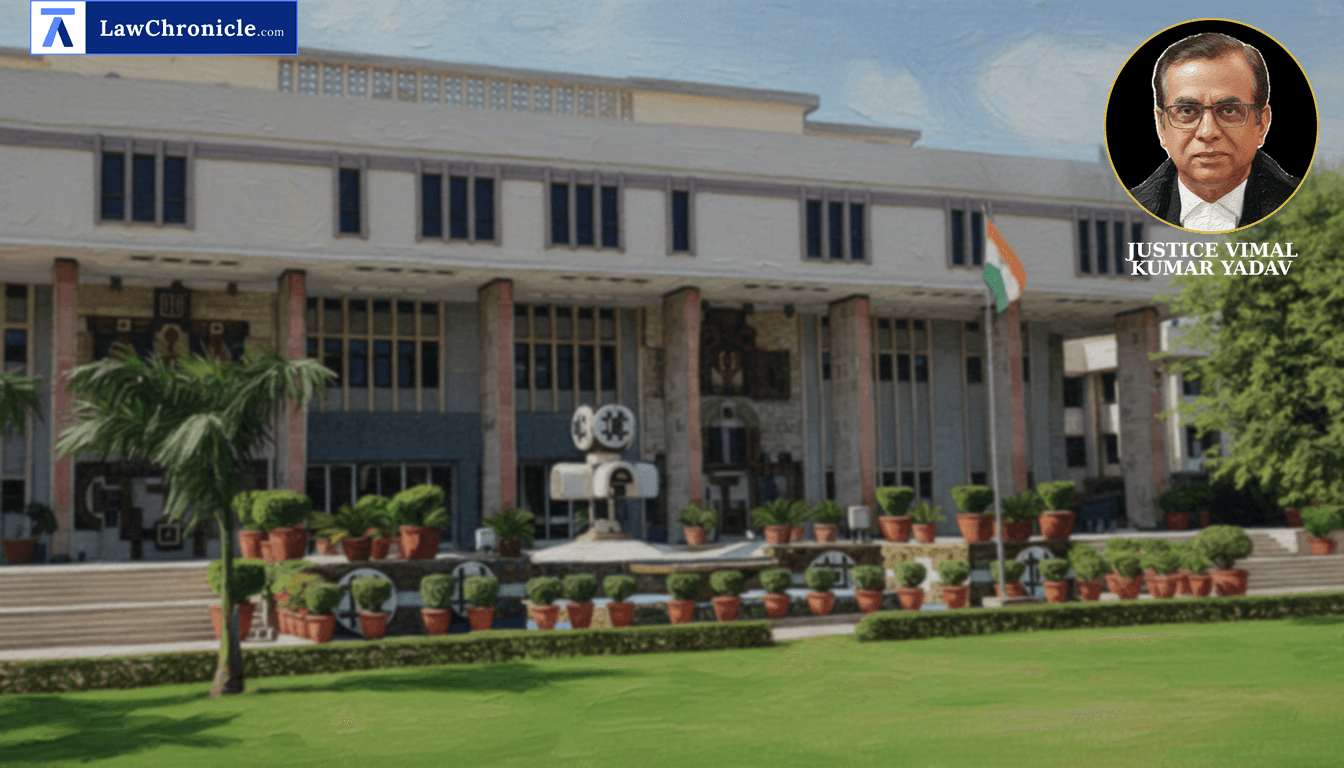
Exposing a fabricated prosecution narrative, the High Court of Delhi has acquitted three men charged with planning a dacoity after finding that the mandatory minimum requirement of five assembly participants was missing and falsely constructed through a fictitious suspect.
In a comprehensive ruling, Justice Vimal Kumar Yadav allowed the appeals filed against the trial court's conviction order, observing that the fundamental statutory prerequisite to invoke dacoity-related provisions was entirely absent from the inception of the case.
Key Takeaways
Mandatory Numerical Threshold: Offence of dacoity under Section 391 of the Indian Penal Code, 1860 strictly requires the involvement of five or more persons, without which charges under Section 399 and Section 402 cannot stand.
Fictitious Suspects Fatal To Prosecution: Fabrication of an elusive fifth suspect to fulfill the statutory numerical requirement demolishes the credibility of the prosecution's entire assembly and preparation narrative.
Unbelievable Overhearing Claims: The Court rejected prosecution claims that police officers in plain clothes could closely overhear secret dacoity planning in an open public park without being noticed.
Search and Seizure Evidentiary Defects: Material contradictions among official police witnesses regarding raiding party members severely undermine the validity of uncorroborated weapon recoveries.
Evaluating the prosecution's core evidence, the High Court noted severe improbabilities in the testimony of official witnesses regarding how they overheard the planning of a dacoity at a crowded public place. Quoting the reasoning behind discarding the prosecution's case on assembly and preparation, the Court, in its reasoning, observed: "When the testimony of these three witnesses as reproduced hereinabove is juxtaposed to the testimony of Constable Arjun Singh then it knocks the bottom of the prosecution’s case out and turn the edifice sought to be raised by prosecution, into rubble. It clearly reflects that witnesses are not deposing the correct facts and in the process lose the credibility and the strength of the case, so far as assembly and preparation for dacoity is concerned."
The Court has following directions:
"Copy of the judgment be transmitted to the learned Trial Court and Prison Authorities for information and necessary compliance."
Ratio
To record a conviction for preparation or assembly for dacoity under Sections 399 and 402 of the Indian Penal Code, 1860, the involvement of a minimum of five persons must be conclusively established. Where the court finds that the presence of the fifth person is entirely unproved or fabricated, less than five persons cannot be convicted for dacoity-related offences in the absence of a specific finding that five or more persons were actually involved.
Background
The case originated from a secret information allegedly received by the police on August 26, 1999, regarding an assembly of individuals planning to commit dacoity at Roshnara Park, Delhi. The police claimed to have apprehended four persons at the spot Maharam, Shyam Kumar, Tulsi, and Shyam Kishore while asserting that a fifth suspect named Raju escaped. Arms including a button-actuated knife, a dagger, and a kirpan were allegedly recovered.
Charges were framed under Sections 399 and 402 of the Indian Penal Code, 1860, and additionally under Section 25 of the Arms Act, 1959 against Maharam. The Trial Court convicted the appellants on February 26, 2004, and sentenced them to five years of rigorous imprisonment under Sections 399/402 of the Indian Penal Code, 1860, with benefit of set-off under Section 428 of the Cr.P.C..
On appeal, the appellants argued that no fifth person was present and that the character 'Raju' was artificially introduced by the police to satisfy the legal prerequisite of five persons under Section 391 of the Indian Penal Code, 1860. Relying on Raj Kumar @ Raju v. State of Uttaranchal ( "(2008) 11 SCC 709": 2008 CaseBase(SC) 521), Yog Raj and Ors. v. State, and Hari v. State, the appellants contended that conviction under Sections 399 and 402 of the Indian Penal Code, 1860 could not be sustained. The High Court found glaring contradictions, particularly noting that Constable Arjun Singh, who was claimed to have chased the fifth fleeing suspect, deposed that he was not even part of the raiding party on that date. Consequently, the High Court set aside the convictions and acquitted all the appellants.
Case Details:
Case No.: CRL.A. 202/2004, CRL.A. 205/2004 & CRL.A. 207/2004
Case Title: Tulsi v. State (NCT of Delhi) (with connected matters)
Appearances:
For the Petitioner(s): Mr. Zeeshan Diwan, Adv. (DHCLSC) with Mr. Harsha, Adv., Mr. Ashutosh Kaushik and Mr. Anupam Agrawal, Advs. with Appellants-in-person.
For the Respondent(s): Mr. Mukesh Kumar, APP for State with SI Rahul Malik, PS Roop Nagar.
Source: 2026 CaseBase(DEL) 4783
Similar Articles

 Breaking News


