Absence Of Ticket No Ground To Reject Railway Accident Claims: PHHC Reiterates
 Copy Link
 Share
Share Save
Save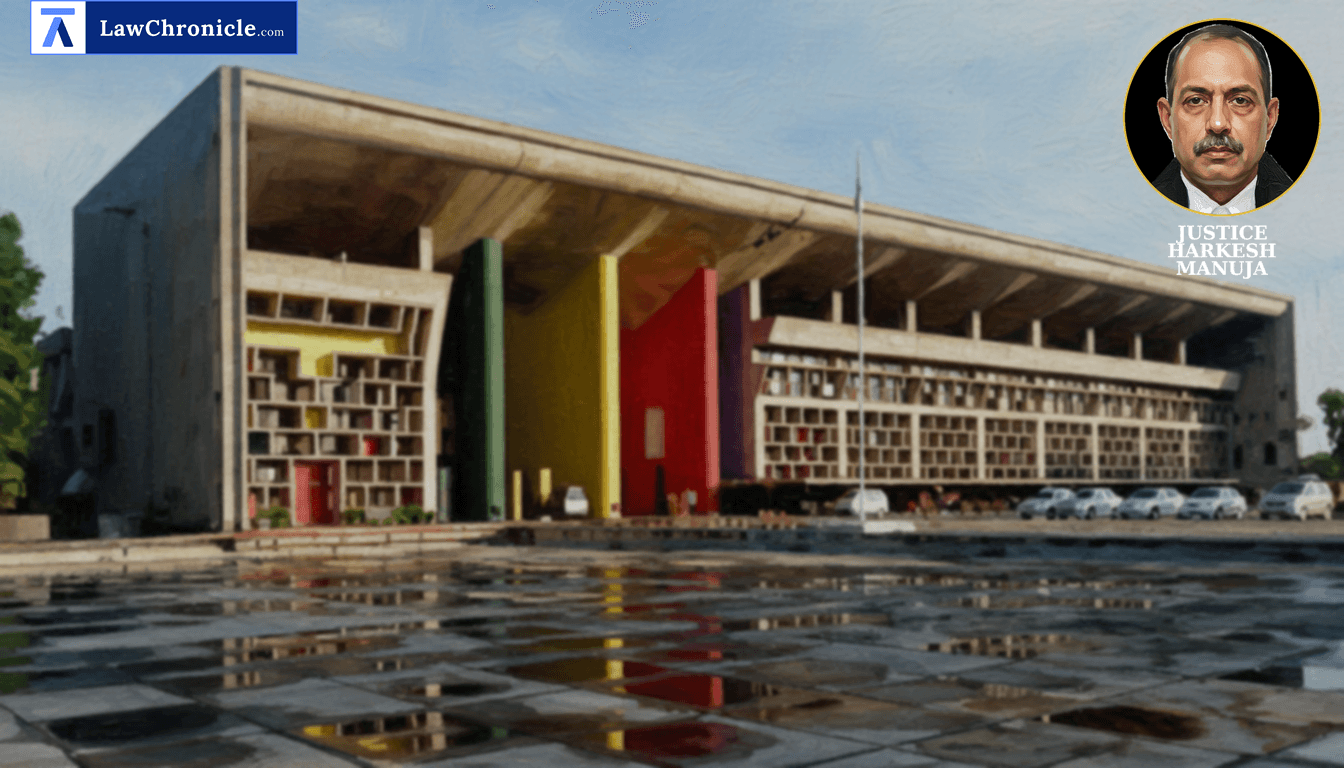
The Punjab and Haryana High Court fortified 'strict liability' regime in railway accidents, ruling that the mere non-recovery of a train ticket from a deceased person cannot be treated as a conclusive ground to defeat Railway compensation claims.
In a significant reversal of a Railway Claims Tribunal order, Justice Harkesh Manuja of the Punjab and Haryana High Court heard an appeal concerning the death of a passenger who allegedly fell from a train between Kurukshetra and Thanesar. The Bench was tasked with determining whether the absence of a physical ticket and the lack of direct eyewitnesses to the accident could absolve the Railways of its statutory liability.
Key Takeaways
Strict Liability Overrules Technicalities
Liability under the law is of a 'no-fault' nature, meaning the railway administration is liable unless it can prove specific statutory exceptions like suicide or intoxication.
Burden of Proof Shifted
Once a claimant places relevant facts suggesting a bona fide journey, the absence of a ticket alone does not negate the claim; the burden shifts to the Railways to provide a cogent alternative explanation.
Probabilistic Standard Applied
Claims under railway laws are not criminal trials; they must be decided on the 'preponderance of probabilities' rather than proof beyond reasonable doubt.
Welfare Legislation Interpretation
Statutes providing compensation for accidents must be interpreted liberally and purposefully to fulfill their social-welfare objectives rather than through a hyper-technical lens.
Tribunal's Erred for Criminal Standards of Proof
The Punjab and Haryana High Court noted that the Tribunal had adopted a hyper-technical approach by treating the non-recovery of a ticket as fatal to the case. Referencing the principles laid down in Union of India v. Rina Devi ( "(2019) 3 SCC 572": 2018 CaseBase(SC) 1157), the Court observed that the initial burden on the claimant can be discharged through attending circumstances. The Bench commented that "The Tribunal appears to have approached the matter as though the claimants were required to establish the journey and the exact manner of the accident with the degree of certainty expected in a criminal trial. The applicable standard is preponderance of probabilities."
The Punjab and Haryana High Court further highlighted that railway accidents often occur without eyewitnesses, and insisting on such evidence would frustrate the object of the Railways Act, 1989. It relied on Rajni and another v. Union of India and another ( "2025 INSC 1201": 2025 CaseBase(SC) 1080) to emphasize that technical irregularities or lapses in procedure should not defeat legitimate claims under welfare statutes.
The Court's Findings on 'Untoward Incidents'
Analyzing the medical and police records, the Court found that the injuries, including multiple traumatic fractures and brain damage, were entirely consistent with a fall from a train. The Court held that the cumulative chain of events, from the deceased being seen off at the station to the recovery of the body near the tracks, established a coherent case of an 'untoward incident' under Section 123(c)(2) of the Railways Act, 1989.
Ratio
The liability of the Railway administration under Section 124-A of the Railways Act, 1989, is a strict/no-fault liability. In claims arising from 'untoward incidents', the absence of a journey ticket or the lack of an eyewitness does not automatically disqualify a claimant. If the preponderance of probabilities, supported by police reports and post-mortem evidence, suggests an accidental fall from a train, the claim must be allowed unless the Railways proves a statutory exception such as suicide, self-inflicted injury, or intoxication.
Background
The dispute arose following the death of one Ramesh in November 2015. His family claimed he fell from a train while traveling from Kurukshetra to Jind. The Railway Claims Tribunal dismissed the claim in 2022, primarily because no ticket was recovered from the body and there were discrepancies in the testimonies recorded six years after the event. The Punjab and Haryana High Court, however, applied the rulings in Union of India v. Prabhakaran Vijaya Kumar ( "(2008) 9 SCC 527": 2008 CaseBase(SC) 1499) and Union of India v. Radha Yadav ( "(2019) 3 SCC 410": 2019 CaseBase(SC) 1138) to conclude that compensation must be calculated by comparing the amount at the time of the accident plus interest against the currently prescribed enhanced compensation, awarding the higher of the two.
Case Details:
Case No.: FAO No. 2815 of 2022 (O&M)
Case Title: REENA AND OTHERS Vs UNION OF INDIA
Appearances:
For the Petitioner(s): Mr. Narender Kaajla, Advocate
For the Respondent(s): Mr. Somesh Gupta, Sr. Panel Counsel, UOI
Source: 2026 CaseBase(PNH) 21096
 Breaking News