Accident Alone Doesn't Prove Rash Driving Under IPC: Delhi HC
 Copy Link
 Share
Share Save
Save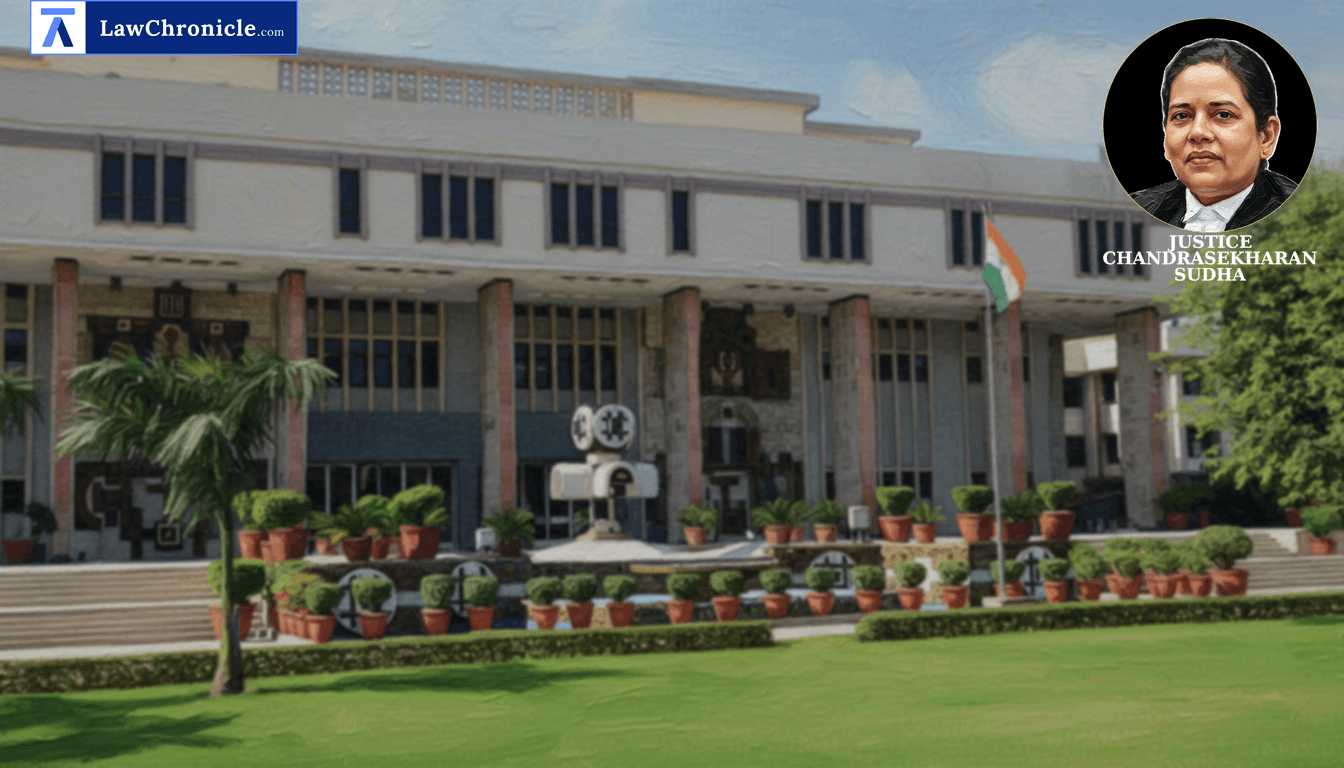
Merely establishing the occurrence of a fatal road accident is insufficient to secure a criminal conviction without concrete proof of rashness or negligence. The Delhi High Court has upheld the acquittal of a bus driver, ruling that site plans prepared based on witness statements during investigation are inadmissible under criminal procedure law to prove high-speed driving or negligent maneuvers.
In an appeal challenging the acquittal of a bus driver accused of causing a fatal accident, a single-judge bench of Justice Chandrasekharan Sudha affirmed the trial court's decision under Section 255(1) of the Code of Criminal Procedure, 1973. The appeals were preferred by the State and the father of the deceased against the trial court's order acquitting the accused of offences under Sections 279 and 304A of the Indian Penal Code, 1860.
Key Takeaways
Accident Occurrence Insufficient For Conviction: Highlighting that mere occurrence of a collision does not automatically presume rash or negligent driving under criminal law.
Inadmissibility Of Investigating Markings: Reaffirming that site plan markings created solely at the instance of witnesses during investigation are barred under Section 162 of Code of Criminal Procedure, 1973.
Res Ipsa Loquitur Limitations: Demonstrating that prosecution must prove specific acts of recklessness, speed violations, or dangerous maneuvers rather than relying on consequences.
Court's Rationale On Proof Of Rashness And Negligence
The High Court observed that the prosecution failed to establish basic ingredients of rashness or negligence under Sections 279 and 304A of the Indian Penal Code, 1860. Examining the testimony of the sole eye-witness, the Court noted that it was conspicuously silent on the speed of the bus, traffic conditions, lane deviation, or dangerous driving patterns.
Addressing the admissibility of site plans in traffic accident cases, the Court, in its reasoning, observed: "It is well settled that a site plan/sketch map is admissible only to the extent it records what the Investigating Officer personally observed at the spot. Any markings showing the location of the incident, victim, or other facts based solely on statements made by witnesses during investigation are inadmissible, as they are hit by Section 162 Cr.P.C., being nothing more than statements made to the police during investigation."
The Court emphasized that essential elements of criminal negligence require gross and culpable neglect or failure to exercise required precautions, distinguishing it from civil liability.
Ratio
To establish criminal liability under Sections 279 and 304A of the Indian Penal Code, 1860, the prosecution must strictly prove that the death or injury was the direct result of a rash or negligent act. A site plan drawn based on witness statements during investigation cannot be admitted to establish the manner of an accident due to the statutory bar under Section 162 of the Code of Criminal Procedure, 1973.
Background
The case originated from an incident on July 7, 2003, when the deceased was riding a motorcycle near the Ring Road flyover in Rajouri Garden. It was alleged that a Blue Line bus driven by the accused rammed the motorcycle from behind, running over the victim and causing instant death. An FIR was registered under Sections 279 and 304A of the Indian Penal Code, 1860 at Rajouri Garden Police Station. Following the investigation, a charge sheet was submitted, and the accused pleaded not guilty upon being explained the particulars under Section 251 of the Code of Criminal Procedure, 1973.
During the trial, the prosecution produced 11 witnesses and several documents, including mechanical inspection reports and a notice under Section 133 of the Motor Vehicles Act, 1988. The accused, questioned under Section 313(1)(b) of the Code of Criminal Procedure, 1973, denied the allegations and claimed false implication.
The trial court acquitted the accused on December 8, 2017. Challenging the acquittal, the State and the father of the deceased appealed to the High Court. When no representation appeared for the deceased's father in CRL.A. 1144/2019, the Court proceeded to decide the matter on merits by relying on Bani Singh & Ors. vs. State of U.P. ( "(1996) 4 SCC 720": 1996 CaseBase(SC) 1562). Examining the legal standards for criminal negligence, the Court referred to Naresh Giri v. State of Madhya Pradesh ( "(2008) 1 SCC 791": 2007 CaseBase(SC) 573), Alister Anthony Pareira Vs. State of Maharashtra ( "(2012) 2 SCC 648": 2012 CaseBase(SC) 120), and Tori Singh v. State of U.P. ( "AIR 1962 SC 399 : (1962) 1 Cri LJ 469": 1961 CaseBase(SC) 71) regarding the interpretation of rash acts and negligence, alongside Jagdish Narain v. State of U.P. regarding site plan admissibility. Concluding that neither the testimony nor the site plan proved rashness or negligence, the Delhi High Court dismissed both appeals.
Case Details:
Case No.: CRL.A. 1143/2019 & CRL.A. 1144/2019
Case Title: STATE (NCT OF DELHI) v. JAGDISH & ANR.
Appearances:
For the Petitioner(s): Ms. Manjeet Arya, APP for State with SI Pradeep Kumar
For the Respondent(s): Ms. Nidhi Mohan Parashar, Advocate with Ms. Arpita Pande, Advocate (Amicus Curiae)
Source: 2026 CaseBase(DEL) 3738
 Breaking News