Ad-Hoc Regularization Date Cannot Precede Appointment Order: Allahabad HC
 Copy Link
 Share
 Save
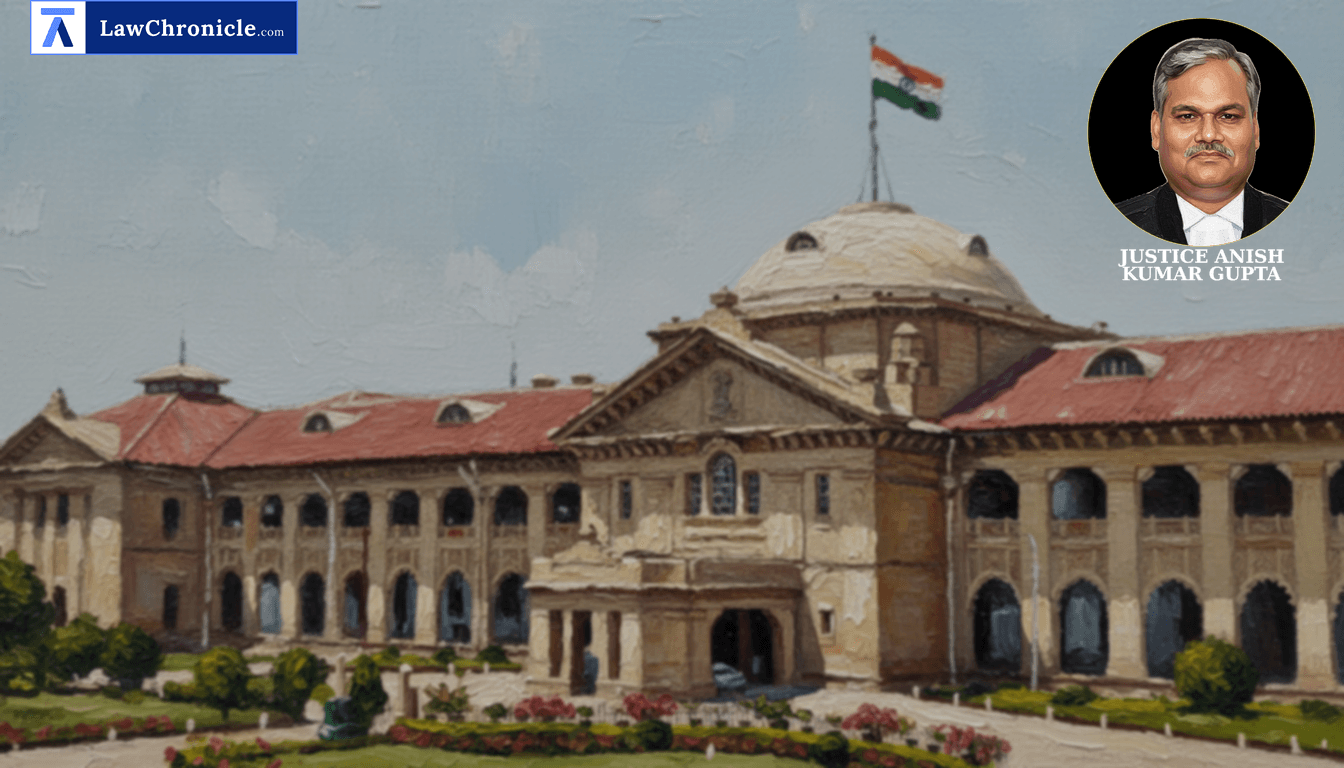
The Allahabad High Court has slammed the door on retrospective service benefits for ad-hoc employees, ruling that regularization under state rules is strictly prospective and contingent upon the availability of substantive vacancies. This decision reinforces the legal boundary between discretionary ad-hoc engagements and formal appointments, clarifying that mere eligibility for regularization does not grant an automatic right to backdated seniority or pay.
A Single Judge bench of Justice Anish Kumar Gupta adjudicated upon a writ petition where the petitioner sought to shift his regularization date from 2016 back to his initial 1992 ad-hoc appointment or the 2001 amendment of the rules. The Court examined the structural mechanics of the UP Regularization of Ad-Hoc Appointments (on Posts Outside the Purview of Public Service Commission) Rules, 1979 and its subsequent amendments to determine the validity of such retrospective claims.
Key Takeaways
Prospective Regularization Mandate
Regularization under the 1979 Rules is effective only from the date of the formal appointment order, not from the date of initial ad-hoc joining.
Vacancy-Based Entitlement
Eligibility for regularization does not equate to an immediate right to a post; it remains subject to the existence of a permanent or temporary vacancy and the employee's position in the seniority list.
Negative Parity Rejected
Illegal or erroneous benefits granted to other employees (like retrospective regularization) do not create a right for others to claim the same, as Article 14 does not recognize 'negative parity.'
Court Observations and Directions
During the proceedings, the Court scrutinized the procedure outlined in UP Regularization of Ad-Hoc Appointments (on Posts Outside the Purview of Public Service Commission) Rules, 1979, noting that the Selection Committee’s role is to assess suitability, while the Appointing Authority issues orders based on seniority and vacancy. The Court emphasized that Rule 7 of the UP Regularization of Ad-Hoc Appointments (on Posts Outside the Purview of Public Service Commission) Rules, 1979 explicitly states that seniority is entitled only from the date of the appointment order after selection.
The Court, in its reasoning, observed: "In the considered opinion of this Court, rules do not provide that all the candidates who are found eligible by the Selection Committee are to be given appointment at one go. They are to be given appointment against regular permanent vacancy only. Thus, as and when the vacancies so occur, such ad hoc candidates are required to be regularized and their seniority will depend from the date of the order of the appointment."
Addressing the petitioner's argument regarding a colleague who received retrospective benefits, the Court relied on Uday Pratap Thakur and Anr. vs. State of Bihar and Ors. ( "Civil Appeal No. 31155 of 2023 dated 28.04.2023": 2023 CaseBase(SC) 1024) to distinguish between regular and work-charged employees. The Court stated: The Court has the following directions:
"In such view of the matter, claim for negative parity cannot be acceded to by this Court. Accordingly, the instant petition is dismissed."
Ratio
Regularization of ad-hoc services governed by the Uttar Pradesh Regularization of Ad-Hoc Appointments Rules, 1979, as amended, takes effect only from the date of the specific order of appointment. Service rendered in an ad-hoc or work-charged capacity prior to such formal regularization cannot be counted for seniority or retrospective benefits, as these appointments are made dehors the regular recruitment rules.
Background
The petitioner was appointed as a Munshi on an ad-hoc basis in March 1992. Following the UP Regularization of Ad-Hoc Appointments (on Posts Outside the Purview of Public Service Commission) (Third Amendment) Rules 2001, he became eligible for regularization as he was appointed before June 30, 1998, and had completed the requisite three years of service. Although he was included in a seniority list in 2001, his formal regularization order was only issued on April 28, 2016.
The petitioner challenged this, citing Chief General Manager, RBI vs. General Secretary, Reserve Bank of India, Sukhendu Bhattacharjee and others Vs. State of Assam ( "2026 INSC 523": 2026 CaseBase(SC) 445), Narender Singh Vs. State of Haryana ( "2022 (3) SCC 286": 2022 CaseBase(SC) 601), and Kumari Laxmi Saroj and Others vs. State of U.P. and Others ( "2022 (17) SCC 477": 2022 CaseBase(SC) 574), arguing that his regularization should be backdated to his initial appointment or at least to the date the 2001 Rules commenced. The State countered that regularization is not automatic and depends on seniority and vacancy availability. The Court ultimately upheld the State's position, dismissing the petition and clarifying that the cited precedents were inapplicable as they did not address the specific statutory scheme of the 1979 Rules.
Case Details:
Case No.: WRIT - A No. - 32582 of 2016
Case Title: Dharmendra Kumar Vishwakarma v. State Of U.P. Thru. Secy. And 3 Others
Appearances:
For the Petitioner(s): Dharmendra Pratap Singh Chauhan, Shesh Kumar Srivastava, Siddharth Khare, Sr. Advocate
For the Respondent(s): C.S.C., Jai Bahadur Singh
Source: 2026 CaseBase(ALL) 883
 Breaking News