


Administrator Cannot Write Down AT-1 Bonds Post Reconstruction: Supreme Court
 Copy Link
 Share
Share Save
Save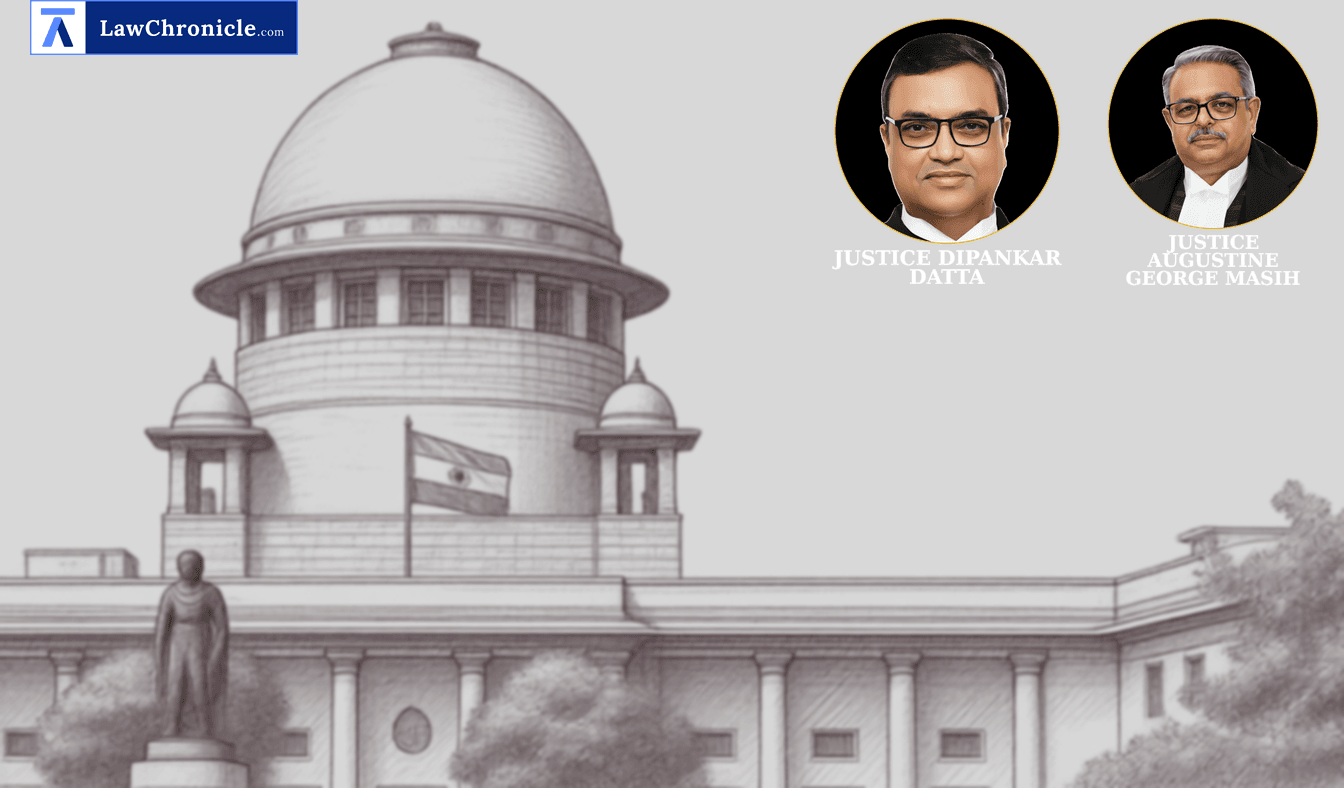
The Supreme Court has affirmed the invalidation of the writing down of Rs 8,415 crore worth of Additional Tier 1 (AT-1) bonds, ruling that an Administrator cannot unilaterally extinguish regulatory capital instruments once a reconstruction scheme omits such authorization.
A bench of Justice Dipankar Datta and Justice Augustine George Masih dismissed appeals filed by YES BANK LIMITED & ANR. v. AXIS TRUSTEE SERVICES LIMITED & ORS., the Reserve Bank of India, and the Union of India against the Bombay High Court judgment. The controversy centered on the decision of the Administrator appointed for YES BANK to permanently write down its AT-1 bonds following the notification of the 'Yes Bank Limited Reconstruction Scheme, 2020'.
Key Takeaways
Limits on Administrator's Statutory Authority
An Administrator appointed under Section 36ACA of the Banking Regulation Act, 1949 acts as a substitute for the Board of Directors and cannot arrogate regulatory powers exclusively reserved for the Reserve Bank of India.
Sanctity of Sanctioned Reconstruction Schemes
Once the Central Government notifies a final reconstruction scheme under Section 45 of the Banking Regulation Act, 1949 after consciously dropping a write-down clause, the Administrator cannot perform a turn-about to write down bonds.
Strict Procedural Adherence for Capital Instruments
Loss absorbency mechanisms under the Basel III framework and Information Memoranda must be strictly triggered according to set rules rather than ex-post administrative choices.
Evaluating the regulatory regime and procedural steps, the Supreme Court held that the Administrator's action was ultra vires the Master Circular and the Reconstruction Scheme. The Apex Court noted that while the draft scheme initially contained a clause for writing down AT-1 bonds, the Central Government consciously dropped this provision in the final notified scheme after considering public objections and recommendations.
Analyzing the underlying statutory scheme and Basel III framework, the Supreme Court, in its reasoning, observed that "An administrator appointed under the BR Act has to act squarely within the four corners of the powers conferred upon him under the statute. He acts as a substitute for the Board of Directors, to run the company in an efficient manner. Any act performed by the administrator beyond the powers clothed upon him would be wholly illegal and void."
Addressing the timeline for exercising loss absorbency clauses, the Apex Court further emphasized that "The preposition 'before' can only mean before the Reconstruction Scheme takes effect. True, the effects of a reconstruction scheme may run for years together; but that, by itself, cannot be read as empowering the relevant authority to write down the AT-1 Bonds at any point within the following three years."
Ratio
An Administrator appointed under Section 36ACA of the Banking Regulation Act, 1949 exercises powers identical to a Board of Directors and does not possess regulatory authority to write down AT-1 bonds post-reconstruction when such power is excluded from the statutorily notified Reconstruction Scheme under Section 45 of the Banking Regulation Act, 1949 and is not independently exercised by the regulatory authority prior to the scheme coming into force.
Background
In December 2016 and October 2017, YES BANK issued Basel III compliant AT-1 Bonds worth Rs 3,000 crore and Rs 5,415 crore respectively. Axis Trustee Services Limited was appointed as the bond trustee. Following a steep decline in YES BANK's financial health, the Central Government imposed a moratorium under Section 45 of the Banking Regulation Act, 1949 on March 5, 2020, and the Reserve Bank of India appointed an Administrator under Section 36ACA of the Banking Regulation Act, 1949.
A Draft Scheme of reconstruction was released on March 6, 2020, containing an explicit clause that AT-1 bonds would stand written down permanently. Stakeholders raised strong objections, suggesting conversion of bonds into equity. Subsequently, the Central Government notified the final 'Yes Bank Limited Reconstruction Scheme, 2020' on March 13, 2020, omitting the clause that provided for the writing down of AT-1 bonds. However, on March 14, 2020, the Administrator ordered the full write-down of the AT-1 bonds.
The writ petitioners successfully challenged this write-down before the High Court of Judicature at Bombay, which set aside the Administrator's order on January 20, 2023. Rejecting the appellants' argument that validity should be tested against subsequent financial stabilization or inherent powers under general savings provisions, the Supreme Court placed reliance on the principle enunciated in Nawabkhan Abbaskhan v. State of Gujarat ( "(1974) 2 SCC 121": 1974 CaseBase(SC) 307) to hold that administrative actions must be evaluated based on the state of law and facts existing on the date the action was taken. The apex court affirmed the High Court's ruling and dismissed all appeals.
Case Details:
Case No.: Civil Appeal No. 3182 of 2025
Neutral Citation: 2026 INSC 1132
Case Title: YES BANK LIMITED & ANR. v. AXIS TRUSTEE SERVICES LIMITED & ORS.
Appearances:
For the Petitioner(s): Mr. Tushar Mehta, Solicitor General of India; Mr. Shyam Divan, Senior Advocate; Mr. Balbir Singh, Senior Advocate
For the Respondent(s): Mr. C.A. Sundaram, Senior Advocate; Dr. Abhishek Manu Singhvi, Senior Advocate; Mr. Neeraj Kishan Kaul, Senior Advocate; Mr. L.V. Srinivasan, Party-in-Person
Source: 2026 CaseBase(SC) 8276
 Breaking News