


Admitted Misconduct Negates Need for Formal Inquiry: Bombay HC Rebukes Industrial Tribunal Interdiction
 Copy Link
 Share
 Save
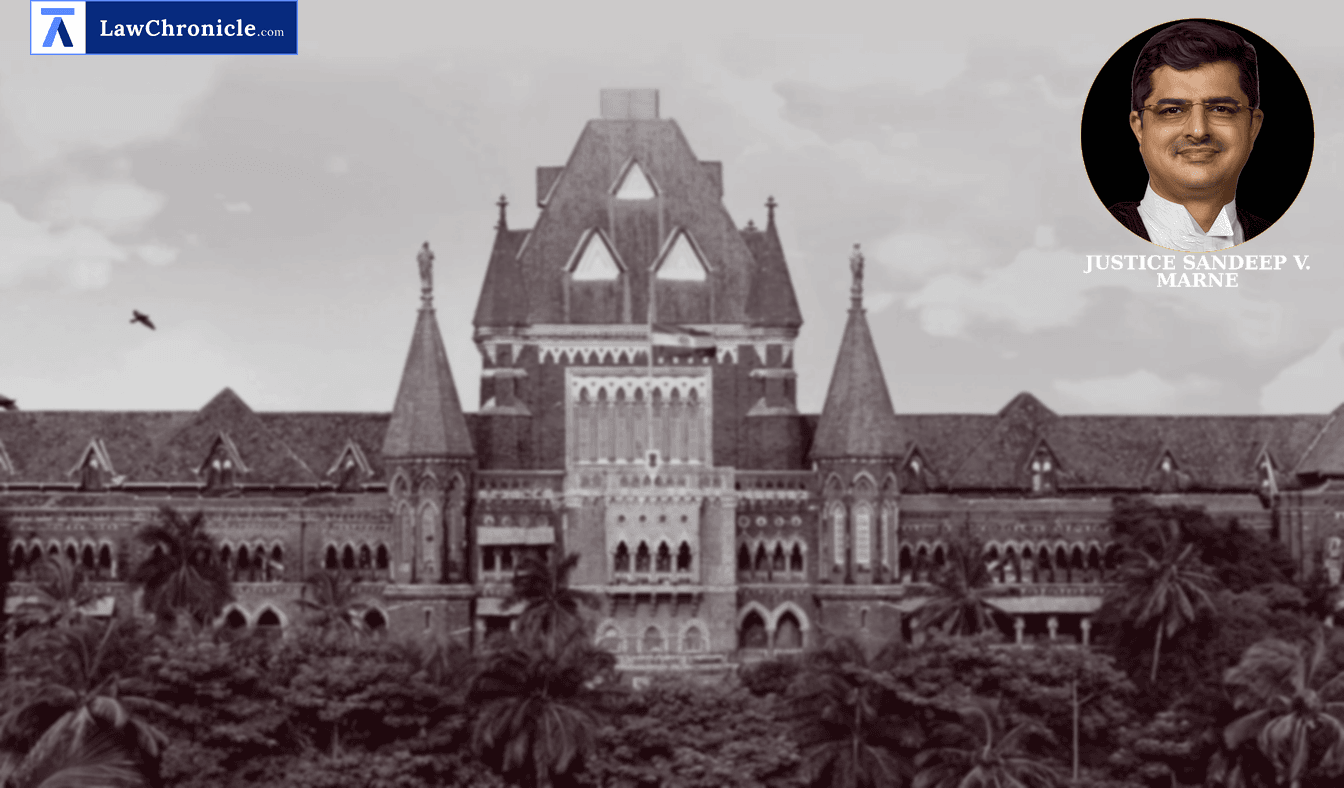
The Bombay High Court has restricted judicial overreach by industrial adjudicators, ruling that a formal disciplinary inquiry is entirely dispensable when an employee unequivocally admits to misappropriation of public funds.
Justice Sandeep V. Marne presided over the matter, examining the propriety of an Industrial Court's interference at the show-cause stage of disciplinary proceedings. The Bench addressed the critical issue of whether an employee, having admitted to misappropriating municipal funds and seeking pardon, could later stall the punishment process by invoking the jurisdiction of the Industrial Tribunal.
Key Takeaways
Inquiry Dispensed on Admission
When a delinquent employee admits to charges in response to a chargesheet, the requirement to conduct a formal inquiry by examining witnesses is legally extinguished.
Restraint on Industrial Adjudicators
Labour and Industrial Courts must exercise restraint and avoid interdicting pending disciplinary proceedings at the show-cause stage, as such interference usurps the disciplinary authority's inherent powers.
Public Funds Protection
Financial misappropriation is a grave misconduct that warrants strict enforcement of discipline, and subsequent retirement does not shield an employee from the consequences of admitted guilt.
Law on Admission of Guilt
The Bombay High Court observed that the purpose of a chargesheet is to verify if an inquiry is necessary; once the guilt is admitted, the process moves directly to the punishment stage. The Bench clarified that disciplinary proceedings are not equivalent to criminal trials where a formal 'plea' must be recorded by an inquiry officer if the admission is already made before the disciplinary authority. The Bombay High Court elaborated that "In a case where the charge is admitted, there is no necessity of holding any inquiry. ... The Industrial Court appears to have dealt with the case as if it is a criminal prosecution. Unlike criminal prosecution, where plea of the accused is required to be recorded by the Court in the trial, in disciplinary proceedings, it is not mandatory to hold inquiry when the charge is admitted."
Addressing the Industrial Court's decision to quash the show-cause notice, the Bombay High Court noted that such interference allowed a guilty employee to remain in service for over a decade. The Bench emphasized that the Respondent had admitted his mistakes both in writing and through the conduct of depositing the misappropriated amounts of Rs. 2,77,116/-.
Ratio
When a delinquent employee admits to the charges levelled in a disciplinary proceeding, the holding of a formal inquiry is dispensed with as there are no facts left to be proved. Industrial adjudicators cannot use their preventive jurisdiction under the Maharashtra Recognition of Trade Unions and Prevention of Unfair Labour Practices Act, 1971 to interdict show-cause notices issued by disciplinary authorities, as doing so usurps the employer's inherent power to enforce discipline and take proceedings to their logical end.
Background
The dispute originated when a Clerk (promoted to A-Grade Clerk) at the Thane Municipal Corporation was found to have misappropriated water supply collections amounting to Rs. 2,77,116/- in 2004. After the audit discovery, the Respondent deposited the funds and submitted a reply admitting the "mistakes" due to family problems, praying for pardon. The Corporation issued a show-cause notice proposing a lenient punishment of reversion to a lower post.
However, the Respondent challenged this notice before the Industrial Tribunal, alleging unfair labour practices under the Maharashtra Recognition of Trade Unions and Prevention of Unfair Labour Practices Act, 1971. The Tribunal stayed the punishment, ruling that the admission in the reply was insufficient without a formal inquiry recording. During the decade-long pendency of the litigation, the Respondent retired in 2021.
In its analysis, the Bombay High Court relied on ADM (City) v. Prabhakar Chaturvedi and Employees State Insurance Corporation, New Delhi and another Versus. A.V. Tungare and others to establish that admissions made before a disciplinary authority are the best piece of evidence. The Court also cited Shri. Vishwanath Bhivaji Kudale Versus. The Chariman, Maharashtra State Electricity Board & Ors. and Dagadu Vasant Mudgal Vs. MSRTC to reiterate that industrial courts should not intervene at interlocutory stages. While the Respondent pleaded for leniency under Constitution of India, 1950 citing financial and health distress, the Bench held that misappropriation of public money cannot be pardoned based on such pretexts. The Bombay High Court allowed the petition, setting aside the Industrial Court's order and directing the notional reversion of the retired employee to adjust his pensionary benefits.
Case Details:
Case No.: WRIT PETITION NO. 5672 OF 2011
Case Title: Thane Municipal Corporation Versus Prabhakar Chango Shinde
Appearances:
For the Petitioner(s): Mr. Mandar Limaye with Mr. Vedant Bende, Advocates
For the Respondent(s): Mr. R.R. Nair, Advocate
Source: 2026 CaseBase(BOM) 7148
Similar Articles




 Breaking News


