Agreement To Marry Cannot Wipe Out Initial Offence Of Rape: Gauhati High Court
 Copy Link
 Share
Share Save
Save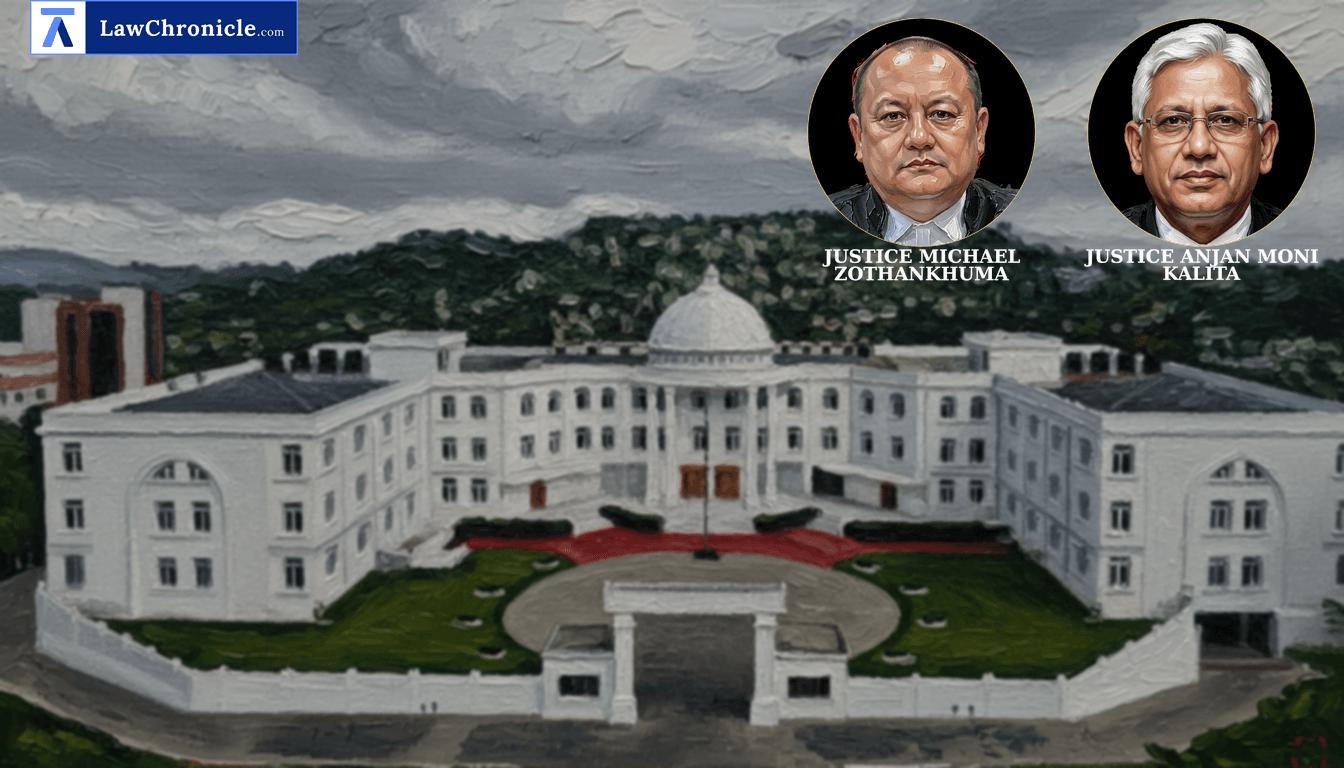
A compromise or an agreement reached in a village meeting promising future marriage cannot expunge or wipe out the initial commission of sexual assault. The Gauhati High Court upheld the conviction of a man under Section 376(1) of the Indian Penal Code, affirming that subsequent marital arrangements do not absolve an accused of rape.
A division bench of Justice Michael Zothankhum and Justice Anjan Moni Kalita delivered the judgment while dealing with a criminal appeal challenging a trial court order that had sentenced the appellant to 25 years of rigorous imprisonment.
Key Takeaways
- Offence Unaffected by Compromise: Panchayati agreements or marriage promises do not extinguish criminal liability for sexual offences.
- Sole Testimony Standard: The credible, uncontradicted testimony of a sexual assault survivor, corroborated by medical evidence, is sufficient for conviction.
- Sentence Modification: While affirming the conviction, the High Court reduced the rigorous imprisonment from 25 years to 10 years in accordance with justice standards.
Court Observations and Sentence Reduction
The High Court noted that the core allegation of sexual intercourse without consent was fully supported by the victim's testimony and medical findings, despite the accused attempting to frame the interaction as consensual.
The Court, in its reasoning, observed: "...the initial charge/allegation of rape is never wiped out or made clean, only because of the alleged agreement made in the village meeting, where the appellant agreed to marry the victim when she reached marriageable age. The fact of the appellant raping the victim is clearly proved by the Prosecution and as such, we do not find any ground to interfere with the impugned judgment passed by the learned Trial Court."
Addressing the failure of the accused to provide explanations for incriminating circumstances during his examination under Section 313 of the Code of Criminal Procedure, the Court relied on the principle articulated in Wazir Khan v. State of Uttarakhand ( "(2023) 11 SCR 39": 2023 CaseBase(SC) 948), noting that an unverified blanket denial adds strength to the prosecution's case.
Regarding the quantum of punishment, the Court held: "The Court has following directions:
"...we are of the view that the ends of justice would be served if the sentence to be undergone by the appellant is reduced. Accordingly, we sentence the appellant under Section 376(1) IPC to undergo rigorous imprisonment for 10 years with a fine of Rs.30,000/-, in default of fine to undergo rigorous imprisonment for another 6 months.""
Ratio
An agreement for marriage entered into following an act of sexual assault does not erase the initial offence of rape. Where the testimony of a survivor remains trustworthy and is corroborated by medical findings, a conviction under Section 376 of the Indian Penal Code stands valid regardless of subsequent compromise attempts.
Background
According to the prosecution, on April 19, 2022, the victim was dragged into a nearby jungle and sexually assaulted while returning from a local Bihu function. Following the incident, a village meeting was held where an agreement was drawn up stating that the appellant would marry the victim when she reached marriageable age. The appellant took the victim to his house for five days, but subsequently married another woman and abandoned her.
Thereafter, an FIR was registered under Section 366 of the Indian Penal Code read with Section 4 of the POCSO Act. Upon completion of investigation and trial, the Special Judge (POCSO), Dhemaji, convicted the appellant under Section 376(1) of the Indian Penal Code and sentenced him to 25 years of rigorous imprisonment. The appellant challenged the judgment before the Gauhati High Court, citing discrepancies in address, non-seizure of mobile phones, and alleged consent.
The High Court dismissed the appeal against conviction while modifying the sentence to 10 years of rigorous imprisonment.
Case Details:
Case No.: Crl.A./356/2025
Case Title: SRI BUBU DOWARAH v. THE STATE OF ASSAM AND ANR.
Appearances:
For the Petitioner(s): Mr. C. Goswami, Adv.
For the Respondent(s): Ms. B. Bhuyan, Addl. PP.
Source: 2026 CaseBase(GAU) 1167
 Breaking News