


Allahabad HC explains Property Registration vs Title Suit in Civil Court
 Copy Link
 Share
 Save
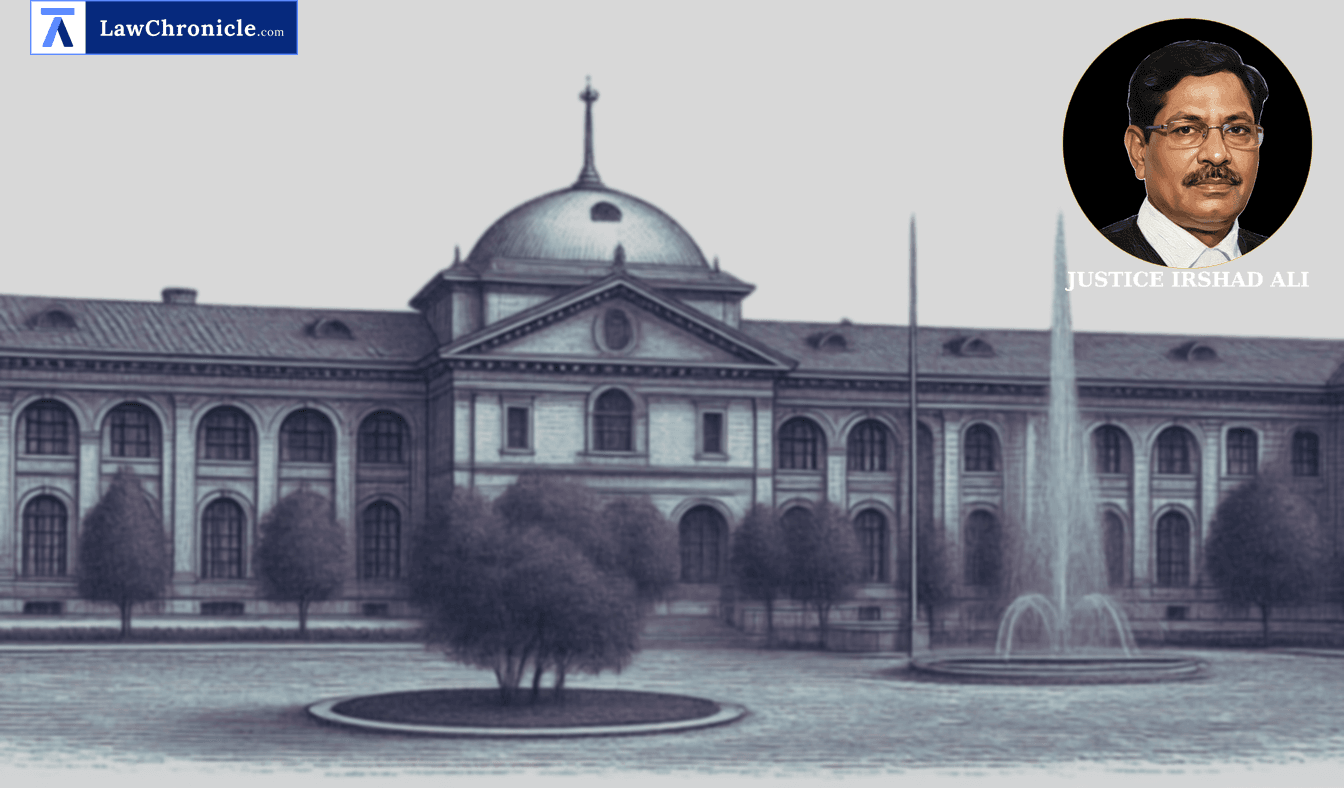
The Allahabad High Court has fortified the distinction between the statutory registration of documents and the final adjudication of proprietary titles, ruling that a Registrar's direction to register a disputed agreement under the Registration Act, 1908 does not amount to a judicial decree of specific performance.
In a verdict delivered by Justice Irshad Ali, the Lucknow Bench dismissed a challenge against an order directing the registration of a 1989 agreement to sell, emphasizing that writ courts will not ordinarily interfere with factual findings supported by attesting witnesses and expert handwriting analysis.
Key Takeaways
Jurisdictional Boundaries Defined
Determinations regarding the execution of a document by registering authorities are limited to the statutory scheme of the Registration Act, 1908 and do not constitute a plenary adjudication of title.
Evidentiary Weight of Expert Opinion
Findings of a Registrar supported by marginal witnesses and handwriting experts are considered 'relevant material' that precludes interference under Article 226 of the Constitution of India.
Civil Remedies Remain Intact
Registration of an instrument does not operate as a decree for specific performance; substantive rights concerning fraud or consideration must be resolved in pending civil suits.
Limitation and Substitution
Long-term participation in proceedings after an interlocutory substitution order effectively waives the right to challenge such procedural lapses in a subsequent writ petition.
Registrar's Mandate on Disputed Execution
The Allahabad High Court scrutinized the statutory scheme contained in Sections 35, 71, 72, 73, and 75 of the Registration Act, 1908. It was observed that when a Sub-Registrar refuses registration based on a denial of execution, the aggrieved party’s remedy is to approach the Registrar to establish the document's validity for the limited purpose of registration.
The Allahabad High Court observed that "The statutory scheme contained in Sections 71 to 75 of the Registration Act has to be examined as a whole and the substance of the proceedings, the order passed by the registering authority and the jurisdiction exercised by the appellate authority have to be considered together... Even assuming that there was some defect in the description or reference to the statutory provision under which the proceedings were initially instituted, such defect by itself would not render the ultimate order void unless the petitioners establish that the authority lacked substantive jurisdiction."
Impact on Proprietary Rights and Civil Litigation
The bench highlighted that while the petitioners alleged the document was a result of fraud and misused signatures, these were 'essentially disputed questions of fact' that required a full-fledged trial. Since the parties had already invoked the jurisdiction of the Civil Court through suits for specific performance and cancellation, the Allahabad High Court refused to act as a court of first instance.
The Court has following directions:
"It is expected that the learned Court concerned shall make all endeavour to conclude the said proceedings expeditiously, preferably within a period of eight months from the date of appearance of the parties and certified copy of this order... It is made clear that the said proceedings shall be decided strictly on their own merits and in accordance with law."
Ratio
An order passed by a Registrar directing the registration of a document under the Registration Act, 1908, after satisfying itself of the execution through witnesses and expert evidence, is an administrative-statutory function. Such an order does not possess the status of a judicial decree and does not adjudicate upon the ultimate validity, enforceability, or title of the property, which remain subject to the independent determination of a competent Civil Court.
Background
The dispute originated from an alleged Agreement to Sell dated April 30, 1989, involving 14 plots in Faizabad. The petitioners’ father, late Chotey Lal (a member of the Scheduled Caste), allegedly executed the agreement in favor of a business trust. After the Sub-Registrar refused registration in 1990 following Chotey Lal's denial of execution, an appeal was filed under Section 72 of the Registration Act, 1908.
During the protracted litigation, Chotey Lal passed away, and his heirs (the petitioners) were substituted. They argued that the document was fabricated on blank stamp papers obtained for a loan. However, the District Registrar in 2017 allowed the appeal, relying on the testimony of marginal witnesses and a handwriting expert's report. The Allahabad High Court affirmed this order but clarified that it does not extinguish the rights of an intervenor who purchased a portion of the land in 1992 via a registered deed.
Case Details:
Case No.: WRIT - C No. - 11162 of 2017
Neutral Citation: 2026:AHC-LKO:75352
Case Title: Rajendra Kumar and another Versus State of U.P. Thru Secy.Tacation and Registration Lko. and Ors.
Appearances:
For the Petitioner(s): Anurag Srivastava, Jyotindra Prakash Pathak, Laxmi Kant Pathak, Mohammad Danish, Mohd. Mansoor
For the Respondent(s): C.S.C., Anit Vishal Srivastav, Mohammad Ehtesham Khan, Pooja Pandey, Pradeep Kumar Singh
Source: 2026 CaseBase(ALL) 1219
Similar Articles


 Breaking News


