


Allahabad High Court Commutes Death Sentence to Life in Fourfold Murder Case
 Copy Link
 Share
 Save
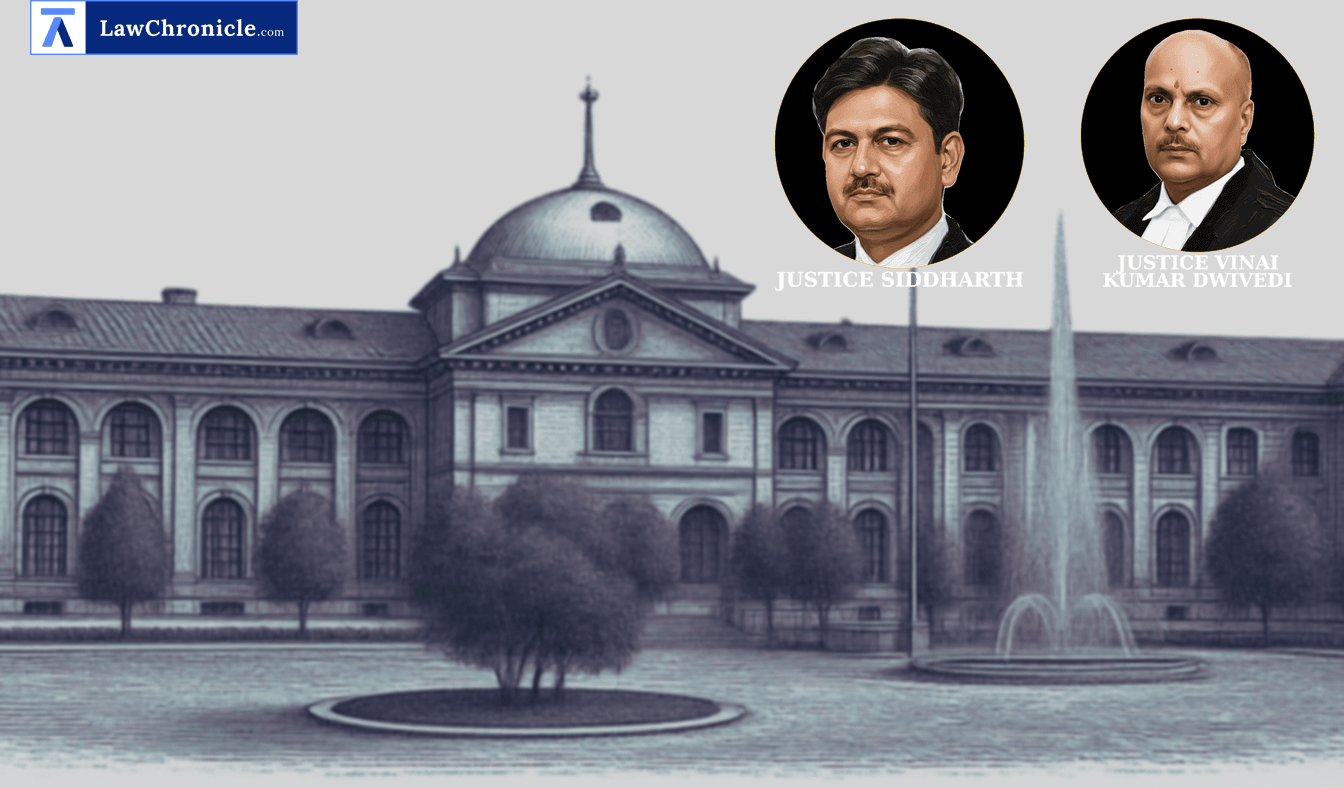
The Allahabad High Court has commuted the death sentences of three individuals convicted for a brutal 2012 quadruple murder, ruling that the use of bamboo sticks rather than lethal firearms or sharp-edged weapons, coupled with a lack of criminal history, removes the case from the 'rarest of rare' category. The Court emphasized that while the crime was heinous, the legal threshold for capital punishment requires a meticulous balance of aggravating and mitigating factors which the trial court failed to adequately document.
A division bench comprising Justice Siddharth and Justice Vinai Kumar Dwivedi adjudicated upon the capital appeals and the reference for confirmation of the death penalty. The bench scrutinized the nature of the assault, which occurred over a land dispute involving a graveyard, ultimately determining that life imprisonment would better serve the ends of justice while maintaining the convictions under the Indian Penal Code, 1860.
Key Takeaways
Weapons and Intent Analysis
Execution of a crime using 'kaccha' bamboo sticks found on-site rather than pre-planned lethal weaponry can serve as a mitigating factor in sentencing, even in multi-victim homicides.
Mandatory Sentencing Balance Sheet
Trial courts are duty-bound to prepare a formal balance sheet of aggravating and mitigating circumstances before awarding the death penalty, failing which the sentence is liable to be set aside.
Vicarious Liability under Unlawful Assembly
Mere membership in an unlawful assembly is sufficient for conviction under Section 149 of the Indian Penal Code, 1860, regardless of whether a specific overt act is assigned to every accused.
Reliability of Injured Witnesses
Minor contradictions in testimony due to trauma or prolonged cross-examination do not invalidate the evidence of injured eyewitnesses whose presence at the scene is medically established.
Rarest of Rare Case and Sentencing Principles
The Allahabad High Court observed that capital punishment is an exception and life imprisonment remains the rule. In evaluating the trial court's decision, the bench noted that the lower court had erroneously categorized the case as 'rarest of rare' simply based on the number of fatalities without assessing the reformative potential of the accused or the lack of professional criminal background. The Bench highlighted that “The learned Sessions Judge, Varanasi, without keeping in mind the aforesaid legal aspects and contrary to the settled principles of law, has erroneously categorized the present case under the category of the rarest of rare cases and awarded the death sentence to the appellants... sentencing the appellants to imprisonment for life would serve the ends of justice far better than awarding them capital punishment.”
Ratio
To categorize a crime as the 'rarest of rare' for the imposition of the death penalty, the court must demonstrate through a detailed balance sheet that the accused poses a permanent menace to society, considering factors such as the nature of the weapon used, the premeditation involved, and the absence of mitigating criminal history. Membership in an unlawful assembly, as defined under Section 149 of the Indian Penal Code, 1860, creates vicarious liability for all members for acts committed in prosecution of the common object, even without specific overt acts by each individual.
Background
The dispute originated on June 16, 2012, at the Baba Rahim Shah Mazar in Varanasi, involving a conflict over graveyard land. The appellants were accused of mercilessly assaulting the informant’s family and a graveyard worker with bamboo sticks, resulting in four deaths and one severe injury leading to vision loss. The Trial Court had convicted the primary appellants under Section 302 of the Indian Penal Code, 1860 and sentenced them to death, while sentencing another family member, Smt. Shakeela, to life imprisonment.
On appeal, the Allahabad High Court relied on Virsa Singh v. State of Punjab ( "AIR 1958 SC 465": 1958 CaseBase(SC) 94) and Suresh Sitaram Surve v. State of Maharashtra ( "(2002) 10 SCC 28": 2002 CaseBase(SC) 556) to affirm that the testimony of injured witnesses is highly credible and should not be discarded due to minor discrepancies. However, referring to Bachan Singh v. State of Punjab ( "AIR 1980 SC 898": 1980 CaseBase(SC) 231) and Machhi Singh v. State of Punjab ( "(1983) 3 SCC 470": 1983 CaseBase(SC) 271), the Court distinguished this case from those requiring the death penalty. While the bench dismissed the appeal of Smt. Shakeela, it partially allowed the appeal of the three death convicts by commuting their sentences to life imprisonment. The Allahabad High Court also discussed the principles of 'falsus in uno, falsus in omnibus' by referencing Gurcharan Singh and Another v. State of Punjab ( "(1955) 2 SCC 424": 1955 CaseBase(SC) 18) and Nisar Ali v. State of Uttar Pradesh, clarifying that the acquittal of one co-accused (Iqbal Rain) does not necessitate the acquittal of others if the evidence against them is trustworthy.
Case Details:
Case No.: CAPITAL CASES No. - 20 of 2022 with Reference No. 15 of 2022 and Criminal Appeal No. 8766 of 2022
Case Title: Amzad and 2 others Versus State of U.P.
Appearances:
For the Petitioner(s): Arvind Kumar Singh, Devesh Vikram, Dinesh Kumar, Gaurav Kakkar (Senior Counsel), Raghvendra Prakash
For the Respondent(s): Thakur Azad Singh (A.G.A.)
Source: 2026 CaseBase(ALL) 1361
Similar Articles

 Breaking News


