


Amicable Settlement Of Non-Heinous Offenses Grounds For Quashing Criminal Proceedings: Kerala HC
 Copy Link
 Share
 Save
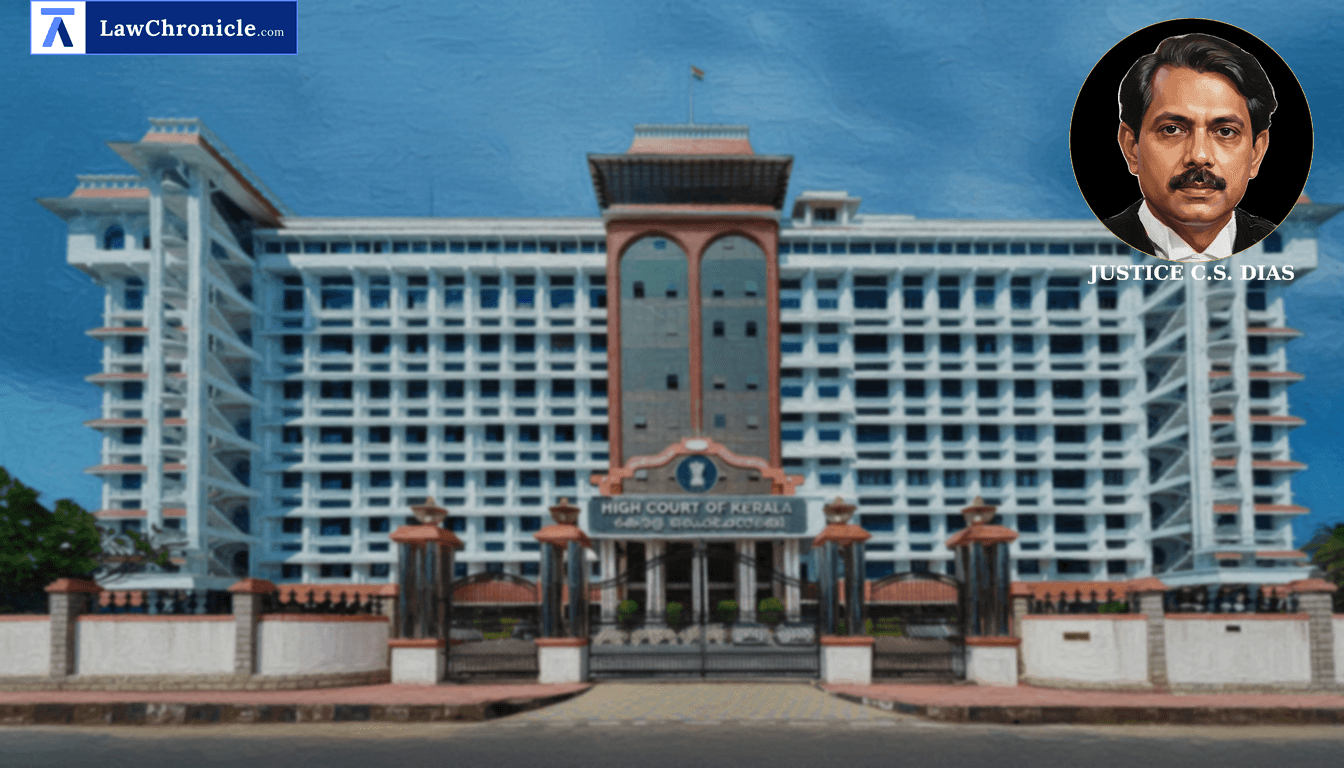
The High Court of Kerala has reinforced the principle that criminal proceedings arising from non-heinous offenses can be quashed when parties reach a bona fide settlement, preventing the judicial process from being unnecessarily burdened by resolved private disputes. By invoking its inherent powers, the court underscored that restoring harmony between parties outweighs the utility of pursuing remote convictions in cases lacking public interest.
A single-judge bench comprising Justice C.S. Dias presided over the petition seeking to quash proceedings pending before the Judicial First Class Magistrate-I, Varkala. The court was considering a challenge to the prosecution initiated under the Bharatiya Nyaya Sanhita, 2023, where the accused and the de facto complainant had voluntarily entered into a settlement.
Key Takeaways
Judicial Economy Over Futile Prosecution
Quashing proceedings in settled matters prevents the waste of judicial resources when the chances of conviction are remote due to the complainant's refusal to support the case.
Restoration of Social Harmony
Priority is given to the amicable resolution of disputes between private parties to restore peace and promote long-term harmony in the community.
Non-Heinous Offense Threshold
Inherent powers to quash based on settlement are strictly reserved for offenses that are not grave, heinous, or of a serious nature involving societal concern.
Criteria for Quashing Settled Criminal Cases
The court emphasized that the inherent jurisdiction of the High Court, as provided under Section 528 of the Bharatiya Nagarik Suraksha Sanhita, 2023, is designed to secure the ends of justice. It noted that when a dispute is primarily private and the parties have resolved their differences with the help of well-wishers, the continuation of criminal trial serves no fruitful purpose. The bench relied on the benchmarks established in Gian Singh v. State of Punjab ( "(2012) 10 SCC 303": 2012 CaseBase(SC) 854) and State of Madhya Pradesh v. Laxmi Narayan and Others ( "(2019) 5 SCC 688": 2019 CaseBase(SC) 1963), which define the scope of quashing proceedings post-settlement.
The Court has the following directions:
"In the result, the Crl. M.C. is allowed. Accordingly, Annexure A1 FIR, Annexure A2 final report and all further proceedings in C.C. No. 302/2026 of the Trial Court, as against the petitioners, are hereby quashed."
The Court, in its reasoning, observed: "On an overall consideration of the facts and circumstances of the present case, and the materials on record, I am satisfied that: the offences alleged are not heinous or of a serious nature; no public interest or element of societal concern is involved; the chances of conviction are remote in view of the settlement; and the continuation of the proceedings would merely burden the judicial process without advancing the cause of justice. Furthermore, the settlement would promote harmony between the parties and restore peace."
Ratio
Where the alleged offenses are not of a heinous or serious nature and do not involve public interest, the High Court may invoke its inherent powers under Section 528 of the Bharatiya Nagarik Suraksha Sanhita, 2023 to quash criminal proceedings if the parties have reached a genuine settlement, as the continuation of such proceedings would be an exercise in futility and a burden on the judicial system.
Background
The case originated from Crime No. 1274/2025 of Ayiroor Police Station, Thiruvananthapuram, involving allegations under Sections 115, 126(2), 296(b), and 351 read with Section 3(5) of the Bharatiya Nyaya Sanhita, 2023. The petitioners, four individuals, moved the High Court seeking to quash C.C. No. 302/2026 after the third respondent (the de facto complainant) filed an affidavit affirming a settlement. The State, represented by the Public Prosecutor, confirmed through the Investigating Officer that the settlement was bona fide and voiced no objection to the quashing of the case. Citing precedents like Naushey Ali v. State of U.P. ( "(2025) 4 SCC 78": 2025 CaseBase(SC) 363), the court concluded that this was a fit case for intervention.
Case Details:
Case No.: CRL.MC NO. 7240 OF 2026
Neutral Citation: 2026:KER:75472
Case Title: Mubbarak & Others v. State of Kerala & Others
Appearances:
For the Petitioner(s): Sri. R. Rajesh (Varkala), Sri. Manu Ramachandran, Sri. M. Kiranlal, Shri. Sameer M Nair, Shri. Suraj T.N., Smt. Jhancy P. George, Shri. Joseph T. Koottakkara, Shri. Kezil Thottukadavil Cherian
For the Respondent(s): Shri. Sabikh Mohammed V.S. (For R3), Sri. Dalbi Emmanuel P. (Public Prosecutor)
Source: 2026 CaseBase(KER) 23806
Similar Articles
 Breaking News


