Amnesty Scheme No Shield for Inertia: Bombay HC Backs SRA Tenders Over Stalled Projects
 Copy Link
 Share
 Save
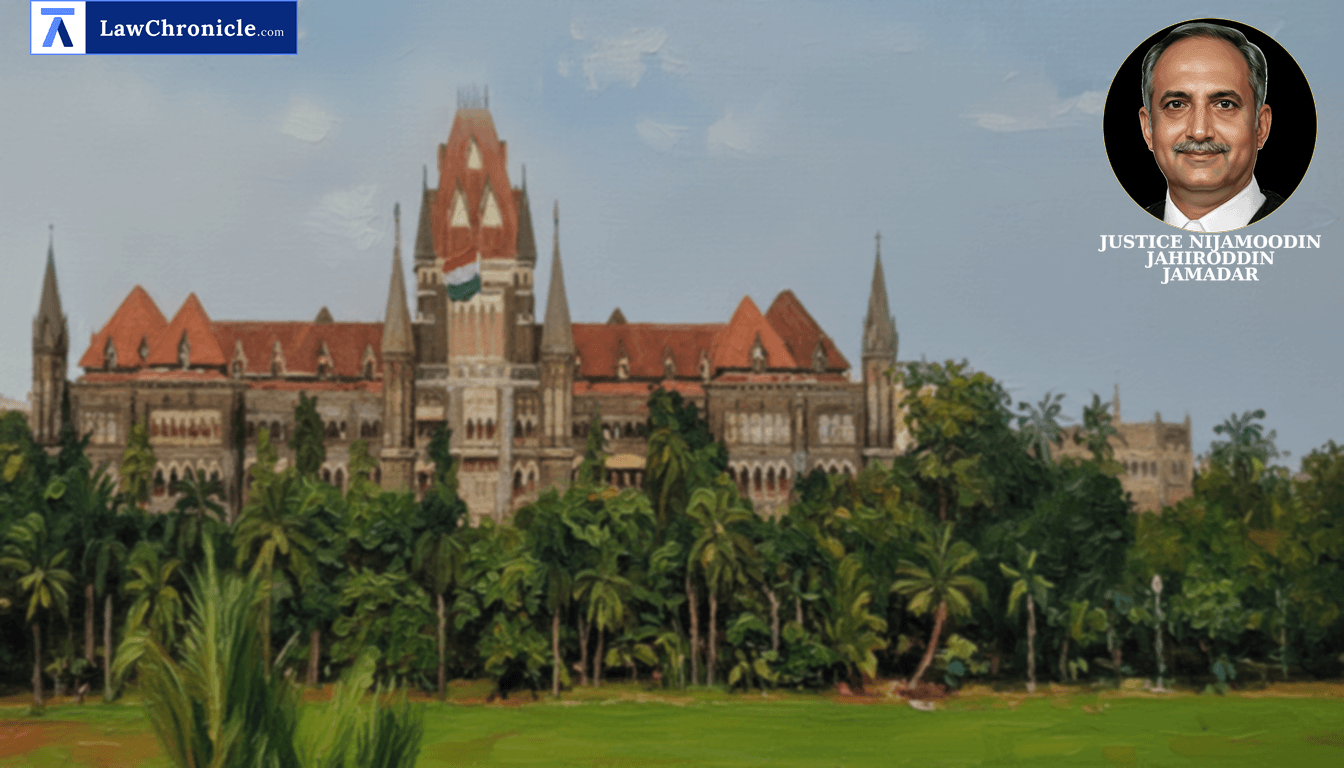
In a decisive check on financial institutions' misuse of rehabilitation policies, the Bombay High Court has ruled that amnesty benefits for stalled slum projects are contingent on time-bound execution, clearing the path for the State to terminate non-performing lenders and float fresh tenders to rescue thousands of dishoused citizens.
Justice N.J. Jamadar, presiding over the Constitution of India, 1950 petition, dismissed the challenge brought by financial entities, asserting that the right to livelihood under Article 21 of the Constitution of India, 1950 overrides the commercial interests of lenders who fail to appoint developers or clear mounting transit rent arrears.
Key Takeaways
Amnesty Scheme Not a Vested Right
Lenders cannot claim an indefinite right to control stalled projects under amnesty schemes if they fail to meet rehabilitation timelines or rent obligations.
AGRC’s Referral Jurisdiction Validated
The Court confirmed that the Apex Grievance Redressal Committee (AGRC) has broad powers to hear matters referred by the State Government, extending beyond its traditional appellate role.
Livelihood Over Commercial Interest
The implementation of slum rehabilitation schemes is a public purpose task tied to the right to life, not a mere real estate development exercise for private profit.
Insolvency No Bar to Project Rescue
Pending proceedings before the NCLT cannot be used as an excuse to keep slum dwellers in limbo or delay the appointment of competent developers.
Court Observations and Directions
The Bombay High Court explained that "The Slum Act, 1971 is certainly not envisaged as a vehicle for the advancement of the private interests of the developers, or for that matter, the financial institutions who advance financial facilities to the developers. The protection of the commercial interests of the owners, developers and the financial institutions is not the object of the Slum Act, 1971, though in the implementation of the SR schemes private parties may reap financial benefits."
Addressing the plight of the slum dwellers, the Bombay High Court emphasized that the State cannot remain a spectator when projects involving thousands of families are derailed. Relying on Tulsiwadi Navnirman Co-op. Hsg. Soc. Ltd. V/s. State of Maharashtra and Ors. and Galaxy Enterprises v/s. State of Maharashtra and Ors., the Court reiterated that the Slum Rehabilitation Authority (SRA) is duty-bound to ensure timely completion. The Bench further noted that even when lenders invoke the SARFAESI Act, 2002, such statutory frameworks do not absolve them of obligations under the Slum Act.
Ratio
The Apex Grievance Redressal Committee (AGRC) possesses the statutory competence under Section 34A(2)(ii) of the Slum Act, 1971 to act as a referral body for the State Government to address project delays. Financial institutions availing of amnesty benefits for stalled schemes are under a mandatory obligation to ensure the payment of transit rent and the timely appointment of developers; failure to do so justifies the withdrawal of such benefits and the initiation of fresh tendering processes by the SRA.
Background
The dispute centered on one of Mumbai’s largest slum rehabilitation projects, involving nearly 7,200 eligible dwellers. The project had been stalled since 2018, with transit rent arrears exceeding Rs. 90 Crores. The petitioner, an Asset Reconstruction Company, had acquired the debt under the SARFAESI Act, 2002 and sought to implement the project under a State-issued amnesty scheme from 2022.
However, the newly appointed developer backed out, and the petitioner sought repeated extensions, citing pending insolvency proceedings. The AGRC, acting on a reference from the State Government, recommended withdrawing the petitioner's benefits and allowing the SRA to find a new developer. The petitioner challenged this as being beyond the AGRC’s jurisdiction and a violation of natural justice. The Bombay High Court rejected these contentions, finding that the petitioners had been given sufficient notice and had failed to demonstrate a genuine intent to prioritize the rehabilitation of the slum dwellers over their own value-maximization goals.
Case Details:
Case No.: WRIT PETITION NO.8052 OF 2026
Case Title: JC Flowers Asset Reconstruction Pvt. Ltd. v. State of Maharashtra and Ors.
Appearances:
For the Petitioner(s): Mr. Rohan Savant with Ms. S. Choudhary, Mr. Mihir Utekar i/by Dhaval Vussonji and Associates; Prakhar Tandon with Mr. Agnel Carneiro, Mr. Tushar Cooper i/by Mulla and Mulla and Craigie Blunt and Caroe.
For the Respondent(s): Mr. P.V.Nelson Rajan, AGP for State; Mr. Bhushan Deshmukh with Ms. Ravleen Sabharwal, Ms. Dharani Divekar i/by R.S.Justicia Law Chambers for SRA; Mr. Jagdish G. Aradwad (Reddy) for Respondent No.4 – AGRC.
Source: 2026 CaseBase(BOM) 7149
Similar Articles




 Breaking News