


Andhra Pradesh HC: Debt Suit Needs No Succession Certificate; Limitation Starts When Due
 Copy Link
 Share
 Save
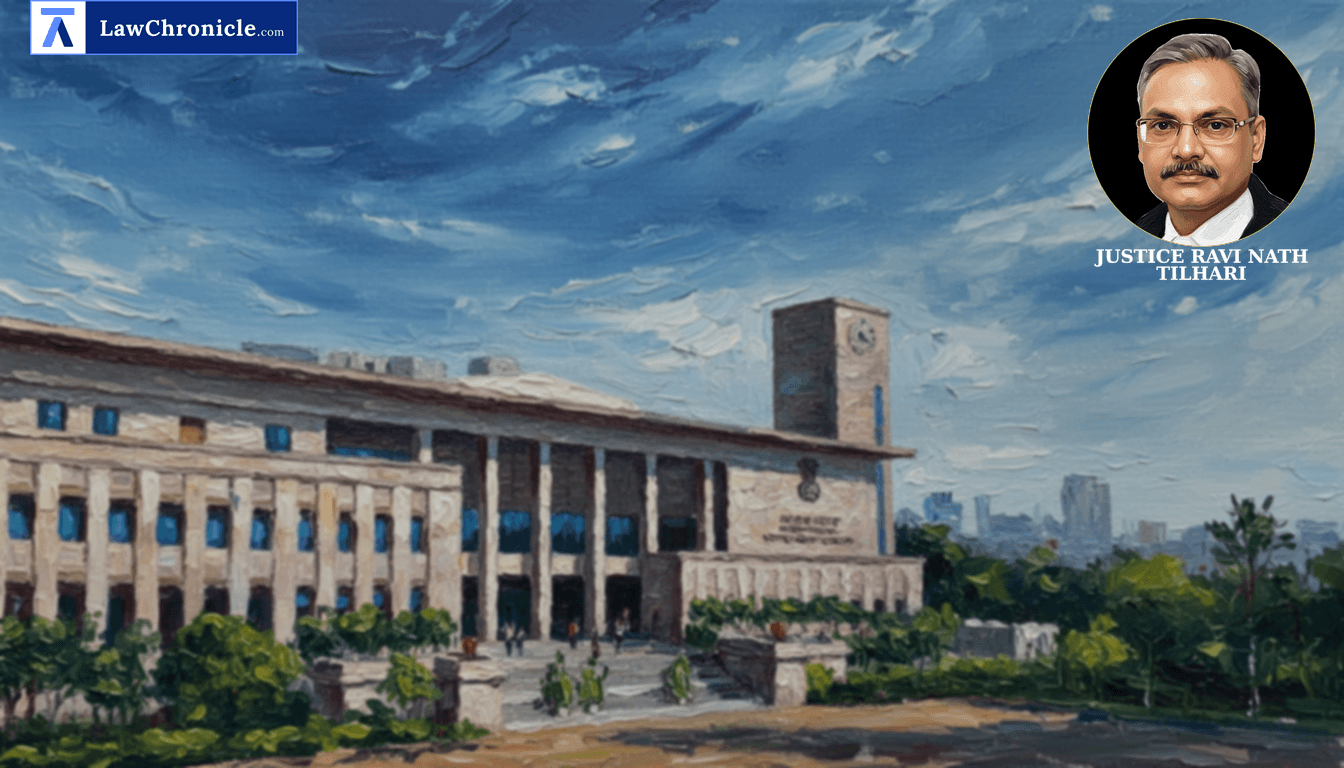
A bench of Justice Ravi Nath Tilhari heard a civil revision petition challenging an order dated 15.07.2025 which rejected an application under Order VII Rule 11(a) and (d) read with Section 151 of the Code of Civil Procedure, 1908 filed in O.S. No. 1225 of 2017, where the defendant sought rejection of the plaint on the grounds of limitation and for want of a succession certificate.
The Court delivered a concise holding that the suit was not liable to be rejected on either ground. The Court, in its reasoning, observed: "A bare reading of Section 214 of the Indian Succession Act shows, that the bar thereunder is not for institution of the suit, but (a) for passing of a decree and (b) for execution of decree. Section 214 therefore, does not bar filing or institution of a suit by the legal heirs or representatives of the deceased against the debtor. So, filing of the suit is not barred without a succession certificate by Section 214 of the Indian Succession Act." The judge held that production of a succession certificate was a condition for passing or executing a decree and not a condition precedent to institute or try a suit. The court further held that Article 62 of the Limitation Act, 1963 began to run when the money became due under the deed and not from the date of execution.
The Court explained that it relied on precedent to delineate the scope of Section 214 of the Indian Succession Act, 1925 and the timing principle under Article 62 of the Limitation Act, 1963. In particular, the decision in Virbhadrappa Shilvant Shop at Barsi v. Shekabai Kom Harun Sayad Ahmed Arab was relied on to show that failure to produce a certificate at the time of institution did not invariably defeat the claim and that a certificate could be produced before decree; Murji Asu v. Shamji Mavji was relied on for the proposition that Section 214 prohibited passing a decree but did not bar trial; and Bai Sarda v. Patel was relied on to underline that Section 214 required production of a succession certificate before decree and that dismissal for non-production at the plaint stage was inappropriate. For the limitation point, the Full Bench decision in Mohammad Hussai v. Sanwal Das was relied on to hold that limitation began to run after expiry of a stipulated period in the instrument, and Prem Chand v. Mohammad Sayeed was cited to reinforce that the period under the Limitation law commenced when the money became due and not from the date of execution of the mortgage deed.
Background
The dispute arose from a suit for recovery of money and consequential decree for sale based on a registered mortgage deed dated 26.02.2004, which provided a contractual period of two years for repayment. The defendant filed an application under Order VII Rule 11(a) and (d) of the Code of Civil Procedure, 1908, contending that the plaint was barred by limitation and that the plaintiffs, who claimed as heirs of the deceased mortgagee, had not produced a succession certificate under Section 214 of the Indian Succession Act, 1925. The trial court recorded that the deed itself provided that the principal and interest were payable within two years and held that the suit filed on 11.10.2017 fell within twelve years counted from the date the money became due. The plaint averred that "(b) …………….The defendant also agreed to pay the entire amount within two years from the date of execution of the mortgage deed….." and the mortgage deed recited: “………Accordingly, I will fully discharge all the liabilities of this property, the amount due, my own liabilities, and the liabilities of other properties belonging to me for a period of two years from this date…..” The High Court agreed with the trial court on both points: it held that Section 214 of the Indian Succession Act, 1925 did not bar institution or trial of the suit and that, on the plaint averments, the period of limitation under Article 62 of the Limitation Act, 1963 began when the money became due after the two year period, making the suit filed on 11.10.2017 within limitation. The court concluded that the plaint was not liable to be rejected under Order VII Rule 11(d) of the Code of Civil Procedure, 1908 and dismissed the civil revision petition as devoid of merit, granting no costs and closing pending miscellaneous petitions.
Case Details:
Case No.: CIVIL REVISION PETITION No.2425 of 2025
NeutralCitation: 2026:APHC:36831
Case Title: G. Chaya Padmini v. Mutta Lakshmi Narasamma and 3 others
Appearances:
For the Petitioner(s): M. S. V. S. Sudha Rani
For the Respondent(s): None appeared
Source: 2026 CaseBase(AP) 114
Similar Articles



 Breaking News


