


Andhra Pradesh HC Uses Order 41 Rule 33 To Enhance Compensation Despite No Cross Appeal
 Copy Link
 Share
 Save
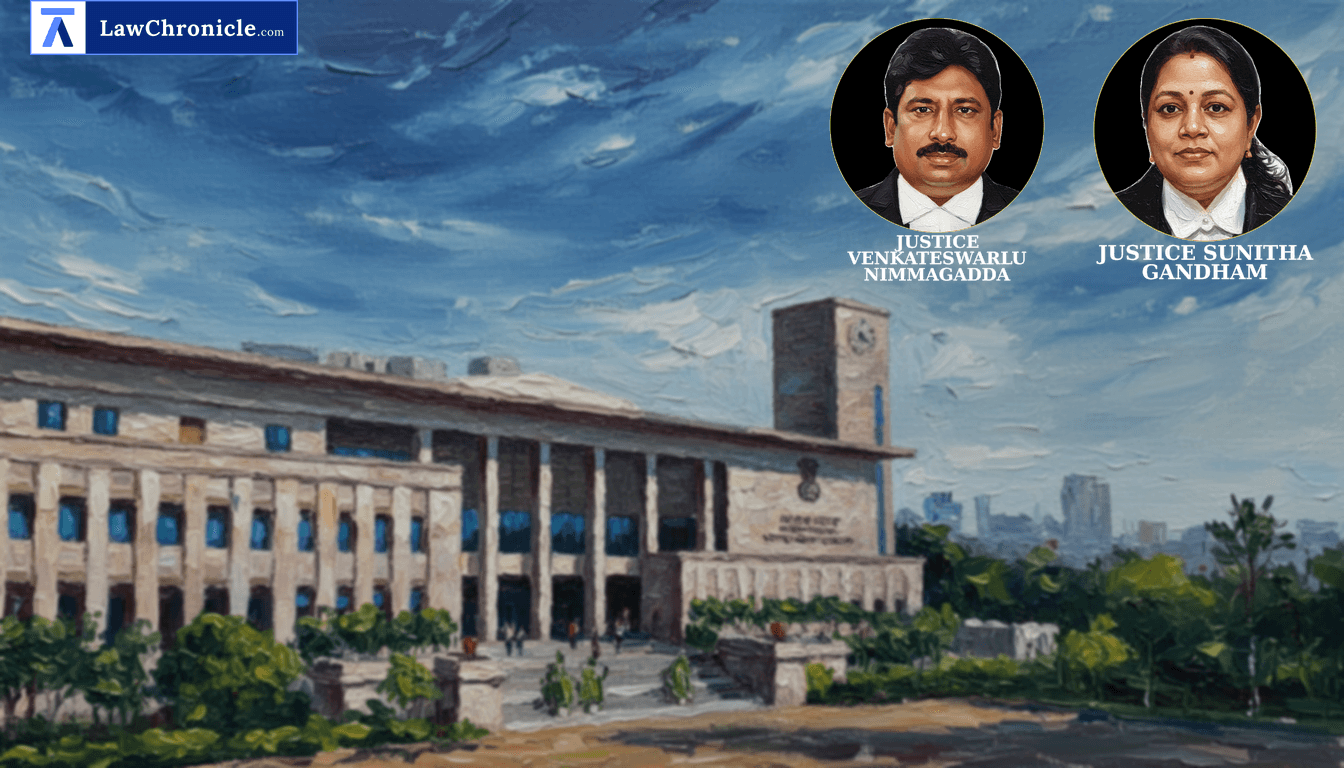
The High Court of Andhra Pradesh has reinforced the principle that victims of motor accidents must receive 'just and fair' compensation, asserting its power to enhance tribunal awards even in the absence of a cross-appeal or independent challenge by the claimants. In a decisive move against hyper-technical procedural barriers, the Court ruled that appellate powers under the Code of Civil Procedure, 1908 must be invoked to ensure substantial justice in insurance claims.
In a judgment delivered by Justice Sunitha Gandham, the Court heard an appeal filed by the Andhra Pradesh State Road Transport Corporation (APSRTC) challenging a Motor Accident Claims Tribunal (MACT) award. The primary issue revolved around whether the compensation of Rs. 10,00,000/- awarded for the death of a 23-year-old electrician was sustainable and whether the Court could enhance this amount while hearing an appeal filed by the insurer for reduction.
Key Takeaways
Just Compensation Over Procedure
Technicalities like the failure to file a cross-appeal cannot prevent the Court from awarding 'just and fair' compensation to accident victims.
Inherent Appellate Powers
Under the Code of Civil Procedure, 1908, the High Court as a final fact-finding body possesses the authority to re-examine the entire case on both facts and law.
Retrospective Application of Precedents
Judicial precedents concerning compensation assessment apply retrospectively unless the Supreme Court explicitly mandates prospective application.
Employer Liability
Public transport corporations are vicariously liable for the rash and negligent acts of their drivers, regardless of minor disputes over the involvement of other vehicles.
Court's Rationale on Just Compensation
The Court observed that even though the petitioners had not preferred an appeal for enhancement, the appellate court is under an obligation to award a figure that is fair and reasonable. Relying on the principles in Sharanamma & Others v. Divisional Controller, North-East Karnataka Road Transport Corporation and Surekha v. Santhosh ( "(2021) 16 SCC 467": 2020 CaseBase(SC) 1026), the bench noted that the Motor Vehicles Act is a beneficial piece of legislation that should not be interpreted through a hyper-technical lens.
The Court has the following directions:
"(i) In the result, and in view of the findings in point Nos.1 to 3, this Motor Accident Civil Miscellaneous Appeal is dismissed, however, modifying the Order of the learned Tribunal in respect of the amount of compensation from Rs.10,00,000/- to Rs.12,72,000/- (Rupees Twelve Lakhs Seventy Two Thousand Only) and awarded the same to the petitioners with interest thereon at 7.5% per annum simple from the date of petition till the date of payment of realization recoverable by the petitioners from respondent.
(ii) Out of the said compensation amount, an amount of Rs.5,00,000/- (Rupees Five Lakhs Only) is awarded to the petitioner No.1, Rs.5,72,000/- (Rupees Five Lakhs Seventy Two Thousand only) is awarded to the petitioner No.2 and Rs.50,000/- each is awarded to the petitioner Nos.3 to 6.
(iii) The compensation amount, as aforesaid, with interest, excluding the amount, if any, already deposited shall be deposited within (02) two months, from the date of receipt of this judgment.
(iv) On such deposit, all the petitioners are permitted to withdraw their shares of compensation as awarded supra along with accrued interest thereon, excluding the amount, if any, already paid."
The Court, in its reasoning, observed: "it is well settled that in the matter of insurance claim compensation in reference to the motor accident, the court should not take hyper technical approach and ensure that just compensation is awarded to the affected person or the claimants. So, in the absence of any appeal or cross objections in respect of quantum of compensation, this Court is under obligation to award just and fair compensation."
Ratio
The High Court, acting under Section 173 of the Motor Vehicles Act, 1988 read with Order 41 Rule 33 of the Code of Civil Procedure, 1908, has the power and duty to enhance a compensation award to make it 'just', even if the claimants have not filed an appeal or cross-objection against the original award.
Background
The dispute arose from a fatal road accident on December 1, 2015. The deceased, N. Sreenath Reddy, was standing near a tractor when an APSRTC bus driven in a rash and negligent manner dashed the tractor, causing it to hit the deceased. A criminal case was registered under Section 304-A of the Indian Penal Code. The Tribunal initially awarded Rs. 10,00,000/-. The APSRTC appealed, claiming the negligence lay with the tractor driver and that the compensation was excessive.
The High Court scrutinized the evidence, including the testimony of PW.2 and the police reports. It found that the non-examination of the bus driver by the corporation was fatal to their defense. Following the settled multiplier and future prospects rules from Sarala Varma and Others Vs. Delhi Transport Corporation and another and National Insurance Company Ltd Vs. Pranay Sethi and others ( "(2017) 6 SCC 680": 2017 CaseBase(SC) 551), and applying the retrospective principle from Government of India and another v. Sri Devarj Medical College, the Court re-calculated the dependency. Using its powers under Order 41 Rule 33 of Code of Civil Procedure, 1908, as supported by National Insurance Company Limited rep. By its Branch Manager v. Susheelamma and Others, the Court dismissed the Corporation's appeal and enhanced the compensation to Rs. 12,72,000/-.
Case Details:
Case No.: Motor Accident Civil Miscellaneous Appeal No: 2294/2017
Neutral Citation: 2026:APHC:46876
Case Title: United India Insurance Co. Ltd. V. Sanam Rajasekhara Reddy And Another
Appearances:
For the Petitioner(s): Medapati Santosh Reddy
For the Respondent(s): Surepalli Madhava Rao
Source: 2026 CaseBase(AP) 19889
Similar Articles
 Breaking News


