


"Arbitration, though rhymes with it, cannot result in an arbitrary measure": SC Restores Frozen Accounts
 Copy Link
 Share
 Save
Arbitration cannot be allowed to result in an arbitrary measure through biased appointments and drastic interim measures. In a decisive ruling, the Supreme Court held an entire arbitral proceeding non est in law after finding no record of consent for the unilateral appointment of a tribunal that subsequently issued severe ex-parte interim directions.
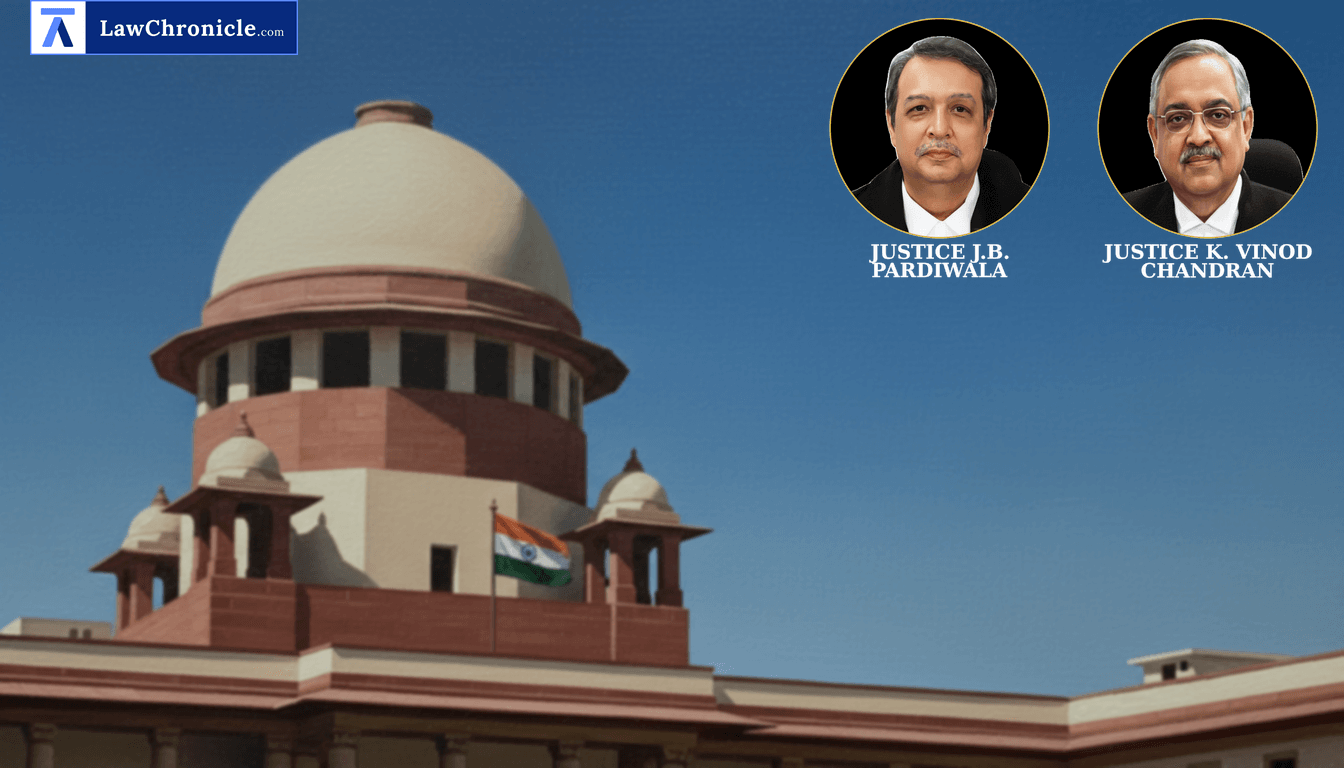
A Division Bench comprising Justice J.B. Pardiwala and Justice K. Vinod Chandran set aside a High Court decision that dismissed an appeal against arbitrary interim orders purely on grounds of limitation.
Key Takeaways
Biased Arbitral Appointments Voided
Unilateral or non-consensual appointment of an arbitral tribunal makes the initiation of arbitration non est in law.
Overreach of Interim Measures Quashed
Interim directions under Section 17 directing account freezes and property takeover without valid tribunal constitution are completely invalid.
Restitution and Heavy Interest Penalty
Siphoned funds must be returned immediately or attract a penal compound interest rate of 18% per annum.
Arbitrary in Arbitration
The Supreme Court while addressing the matter commented that “Arbitration, though rhymes with it, cannot result in an arbitrary measure, even in the appointment of an Arbitral Tribunal.” The Apex Court accordingly set aside the High Court order of initiation of arbitration to be non est in law as well as interim orders passed by the Arbitral Tribunal. The Bench further directed that "If the interim orders have been given effect to, then any amount deposited from the account of the appellants to the account of the respondent herein, shall be remitted back within a period of one week from today and the interest due on such amounts, the very appointment having been found to be non est in law, shall be one of the issues to be considered by the Arbitrator whom we intend to appoint. If the amounts are not remitted back as directed by us, then it would carry Compound Interest @18% from the date on which it was debited from the accounts of the appellants at monthly rests and the same shall be set off as against any claim found in favour of the respondent in Arbitration. Any attachment or takeovers of movable or immovable properties of the appellants shall also be set at naught and the same restored to the possession of the appellants. To facilitate resolution of the disputes, we direct that Ms. Mayuri Raghuwanshi, Advocate, be appointed as an Arbitrator. The Registry of this Court shall intimate the learned Arbitrator appointed by us. The learned Arbitrator shall issue notices to the parties in connection with the arbitral proceedings. The learned Arbitrator is free to determine her fee in consultation with the parties. We make it clear that we have expressed no opinion on the merits of the case, which aspect is left open for the parties to urge before the learned Arbitrator."
Ratio
Where an arbitral tribunal is appointed without demonstrating party consent and despite explicit allegations of bias, the very initiation of arbitration is non est in law, invalidating any interim orders issued under Section 17 of the Arbitration and Conciliation Act, 1996.
Background
Disputes arose between the appellants and the respondent bank out of an agreement containing an arbitration clause. The respondent bank allegedly appointed an Arbitral Tribunal, claiming it was done on consent. Upon receiving communication from the tribunal, the appellants promptly objected, highlighting that the tribunal had close links with the respondent bank.
Despite these objections, the tribunal proceeded to pass three interim orders under Section 17 of the Arbitration and Conciliation Act, 1996, directing the freezing of the appellants' bank accounts across multiple banks, authorizing the respondent bank to take over movable and immovable properties, and ordering the transfer of deposited funds to the respondent's account.
The appellants appealed these interim orders before the High Court under Section 37 of the Arbitration and Conciliation Act, 1996. However, the High Court dismissed the appeal solely on limitation grounds, noting the absence of an application to condone delay under Section 5 of the Limitation Act, 1963.
Upon hearing the matter, the Supreme Court found that there was no record to show consent for the tribunal's appointment. Considering the arbitrary nature of the interim orders passed despite raised allegations of bias, the apex court set aside the High Court's order, invalidated the interim directions, and substituted the tribunal with an independent arbitrator to resolve the underlying dispute.
Case Details:
Case No.: Civil Appeal No.13015 of 2026 (Arising out of SLP (C) No. 26596 of 2026)
Neutral Citation: 2026 INSC 1014
Case Title: Arth Micro Finance Private Ltd. And Ors. v. Shivalik Small Finance Bank Ltd.
Appearances:
For the Petitioner(s): Sri K. Parameshwar, Senior Counsel
For the Respondent(s): Sri Bishwajit Bhattacharyya, Senior Counsel
Source: 2026 CaseBase(SC) 7018
Similar Articles
 Breaking News


