


Arrest Is Not Necessary If Documentary Evidence Exists: Andhra Pradesh HC
 Copy Link
 Share
 Save
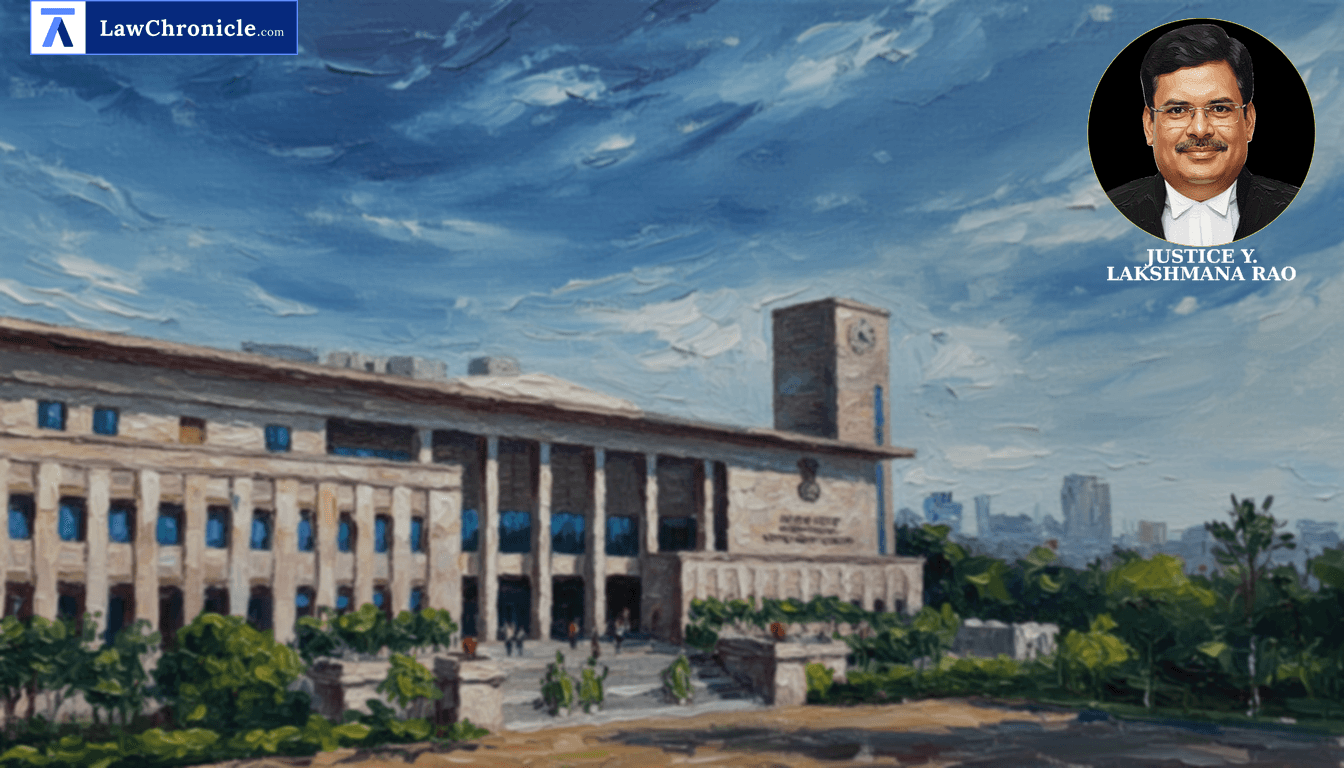
The Andhra Pradesh High Court has underscored the sanctity of personal liberty by ruling that custodial interrogation is not a mandatory prerequisite for investigation when documentary evidence is already available and the accused has demonstrated cooperation with the law. The court's intervention highlights a significant pushback against the execution of P.T. warrants and mechanical remands in financial fraud cases where the investigation has largely matured.
A single-judge bench of Justice Y. Lakshmana Rao adjudicated upon a bail petition filed under Sections 480 and 483 of the Bharatiya Nagarik Suraksha Sanhita, 2023. The petitioner, Kavala Venkata Narasimham, sought regular bail after being arrested in connection with a CID investigation involving allegations of loan fraud and corruption.
Key Takeaways
Curbing Mechanical Arrests
The Court reiterated that arrest is not a default necessity, especially when the case relies on documentary evidence that is already within the possession of the investigating agency.
Precedent on Financial Intent
By relying on Arshad Neyaz Khan v. State of Jharkhand ( "2025 LiveLaw (SC) 950": 2025 CaseBase(SC) 850), the court reinforced that a mere failure to repay or execute an agreement does not satisfy the test of dishonest inducement under Section 420 of the Indian Penal Code, 1860 without clear proof of fraudulent intent at the inception.
Procedural Compliance Over P.T. Warrants
The ruling serves as a reminder that even when a P.T. (Prisoner Transit) warrant is executed, the court must weigh the period of incarceration and the stage of investigation before extending judicial custody.
Court's Observations on Custodial Necessity and Investigation Stage
The Court observed that the petitioner had already spent 52 days in judicial custody and noted the specific procedural history where a coordinate Bench in Constitution of India proceedings had previously directed the police not to arrest the petitioner without following due process. The Court also took cognizance of the fact that 29 other accused individuals were deleted from the array by the prosecution itself, based on their lack of awareness regarding the loan sanctions.
The Court, in its reasoning, observed: "Having regard to the facts and circumstances of the case, the nature and gravity of the allegations levelled against the petitioner, the period of incarceration undergone by him and the stage of investigation, this Court is inclined to enlarge the petitioner/Accused No.1 on bail, subject to certain stringent conditions."
The Court further referred to the principle established in Siddharth v. State of U.P., noting that arrest is not necessary when there is documentary evidence and the charge sheet has been filed. It also noted the legal distinction between cheating and criminal breach of trust, citing Delhi Race Club (1940) Ltd. v. State of U.P. ( "(2024) 10 SCC 690": 2024 CaseBase(SC) 209) and Arshad Neyaz Khan v. State of Jharkhand ( "2025 SCC OnLine SC 2058": 2025 CaseBase(SC) 850) to emphasize that these two charges cannot coexist simultaneously.
The Court has following directions:
"i. The Petitioner/Accused No.1 shall be enlarged on bail subject to his executing a bond for a sum of Rs.5,00,000/- (Rupees Five lakhs only) with two sureties for the like sum each to the satisfaction of the learned Special Judge for Trial of Cases under the Prevention of Corruption Act, Rajamahendravaram.
ii. The Petitioner/Accused No.1 shall appear before the Station House Officer concerned, on every Saturday in between 10:00 am and 05:00 pm, till filing of the charge sheet.
iii. The Petitioner/Accused No.1 shall not leave the limits of the District without prior permission from the Station House Officer concerned.
iv. The Petitioner/Accused No.1 shall not commit or indulge in commission of any offence while on bail.
v. The Petitioner/Accused No.1 shall cooperate with the Investigating Officer in further investigation of the case and shall make himself available for interrogation by the Investigating Officer as and when required.
vi. The Petitioner/Accused No.1 shall not, directly or indirectly, make any inducement, threat or promise to any person acquainted with the facts of the case so as to dissuade him/her from disclosing such facts to the Court.
vii. The Petitioner/Accused No.1 shall surrender his passport, if any, to the Investigating Officer. If he claims that he does not have passport, he shall submit affidavit to that effect to the Investigating Officer."
Ratio
In financial crimes predominantly based on documentary evidence, the necessity of arrest is diminished if the accused has been incarcerated for a significant duration and the investigation is at an advanced stage. Furthermore, for an offense of cheating under the Indian Penal Code, 1860 to be made out, there must be evidence of fraudulent or dishonest intention at the time of making the promise, rather than a mere subsequent failure to fulfill a contractual or financial obligation.
Background
The case arose from Crime No. 22 of 2024 registered by the CID Police Station, Mangalagiri, involving allegations under Sections 420, 409, and 120-B of the Indian Penal Code, 1860, alongside Section 13(2) of the Prevention of Corruption Act, 1988. The prosecution alleged that the petitioner (Accused No. 1) had availed a loan of Rs. 6.5 Crores from a bank by utilizing 25 fictitious borrowers, with funds being routed to his and his wife's accounts.
The petitioner’s counsel argued that the petitioner was a law-abiding citizen and the sole breadwinner, contending that the arrest was unnecessary as the case was based on documents. The State, through the Assistant Public Prosecutor, opposed the bail, citing that the investigation was ongoing and material witnesses were yet to be examined. After considering that the petitioner had already secured pre-arrest bail in a related crime and had spent nearly two months in custody, the High Court allowed the petition with strict conditions.
Case Details:
Case No.: CRIMINAL PETITION NO: 7388/2026
Neutral Citation: 2026:APHC:41935
Case Title: Kavala Venkata Narasimham V. The State Of Andhra Pradesh
Appearances:
For the Petitioner(s): R Siva Sai Swarup
For the Respondent(s): Public Prosecutor
Source: 2026 CaseBase(AP) 17804
Similar Articles

 Breaking News


