


Arrest Without Fresh Material After Statutory Cooperation Constitutes Colourable Exercise Of Power: Bombay HC
 Copy Link
 Share
 Save
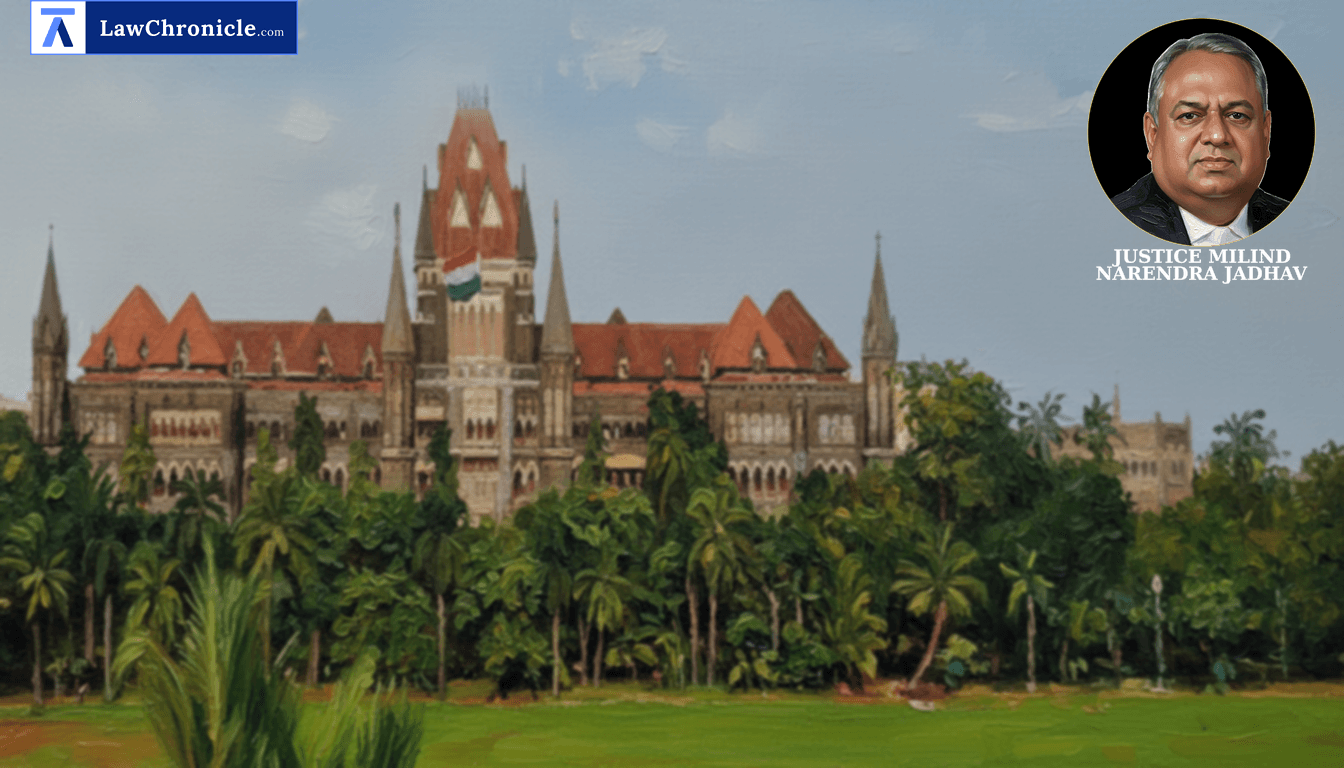
In a stern rebuke to executive overreach under money laundering laws, the Bombay High Court has quashed the arrest of an accused, ruling that the Directorate of Enforcement cannot bypass a judicial order for interrogation to effect a 'drastic' arrest based on old material already in its possession. The Bench held that when an agency chooses to invoke statutory powers to summon and confront a person, it cannot abruptly abandon that process to animate a new arrest without any fresh incriminating circumstances, as doing so would render the legal definition of investigation negatory.
A single-judge bench of Justice Milind N. Jadhav heard the writ petition challenging the legality of the arrest and subsequent remand orders. The Bombay High Court examined whether the Directorate of Enforcement (ED) could validly arrest an individual under Section 19 of the Prevention of Money Laundering Act, 2002 after having already sought and received judicial permission to record their statement under Section 50 of the same Act using the exact same material.
Key Takeaways
Precedence of Statutory Interrogation
If an agency invokes Section 50 of Prevention of Money Laundering Act, 2002 to confront a person with material, it cannot suddenly 'wish away' that process to effect an arrest unless fresh material surfaces.
Arrest is Not for Investigation
Power to arrest under Section 19(1) is a discretionary, drastic action and is not intended to be used merely as a tool to facilitate investigation or custodial interrogation.
Protection of Personal Liberty
The gravity of an offence does not deter the Court's power of judicial review to ensure that statutory and constitutional safeguards against arbitrary arrest are strictly maintained.
Colourable Exercise of Power
The Bombay High Court observed that the Petitioner had cooperated significantly, appearing 38 times over 18 months. It noted that the ED had previously moved an application under Section 50(2) and (3) to confront the Petitioner, which the Special Court had allowed. By arresting the Petitioner on the same material instead of completing the interrogation, the ED engaged in a 'colourable exercise of power'.
The Bench elaborated that “Once such an opinion was formed in writing and allowed by a judicial order, Respondent No.1 cannot proceed with arresting the Petitioner by supplying him the grounds of arrest invoking Section 19 on the basis of the very same material, which was the basis for forming the earlier opinion. This can only be justified if there is a supervening exigency or fresh material so incriminating in nature arisen or discovered in the interregnum such that the Petitioner is required to be arrested due to the same.”
Ratio
Power under Section 19(1) of the Prevention of Money Laundering Act, 2002 to arrest a person cannot be exercised on the basis of material already in the possession of the investigating agency when the agency has already opted to invoke the judicial process under Section 50(2) and (3) of the Act to confront the accused with that very same material, unless fresh incriminating evidence or supervening circumstances justify such an arrest.
Background
The case arose from an FIR registered in 2023 alleging the formation of shell entities and 269 mule bank accounts to remit foreign currency worth over Rs. 7,000 crores through forged documents. The Petitioner was alleged to be the mastermind behind this hawala network. While the ED contended that the Petitioner was evasive and had disposed of properties acquired through proceeds of crime, the Petitioner argued that he had consistently cooperated by appearing on 38 occasions for statement recording.
The Bombay High Court relied on Arvind Kejriwal Vs. Directorate of Enforcement ( "(2025) 2 SCC 248": 2024 CaseBase(SC) 105) and Radhika Agarwal Vs. Union of India ( "(2025) SCC OnLine SC 449": 2025 CaseBase(SC) 262) to emphasize that Section 19 contains exacting conditions and safeguards. It also referred to Deepak Singh Vs. Directorate of Enforcement regarding the necessity of arrest. The Bench ultimately found that since the ED had already obtained a judicial order to record the Petitioner's statement under Section 50 on June 23, 2026, but instead chose to arrest him on the same day without new material, the arrest was illegal and violative of Constitution of India. The petition was allowed, and the Petitioner was ordered to be released immediately.
Case Details:
Case No.: WRIT PETITION NO. 3476 OF 2026
Case Title: Jitendra Pandey Versus Directorate of Enforcement & Anr.
Appearances:
For the Petitioner(s): Mr. Ravindra Kadam, Senior Advocate a/w Mr. Shrey S. Lodha, Mr. Dulraj Jain, Mr. Aryan Kotwal, Ms. Anjali Joshi, Hrutik Chavan and Aarti Nishad i/by D’vocate Legal LLP, Advocates.
For the Respondent(s): Mr. C.R. Pendse a/w Mr. Atharva S. Jagtap a/w Mr. Amit Mane, Advocates for Respondent No.1 – ED; Mr. Amit Munde, APP for Respondent No.2 – State.
Source: 2026 CaseBase(BOM) 7127
Similar Articles
 Breaking News


