


Badli Workers Cannot Claim Double Benefit of Wages and Extra Workday for Regularization: Delhi HC
 Copy Link
 Share
 Save
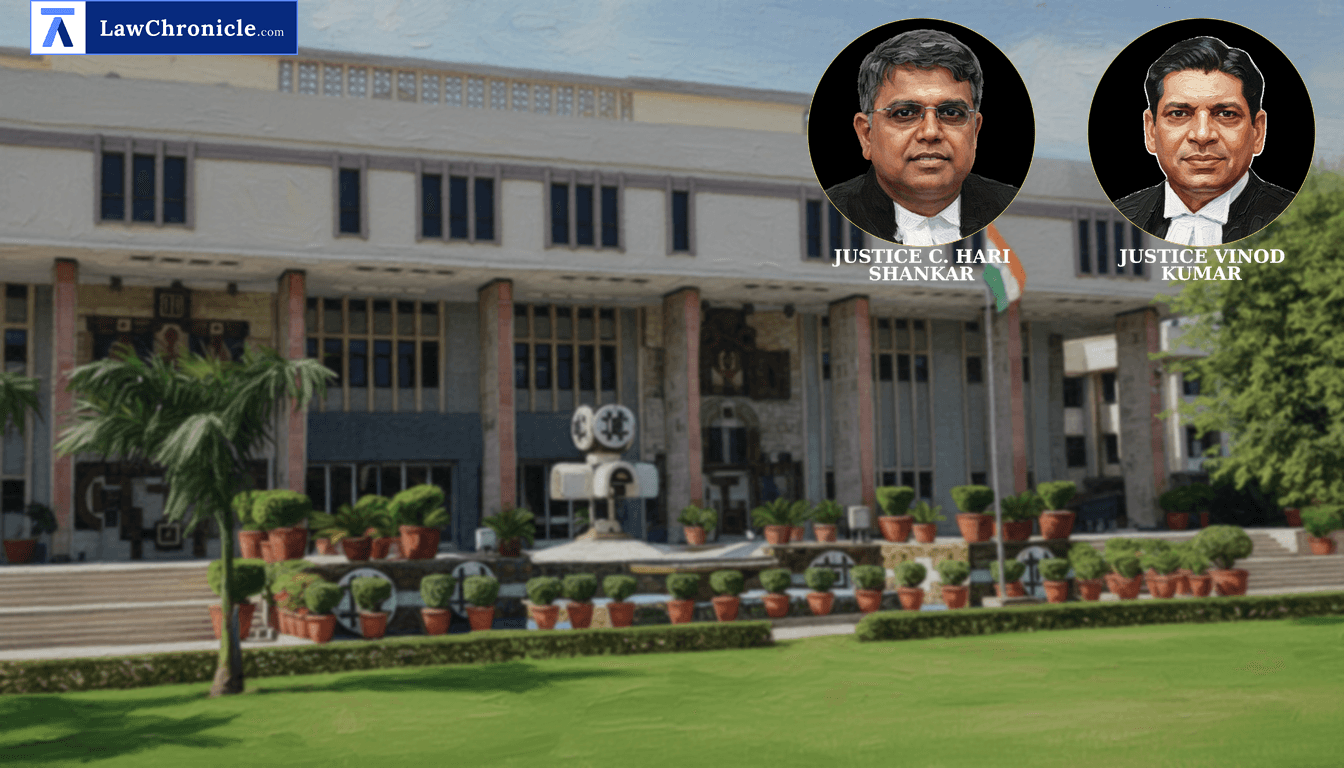
The Delhi High Court has fortified the principle that compensatory holidays cannot be counted as 'actual working days' to satisfy the 240-day threshold for regularization, preventing contractual employees from claiming a 'double benefit' of both wages and service credit for the same period of work.
A Division Bench comprising Justice C. Hari Shankar and Justice Vinod Kumar delivered this ruling while dismissing a writ petition challenging a Central Administrative Tribunal order. The petitioners, who were engaged as 'Badli' workers by the Delhi Milk Scheme, sought regularization of their services under the Certified Standing Orders for the Employees of the Delhi Milk Scheme. The core dispute centered on whether compensatory holidays granted in lieu of working on Sundays or weekly offs should be included when calculating the mandatory 240 days of service required for transfer to a regular establishment.
Legal Challenge Against Tribunal Decision
The petitioners challenged an order dated December 15, 2016, which dismissed their applications for regularization. They contended that by counting weekly holidays, compensatory holidays, and national holidays, they had completed more than 240 days in a year. They specifically argued that under Section 52 and Section 53 of the Factories Act 1948, they were entitled to have both the days they worked (for which they were paid) and the resulting compensatory holidays counted toward their total service duration.
However, the Delhi Milk Scheme, a 'factory' under the Factories Act 1948, maintained that 'Badli' workers are substitutes for regular employees and can only be regularized if they strictly complete 240 days of attendance. The respondent argued that since the petitioners were already paid for working on their off days, granting them extra service credit for compensatory holidays would amount to an impermissible double benefit.
The Exclusion of Compensatory Holidays from 'Actual' Work
The Court closely examined the Constitution of India and Rule 77 of the Delhi Factory Rules 1950. The Bench observed that while these provisions ensure workers are not deprived of rest through a mechanism of substitutional holidays, they do not direct that such leave periods be treated as working days for seniority or regularization purposes.
Refuting the petitioners' reliance on Form 9 of the Delhi Factory Rules 1950, the Court clarified that the form is merely a record-keeping mechanism for enforcement and carries no weight in determining the computation of working days for regularization. The Court noted that the specific language of the Certified Standing Orders for the Employees of the Delhi Milk Scheme requires that a worker must "actually work" for the prescribed period.
In its reasoning, the Court observed: "The scheme of providing Compensatory Holidays as specified in Sections 52 and 53 of the Factories Act 1948 and Rule 77 read with Form No. 9 of the Delhi Factory Rules 1950 only provide a mechanism for ensuring Compensatory Holidays. None of these provisions contain any direction as to how 240 days would be calculated... By use of the word 'actually', the Standing Order has clearly excluded the Compensatory Holidays out of computation of the working days."
Adherence to Judicial Precedent
The High Court relied heavily on the precedent set in UOI and Anr. v Shishpal and Ors., which dealt with identical circumstances. In that case, the Court had established that while actual working days, Sundays, and National Holidays are included in the 240-day calculation, additional days cannot be added if the worker has already been compensated for working on an off day.
Addressing the petitioners' request for a departure from this rule, the Court held: "since the workers were paid for the work done on off days/Sundays, the double benefit i.e. of wages and at the same time treating it as extra day(s) cannot be given."
The Court has the following directions:
"Accordingly, we are of the opinion that the impugned order is a reasoned and detailed exposition of law and it also follows a Division Bench judgment of this Court i.e. UOI and Anr. v Shishpal and Ors.. Accordingly, we find no infirmity in the impugned order. Accordingly, the petition is dismissed."
Key Takeaways:
Strict Interpretation of 'Actual Work'
Only days of physical attendance and statutory holidays like Sundays/National holidays count toward the 240-day regularization threshold; compensatory leave does not.
Prohibition of Double Benefits
Employees cannot claim both financial compensation for working on a holiday and also treat the resulting compensatory off as a second 'working day' for service benefits.
Precedence of Standing Orders
Specific terminology in Certified Standing Orders, such as the requirement to 'actually work', overrides general welfare provisions regarding leave management when determining eligibility for permanent status.
Contractual Substitution Limits
Badli or substitute workers remain governed strictly by the letter of their engagement terms and do not gain an inherent right to regularization without precise fulfilment of attendance mandates.
Ratio Decidendi:
Compensatory holidays granted under Section 53 of the Factories Act 1948 in lieu of lost weekly holidays do not constitute 'actual work' for the purpose of calculating the 240-day service requirement for regularization. A worker who is paid wages for working on a weekly off day cannot claim the additional benefit of having the subsequent compensatory holiday counted as an extra working day in their service record.
Background:
The petitioners were engaged as 'Badli' workers by the Delhi Milk Scheme during 1999. Under the relevant Certified Standing Orders for the Employees of the Delhi Milk Scheme, a Badli worker who works for at least 240 days in a 12-month period is entitled to be transferred to the regular establishment. The petitioners argued they met this mark by adding compensatory holidays to their tally. The Central Administrative Tribunal dismissed their claims in 2016, prompting this writ petition. The High Court analyzed the interplay between the Factories Act 1948 and the Certified Standing Orders for the Employees of the Delhi Milk Scheme, ultimately finding that the legislative intent was to ensure rest, not to artificially inflate service duration for regularization. Citing the Supreme Court decision in Secretary, State of Karnataka v Uma Devi, the Bench also noted that temporary or casual workers do not have an automatic right to regularization if the proper selection process and service requirements are not met.
Case Details:
Case No.: W.P.(C) 6102/2017
Case Title: ANIL KUMAR & ORS v. UNION OF INDIA & ANR
Appearances:
For the Petitioner(s): Mr. Mahesh Srivastava and Mr. Vaibhav Manu Srivastava, Advs.
For the Respondent(s): Ms. Archana Gaur, CGSC with Ms. Ridhima Gaur and Mr. Deepu Kumar, Advs.
Source: 2026 CaseBase(DEL) 555
Similar Articles
 Breaking News


