Banks Can Claim Suspense Account Interest Post-NPA: Supreme Court
 Copy Link
 Share
Share Save
Save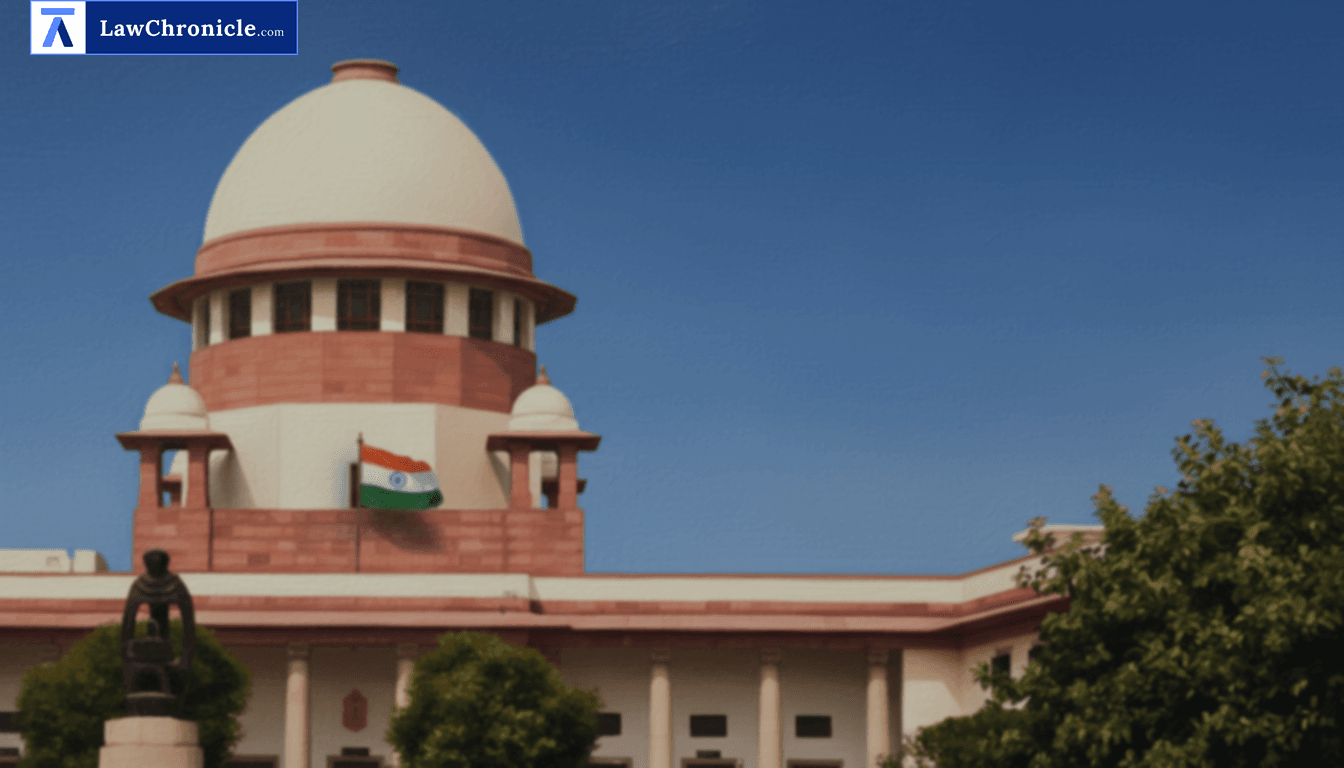
In a major relief to banking institutions, the Supreme Court has ruled that borrowers cannot ignore standard bank accounting practices or exclude interest maintained in suspense accounts post-NPA classification to unilaterally reduce their debt liabilities.
An apex court bench comprising Justice Sanjay Kumar and Justice Sanjeev Sachdeva set aside an order of the Orissa High Court that had permitted a borrower to close its loan account by relying solely on a bank certificate that excluded suspense interest components.
Key Takeaways
- Protection of Suspense Account Interest: Banks remain fully entitled to recover interest accrued in separate suspense accounts after an account is classified as a Non-Performing Asset (NPA).
- Sanctity of Statutory Debt Definition: Borrowers cannot manipulate loan statements by ignoring contractually agreed interest components, as statutory provisions explicitly include interest within the definition of debt.
- Reversal of Unrealistic High Court Settlement Calculations: The judgment prevents lower courts from oversimplifying bank recovery claims by relying on incomplete debt certificates.
Court Observations and Directions
The apex court noted that post-NPA classification, banks maintain interest in a separate suspense account per regulatory guidelines, which does not reflect in the principal loan account statement but remains a recoverable debt liability.
The Court, in its reasoning, observed: "Oversimplification of calculation by the High Court with respect to the amount payable, ignoring the existence of the suspense account for the interest component since the date of classification of the loan account as a non-performing asset, and giving effect only to the figure mentioned in the PNB’s certificate dated 24.12.2020... is therefore clearly unsustainable. The Trust and its trustees cannot blithely ignore the accounting system followed by banks and come up with different calculations at different points of time to suit their own interests."
The Court has following directions:
"The appeals are accordingly allowed, setting aside the order dated 11.01.2024 in W.P. (C) No. 32036 of 2023 and the order dated 14.05.2024 in I.A. No. 2279 of 2024 in W.P. (C) No. 32036 of 2023, passed by the High Court of Orissa at Cuttack, and restoring the order dated 01.09.2023 passed by the Debts Recovery Appellate Tribunal, Kolkata, in Appeal No. 16 of 2021. The appellant, Punjab National Bank, is entitled to seek recovery of its dues in terms thereof by way of appropriate proceedings, after giving credit to the amounts paid by the Trust and its trustees after the said date, if any, in accordance with law."
Ratio
Under Section 2(g) of the Recovery of Debts Due To Banks And Financial Institutions Act, 1993, 'debt' legally encompasses all contractual liabilities inclusive of accrued interest. Interest maintained in suspense accounts post-NPA status forms an integral part of the recoverable debt, and courts cannot reopen interest terms or disregard standard bank accounting practices.
Background
United Bank of India (later amalgamated with Punjab National Bank) sanctioned a ₹5 crore loan in 2011 to a charitable trust for constructing a college building. After the loan account was classified as an NPA in June 2017, recovery proceedings were initiated under Section 19 of the Recovery of Debts Due To Banks And Financial Institutions Act, 1993 before the Debts Recovery Tribunal (DRT). The DRT initially determined the balance liability at ₹1,83,268/-, which was subsequently enhanced by the Debts Recovery Appellate Tribunal (DRAT), Kolkata, to ₹54,90,413/- along with interest.
Upon challenge by the borrower, the High Court of Orissa accepted a certificate issued by PNB reflecting an outstanding balance of ₹31,99,000/- and directed full closure of the account on payment of ₹29,55,678.02 paisa, ignoring the suspense interest account. PNB appealed to the Supreme Court.
Reiterating the principles settled in Central Bank of India vs. Ravindra and others ( "(2002) 1 SCC 367": 2001 CaseBase(SC) 2408) and applied in Union of India vs. Association of Unified Telecom Service Providers of India and others ( "(2020) 3 SCC 525": 2020 CaseBase(SC) 1072), the Supreme Court emphasized that interest capitalized or maintained via bank accounting norms forms part of the enforceable debt. The Court also referred to Section 21A of the Banking Regulation Act, 1949, which prohibits courts from reopening bank interest transactions on grounds of excessive interest rates.
Case Details:
Case No.: Civil Appeal Nos. ............. & ............. of 2026 (@ Special Leave Petition (C) Nos. 27363-27364 of 2024)
Neutral Citation: 2026 INSC 836
Case Title: Punjab National Bank v. M/s. Shree Jyoti Education and Management Trust World and others
Source: 2026 CaseBase(SC) 769
 Breaking News