Bidder Cannot Challenge Auction Cancellation After Encashing Full Refund: Madras HC
 Copy Link
 Share
Share Save
Save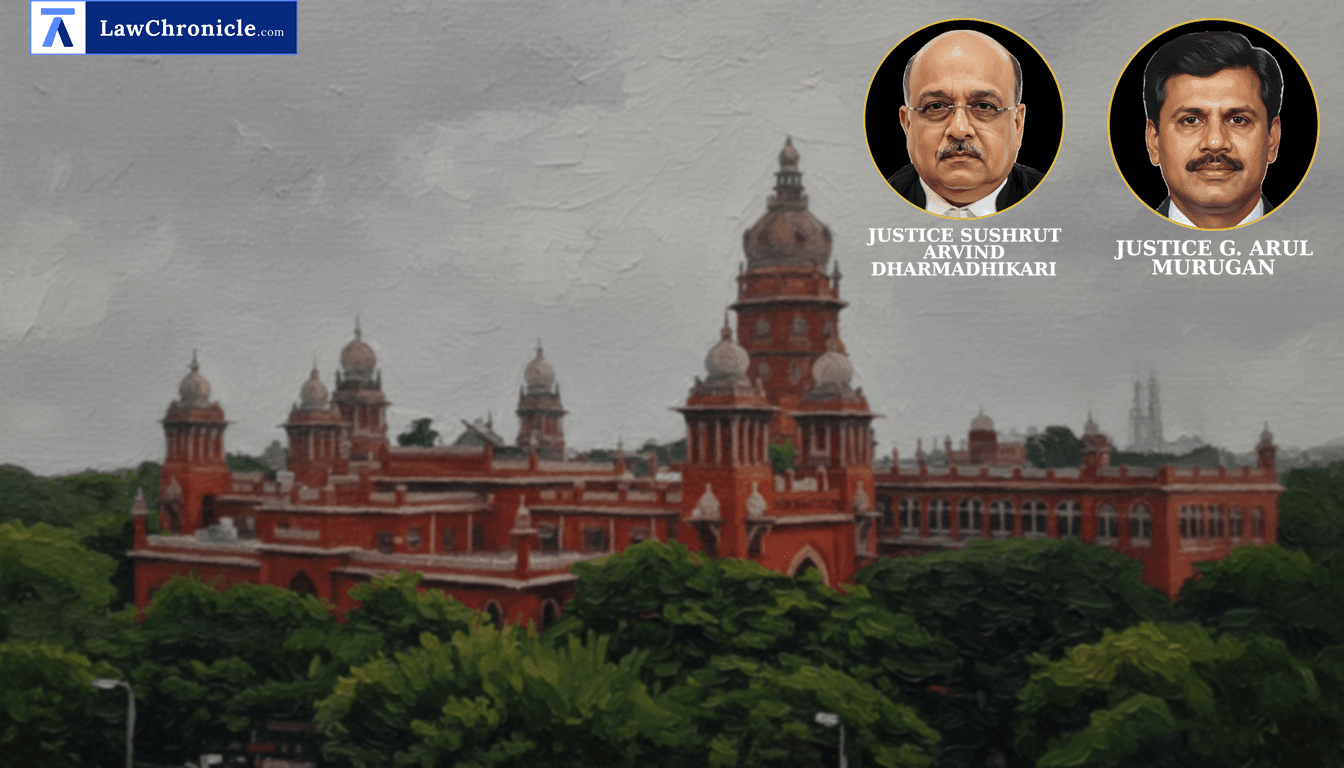
The Madras High Court has slammed the brakes on a bidder's attempt to revive a cancelled e-auction, ruling that the unconditional acceptance and encashment of a full refund operates as a total dissolution of the contract. A bench comprising the Hon'ble Chief Justice Sushrut Arvind Dharmadhikari and Justice G. Arul Murugan heard a writ petition filed under Article 226 of the Constitution of India of the Constitution of India. The petitioner sought to quash an order by the respondent bank that cancelled an e-auction sale of a secured asset and further requested a direction to issue a sale certificate and deliver physical possession.
Key Takeaways
Dissolution of Contract
Encashing a refund after an auction cancellation signifies the final dissolution of the contractual relationship between the bidder and the bank.
Doctrine of Election Applied
A party cannot 'approbate and reprobate' by accepting the financial benefit of an order and simultaneously challenging its validity in court.
Risk Awareness in Secured Assets
Bidders participating in sales on an 'As is where is' basis are bound by symbolic possession constraints, especially when statutory recovery proceedings are pending.
Limitations of Writ Jurisdiction
The High Court will not exercise its extraordinary jurisdiction under Article 226 of the Constitution of India to grant relief once a claimant has voluntarily accepted the termination of the transaction.
Principle of Approbate and Reprobate
The dispute arose after the respondent bank cancelled the e-auction due to complications regarding Tax Deducted at Source (TDS) under Section 194-IA of the Income-tax Act, 1961 and legal hurdles in obtaining physical possession. While the petitioner claimed the bank was duty-bound to issue a sale certificate under Rule 9(6) of the Security Interest (Enforcement) Rules, 2002, the Madras High Court focused on the petitioner's subsequent conduct.
The Madras High Court explained its reasoning that “The principle of doctrine of election and approbate and reprobate strictly applies here. A party cannot accept the benefit of an order (the full refund of the purchase price) and simultaneously challenge the validity of that same order in court. By encashing the four demand drafts, the auction contract stood fully dissolved. The petitioner cannot now seek a sale certificate for a sale that she accepted as cancelled.”
Ratio
The principle of 'approbate and reprobate' precludes a party from challenging the cancellation of an auction sale once they have unconditionally accepted and encashed the full refund of the sale consideration. Such an act constitutes a voluntary election that dissolves the contract and extinguishes any legal right to claim a sale certificate or possession under the Security Interest (Enforcement) Rules, 2002.
Background
The respondent bank initiated recovery proceedings under the Securitisation and Reconstruction of Financial Assets and Enforcement of Security Interest Act, 2002 against a borrower and issued an auction notice for a property in Chennai. The petitioner was the highest bidder, paying Rs.2,92,50,000/-. However, complications arose when it was discovered that a mortgagor's PAN was inactive, triggering a 20% TDS requirement under the Income-tax Act, 1961 instead of the expected 1%. Furthermore, the bank faced litigation from the borrowers before the CJM and the DRT.
Due to these hurdles, the bank cancelled the sale on 28.04.2026 and returned the entire consideration via four demand drafts. The petitioner, despite protesting the cancellation in the writ petition, had already encashed these drafts. The bank argued that the petition was non-maintainable as the petitioner participated with full knowledge that the sale was on an "As is where is" basis and had already accepted the refund. The Madras High Court agreed, holding that the act of encashment completely extinguished the petitioner's claim over the property.
Case Details:
Case No.: W.P.No.19464 of 2026 and W.M.P.No.20743 of 2026
Case Title: S.Karpagavalli vs. The Authorized Officer, Indian Bank
Appearances:
For the Petitioner(s): Ms.Saraswathi Muthiah [Thru VC]
For the Respondent(s): Ms.Bhargavi Sundar Rajan
Source: 2026 CaseBase(MAD) 21494
 Breaking News