Bilkis Bano Convicts Granted Bail: Does Gravity of Offence Determine Right to Liberty?
 Copy Link
 Share
 Save
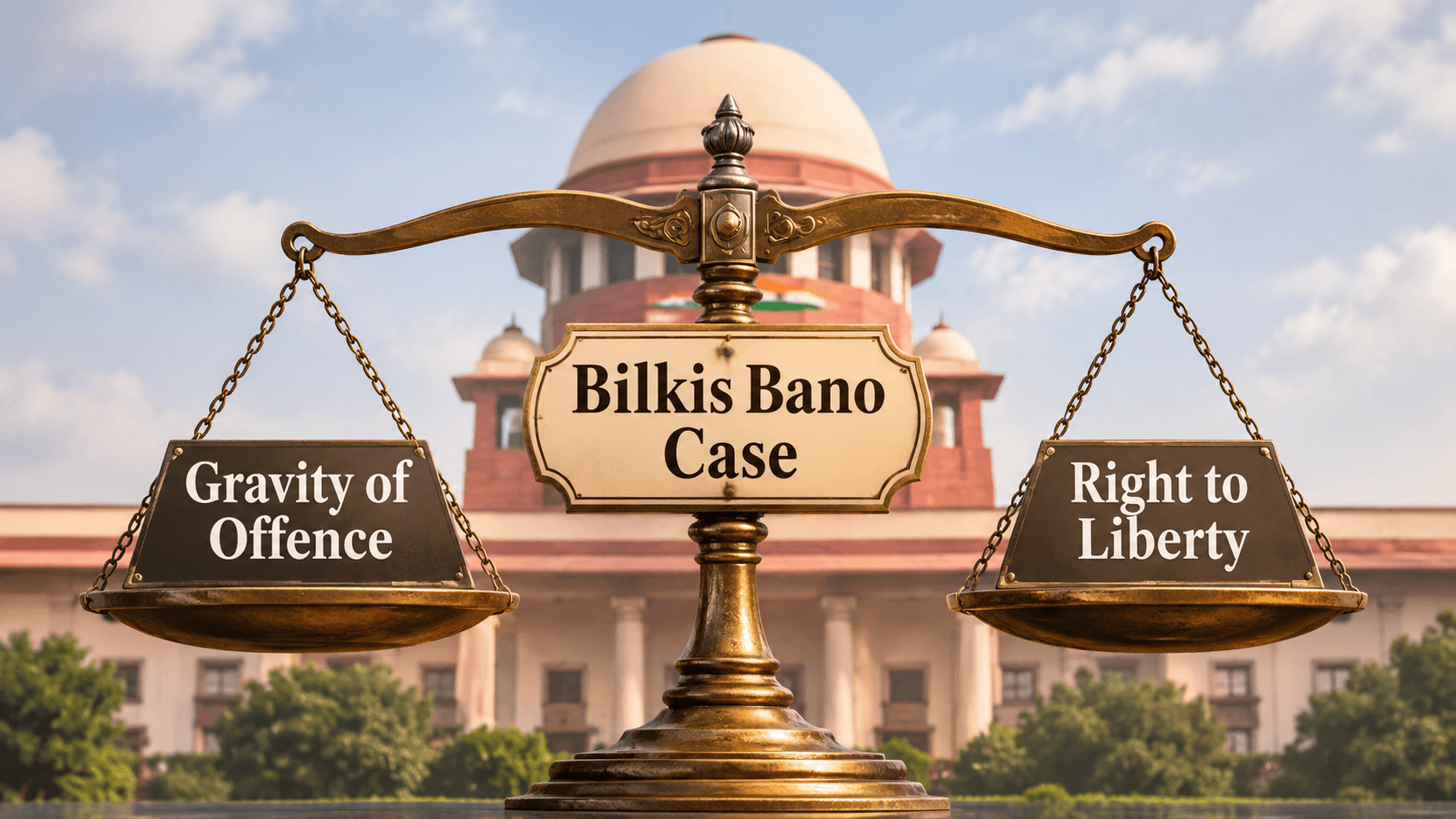
The Supreme Court's suspension of life sentences of two convicts in the Bilkis Bano case granting them bail has brought an important question of criminal jurisprudence back into focus: To what extent should the gravity of an offence influence the exercise of judicial discretion while considering bail or suspension of sentence? The development has revived the debate over the competing considerations of personal liberty, prolonged incarceration, the rights of survivors and the interests of justice. While the seriousness of an offence is undoubtedly a relevant consideration in determining whether an accused should be released, can it, by itself, justify continued incarceration irrespective of other circumstances?
The Bilkis Bano Case provides an important context to examine this question, particularly because the latest relief concerns persons whose convictions and life sentences have already been upheld by the Bombay High Court.
Bilkis Bano Case: Supreme Court Suspends Life Sentences of Two Convicts
- The case arose from the communal violence in Gujarat in 2002, during which Bilkis Bano, then five months pregnant, was gangraped and several members of her family, including her three-year-old daughter, were killed.
- In 2004, the Supreme Court transferred the case to Special Court in Mumbai.
- In January 2008, a special CBI court in Mumbai convicted 11 persons and sentenced them to life imprisonment. The Bombay High Court in 2017 CaseBase(BOM) 1343 upheld their convictions and sentences in May 2017.
- In August 2022, the Gujarat Government granted remission to all 11 convicts, resulting in their premature release. However, on January 8, 2024, the Supreme Court quashed the remission orders, holding that the Gujarat Government was not the appropriate government to grant remission in the case. The Court also found that the earlier proceedings leading to the remission decision had involved suppression of material facts.
In the latest development, a Supreme Court Bench comprising Justices M.M. Sundresh and Prasanna B. Varale, by an order dated October 28, 2026, suspended the life sentences of two convicts, Bipinchand Kanaiyalal Joshi and Pradip Ramanlal Modhiya, and granted them bail pending consideration of their appeals. The Apex Court took note of the fact that both appellants had remained incarcerated for more than 17 years. The Bench highlighted the fact of one of them having suffered from a severe physical handicap. The Gujarat Government opposed the applications, relying, among other things, on the seriousness of the offences and the findings recorded by the courts below.
Therefore, the Supreme Court order through which Bilkis Bano convicts were granted bail brings into focus the question of how courts balance the gravity of an offence against other considerations while deciding applications for release during the pendency of an appeal.
Distinction between Bail and Suspension of Sentence
Before examining the competing arguments, it is important to distinguish between regular bail before conviction and suspension of sentence after conviction.
An accused seeking bail before the conclusion of trial is ordinarily entitled to rely on the presumption of innocence. The considerations include the nature of the accusation, the available material, the possibility of absconding, the likelihood of influencing witnesses and the prospect of tampering with evidence. The position changes once a person has been convicted. The presumption of innocence no longer operates in the same manner, and the court must consider the findings of the trial court while deciding whether the sentence should be suspended pending appeal. Under Section 389 of the Code of Criminal Procedure, 1973, an appellate court may, for reasons recorded in writing, suspend the execution of a sentence or order appealed against and, where the convicted person is in confinement, release that person on bail or on their own bond. The corresponding provision under the Bharatiya Nagarik Suraksha Sanhita, 2023, is Section 430.
Thus, Suspension of sentence does not amount to acquittal or setting aside the conviction. It temporarily suspends the execution of the sentence while the appeal remains pending. The conviction continues to operate unless overturned in appeal. The distinction is particularly significant in the Bilkis Bano Case, where the relief granted to the two convicts does not disturb their convictions but permits their release pending adjudication of their appeals.
Gravity of Offence for Bail: How Much Weight Does It Carry?
The nature and gravity of an offence are recognised considerations in bail jurisprudence. Courts routinely examine the seriousness of the allegations, the punishment prescribed, the role attributed to the accused and the potential consequences of release. In cases involving rape, gangrape and murder, the gravity of the allegations assumes particular significance because of the nature of the harm caused and the interests of the survivor and society.
However, the question is whether gravity of offence for bail should operate as a decisive consideration or one factor among several. If the seriousness of an offence alone were sufficient to deny release, other relevant circumstances, including prolonged incarceration, medical conditions and the likelihood of an appeal being heard within a reasonable period, could become secondary. On the other hand, treating the gravity of the offence as merely incidental may fail to account for the seriousness of the judicial findings already recorded against a convicted person.
Courts have to ensure that neither consideration becomes an automatic rule overriding the need for an individual assessment.
Personal Liberty and Bail
The constitutional guarantee of personal liberty under Article 21 does not cease to have relevance merely because a person has been convicted. Although conviction changes the legal position of the individual, the right to challenge that conviction through an appeal remains an important safeguard. Prolonged incarceration pending appeal raises a distinct concern. Where appeals take considerable time to be decided, a convicted person may remain in prison for an extended period before the appellate court examines the correctness of the conviction and sentence.
In Kashmira Singh v. State of Punjab (1977 CaseBase(SC) 356), the Supreme Court recognised the concern arising from prolonged imprisonment while an appeal remains pending, particularly where the appeal may take years to be heard.
Similarly, individual circumstances such as serious illness, disability, advanced age and the period already spent in custody may be relevant to an application for suspension of sentence. The argument in favour of release, therefore, is not that the gravity of the offence should be ignored, but that it should not automatically eclipse every other consideration. Judicial discretion must account for the circumstances of the individual case and the practical ability of the appellate system to provide timely adjudication.
Bail, Gravity of Offence, and Survivor's Rights
The opposing argument begins with the nature of the offence and the fact that the individual has already been found guilty by a competent court. In serious offences involving sexual violence, the consequences extend beyond the immediate physical harm. The survivor may continue to face concerns relating to personal safety, intimidation, social pressure and the possibility of renewed contact with the convicts. The release of convicted persons may, in particular circumstances, create a risk of influencing witnesses, threatening the survivor or interfering with the administration of justice. Such concerns warrant judicial consideration while determining the conditions of release.
There is also a broader institutional concern. Where convictions have been upheld by an appellate court, the findings cannot be treated as inconsequential merely because a further appeal is pending.
In Preet Pal Singh v. State of Uttar Pradesh (2020 CaseBase(SC) 1037), the Supreme Court emphasised that suspension of sentence after conviction requires a different approach from the consideration of regular bail before conviction. The court must take into account the prima facie findings supporting the conviction and the reasons recorded by the courts below.
Therefore, the argument against release is not necessarily that a person convicted of a serious offence should never be granted bail. Rather, it is that the gravity of the offence, the findings supporting conviction and the interests of the survivor must receive meaningful consideration before such relief is granted.
Should There Be a Different Standard for Bail in Rape Cases?
The debate arising from the Bilkis Bano Case also invites a broader examination of bail jurisprudence in sexual-offence cases. There is a need to distinguish between an accused seeking bail during trial and a person convicted of rape seeking suspension of sentence during an appeal. The former is governed by the presumption of innocence, while the latter involves an existing conviction that has to be considered by the appellate court.
Even among convicted persons, the circumstances may differ substantially. The period of incarceration, the nature of the evidence, the findings of the trial court, the possibility of interference with the survivor or witnesses and the likely time required for disposal of the appeal may vary from case to case.
Consequently, a blanket approach either favouring or opposing bail in all rape cases may not adequately serve the interests of justice. The law must allow judicial discretion, but that discretion must be exercised through reasoned orders that address the relevant circumstances. In particular, where the survivor's safety may be affected, appropriate safeguards and enforceable bail conditions assume importance.
Does Liberty Depend on the Nature of the Crime?
The decision to grant bail to two Bilkis Bano Case convicts once again places the relationship between personal liberty and the gravity of an offence under judicial and public scrutiny. The seriousness of a crime cannot be disregarded while considering suspension of sentence, particularly after conviction. Equally, the constitutional protection of liberty cannot be rendered meaningless merely because the offence falls within a category regarded as particularly heinous.
The question is not whether gravity should matter, but how much weight it should carry alongside prolonged incarceration, individual circumstances, the findings supporting conviction and the interests of the survivor.
 Breaking News