Blacklisting Order Passed Without Prior Show Cause Notice Non-Est: Gujarat HC
 Copy Link
 Share
Share Save
Save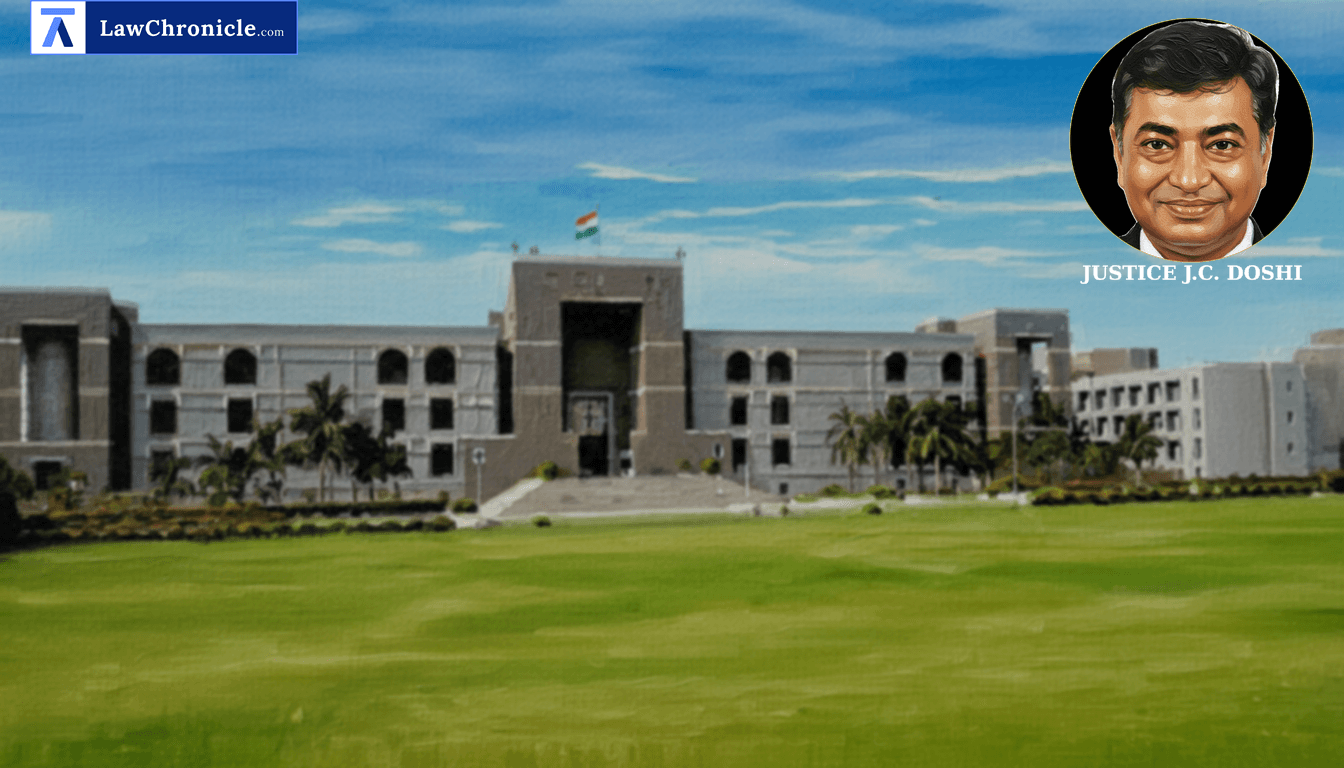
Blacklisting a contractor without serving a prior show-cause notice constitutes a fatal violation of natural justice, rendering the penal action legally void regardless of whether the blacklisting period has elapsed. Deciding an appeal challenging a trial court order, the High Court held that administrative authorities cannot inflict the 'civil death' of blacklisting without explicit disclosure of the proposed action.
A single-judge bench of Justice J. C. Doshi set aside the trial court decision that dismissed a contractor's suit for failing to tender oral evidence, emphasizing that undisputed procedural lapses concerning constitutional guarantees require no oral proof.
Key Takeaways
No Blacklisting Without Notice: State entities cannot blacklist contractors without issuing a prior show-cause notice detailing the proposed penalty.
Stigma Outlasts Expiry: The expiration of a blacklisting period does not render a legal challenge infructuous due to the enduring business stigma.
No Oral Evidence Needed for Undisputed Lapses: Uncontested breaches of natural justice visible on the record do not require formal oral testimony under the Code of Civil Procedure.
Adhering to Article 14: State instrumentalities bound by Constitution of India must act fairly and non-arbitrarily in contractual matters.
Court's Rationale on Natural Justice and Civil Death
The High Court examined whether the municipal corporation could maintain a blacklisting order issued without prior notice and whether the trial court erred in dismissing the suit for lack of oral evidence.
The Court, in its reasoning, observed: "...blacklisting has to be preceded by a show cause notice. Law in this regard is firmly grounded and does not even demand much amplification. The necessity of compliance with the principles of natural justice by giving the opportunity to the person against whom action of blacklisting is sought to be taken has a valid and solid rationale behind it. With blacklisting many civil and/ or evil consequences follow. It is described as 'civil death' of a person who is foisted with the order of blacklisting. Such an order is stigmatic in nature and debars such a person from participating in Government Tenders..."
Addressing the trial court's insistence on oral testimony, the High Court noted that under Order XIV and Order XV of the Code of Civil Procedure, when material facts concerning the absence of a show-cause notice are not disputed by the defendant, the court must pronounce judgment on the legal issue directly without requiring oral evidence.
Ratio
An order of blacklisting passed by a State instrumentality without serving a prior show-cause notice explicitly proposing the penalty of blacklisting is a nullity and non-est in law for violating the principles of natural justice. Because blacklisting carries lasting stigmatic consequences and affects fundamental rights under Constitution of India, the expiry of the blacklisting period does not extinguish the cause of action.
Background
The plaintiff, a construction firm registered under the Indian Companies Act, 1956, was awarded multiple infrastructure contracts totaling over Rs. 150 crores by the municipal authority. Following public interest litigation concerning poor road conditions after heavy rains, the municipal corporation directed repair works. Although the contractor carried out resurfacing works, the corporation issued a notice informing them of a resolution blacklisting the firm for three years.
The contractor filed a civil suit under Section 96 of the Code of Civil Procedure seeking to declare the blacklisting resolution null and void due to the absence of a show-cause notice or hearing. The trial court dismissed the suit on the ground that the plaintiff failed to enter the witness box to lead oral evidence. On appeal, the High Court relied on settled precedents, including Raghunath Thakur v/s. State of Bihar and others ( "(1989) 1 SCC 229": 1988 CaseBase(SC) 395), Gorkha Security Service v/s. Government (NCT of Delhi) and others, M/s. Erusian Equipment & Chemicals Ltd. v. State of West Bengal & Anr. ( "(1975) 1 SCC 70": 1974 CaseBase(SC) 301), and Patel Engineering Ltd. v. Union of India and Anr., to hold that blacklisting without procedural fairness is legally unsustainable.
Case Details:
Case No.: R/First Appeal No. 1889 of 2026
Neutral Citation: 2026:GUJHC:54830
Case Title: GPC Infrastructure Private Limited v. Ahmedabad Municipal Corporation & Ors.
Appearances:
For the Petitioner(s): Mr. Unmesh Shukla, Sr. Counsel with Ms. Grishma M Ahuja and Mr. Karna H Dhomse
For the Respondent(s): Mr. G H Virk and Mr. Simranjitsingh H Virk
Source: 2026 CaseBase(GUJ) 17496
 Breaking News