


Bombay HC: Auction Purchaser’s Rights Prevail Over Secured Creditor’s Delayed Claims
 Copy Link
 Share
 Save
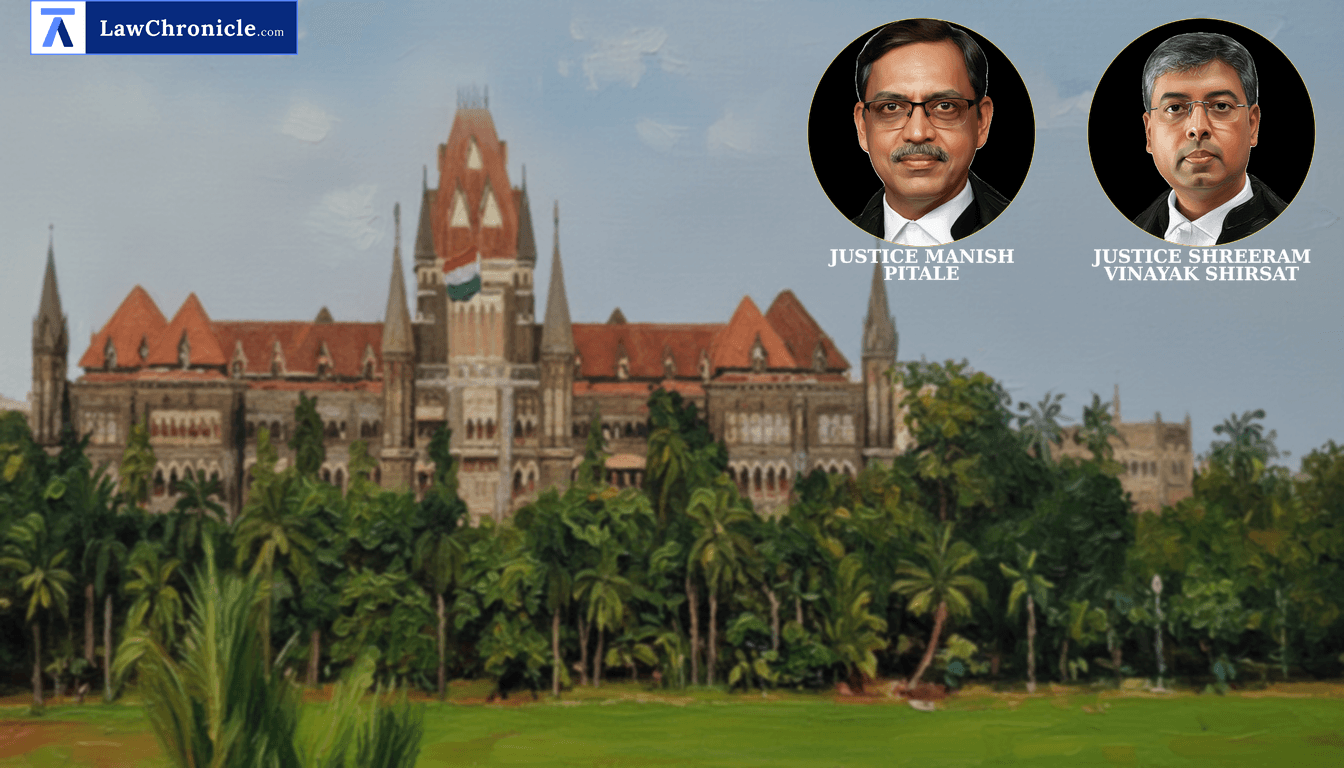
Protecting the interests of bona fide auction purchasers, the High Court of Bombay held that a secured creditor cannot re-enforce a security interest over a property already sold through a prior auction conducted under the Securitisation and Reconstruction of Financial Assets and Enforcement of Security Interest Act, 2002. The Court emphasized that once a security interest is enforced and the asset is sold, it is no longer available for further enforcement by competing creditors.
A bench comprising Justice Manish Pitale and Justice Shreeram V. Shirsat adjudicated upon a writ petition filed by two individuals who were physically dispossessed from their home by Saraswat Co-operative Bank Ltd., despite having purchased the flat in a 2017 auction conducted by State Bank of India. The Court observed the "alarming predicament" where the petitioners were ousted from their residence after eight years of peaceful occupation due to competing claims between two financial institutions.
The Court, in its reasoning, observed: "...once the security interest in the present case i.e. the subject flat was dealt with and respondent-SBI had enforced its security interest, the said flat was no longer available for further enforcement by respondent-Saraswat Bank. The absurdity of respondent-Saraswat Bank’s claim that it was entitled to proceed further in respect of the subject flat, is evident and in the light of the abovenoted position of law, the said claim deserves to be rejected."
Exhaustion of Security Interest and Section 11 Mandate
The bench noted that while the Saraswat Co-operative Bank Ltd. had taken symbolic possession in 2013, it remained in a "deep slumber" for eleven years. Conversely, State Bank of India proceeded with alacrity, obtaining physical possession through the Magistrate and conducting an auction in 2017. Referring to Section 13(6) of the Securitisation and Reconstruction of Financial Assets and Enforcement of Security Interest Act, 2002, the Court clarified that the transfer of a secured asset vests all rights in the transferee as if the transfer were made by the owner.
Applying the ratio from Bank of India vs. Sri Nangli Rice Mills Private Limited and others, the Court held that inter-se disputes between banks regarding priority of charges must be resolved through arbitration as per Section 11 of the Securitisation and Reconstruction of Financial Assets and Enforcement of Security Interest Act, 2002 and the Arbitration and Conciliation Act, 1996. The Court stated that such disputes should not hinder the recovery process or cause misery to third-party purchasers.
Final Directions Issued to Respondent Bank
The Court has the following directions:
"The petitioners shall be put back in possession of the subject flat by respondent – Saraswat Bank within four weeks from today and all their possessions shall be returned. The said respondent-Saraswat Bank is restrained from dealing with the subject flat. At the same time, liberty is reserved for the said respondent-Saraswat Bank to invoke Section 11 of the Securitisation Act, if it so chooses, to raise a dispute with respondent-SBI, in accordance with law."
Background:
The case arose when the original borrower took credit facilities from both banks using the same flat as security. State Bank of India created a mortgage in 2004, which was registered with CERSAI in 2012. Saraswat Co-operative Bank Ltd. extended facilities in 2012. After the borrower defaulted, State Bank of India auctioned the property in 2017 to the petitioners. However, in 2025, Saraswat Co-operative Bank Ltd. obtained an order under Section 14 of the Securitisation and Reconstruction of Financial Assets and Enforcement of Security Interest Act, 2002 and forcibly evicted the petitioners.
The petitioners argued that as registered sale certificate holders, they were the legal owners. The High Court agreed, distinguishing the present case from precedents like United Bank of India vs. Satyawati Tondon and others ( "(2010) 8 SCC 110": 2010 CaseBase(SC) 387) and Celir LLP vs. Bafna Motors (Mumbai) Private Limited and others, noting that the invocation of Section 14 after an eleven-year delay, when the security interest was already exhausted, was without authority of law. The Court relied on The Cosmos Co-operative Bank Ltd. vs. Central Bank of India and others and Central Bank of India and another vs. Smt. Prabha Jain and others to conclude that the DRT does not have jurisdiction to decide complex questions of title or declare mortgages illegal, justifying the use of writ jurisdiction.
Case Details:
Case No.: WRIT PETITION NO. 11618 OF 2025
Case Title: Mariyam Rangwala and another vs. State of Maharashtra, Thr. Registrar, CMM & ors.
Appearances:
For the Petitioner(s): Mr. Shadab Jan a/w. Mr. Pranay Patil, i/b. Mr. Shreyas Deshpande
For the Respondent(s): Ms. G. R. Raghuwanshi, AGP for respondent No.1; Mr. Charles D’souza a/w. Mr. Aayush Kothari, Mr. Rupak Sawangikar and Mr. Nikhil Rajani, i/b. M/s. V. Deshpande & Co. for respondent No.2; Mr. Navin Arora, i/b. Sagar & Sagar Law Officers for respondent No.3.
Source: 2026 CaseBase(BOM) 257
Similar Articles
 Breaking News


