

Bombay HC Awards Compensation, Holds Train Fall Death an “Untoward Incident”
 Copy Link
 Share
Share Save
Save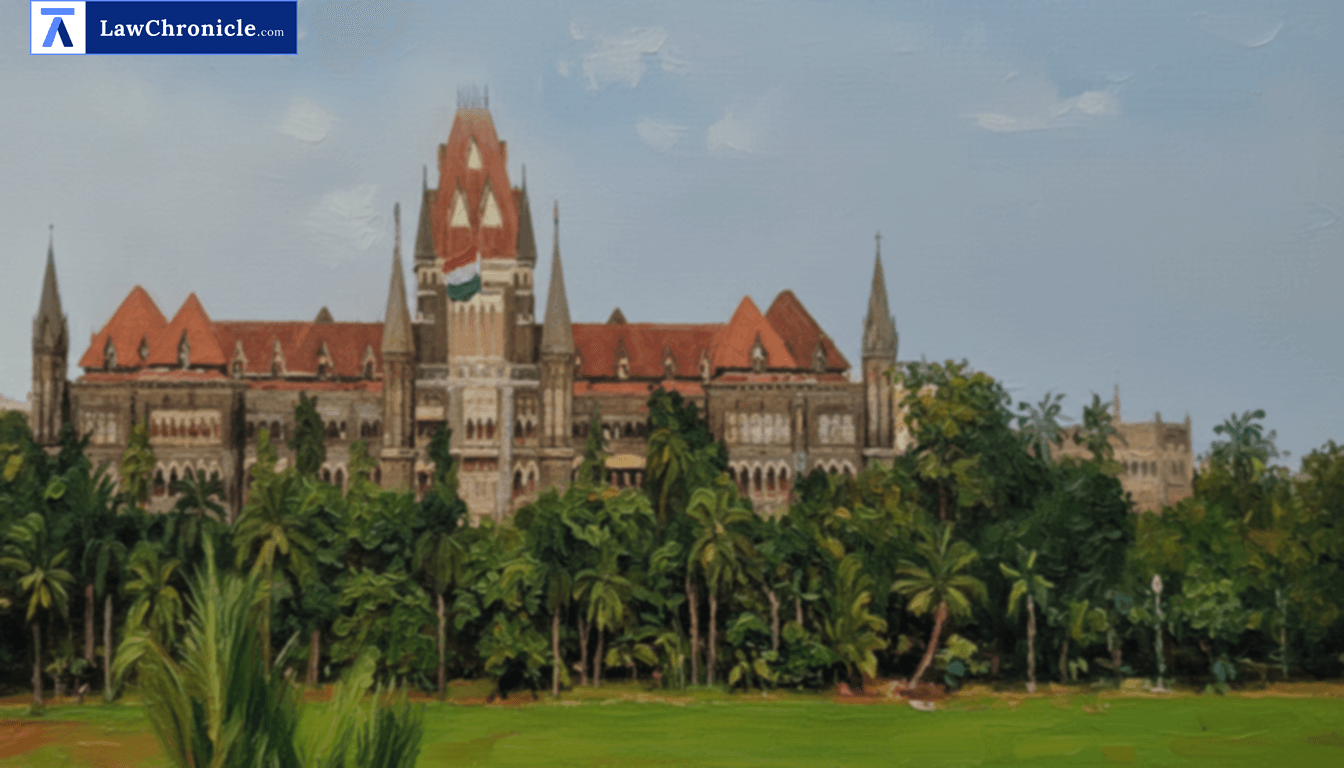
The Bombay High Court allowed the compensation claim, setting aside the Tribunal’s finding that the death of the deceased did not qualify as an “untoward incident” under the Railways Act. It held that the evidence on record supported the claimants’ case and concluded that the deceased died due to an accidental fall from a moving train.
A single-judge bench of Justice Jitendra Jain heard First Appeal No.448 of 2017 in which the dependents of a deceased rail passenger challenged an order of the Railway Claims Tribunal that had rejected their claim under Section 123(c)(2) of the Railways Act, 1989. The appeal concerned whether the death of the deceased amounted to an “untoward incident” and whether he was a bonafide passenger at the time of the accident.
The Court allowed the appeal and directed the Railway to remit compensation with interest, holding that the Tribunal’s findings were perverse and that material evidence had not been properly considered. The Court found that the deceased was a bonafide passenger, rejected the Railways’ theory that he died while crossing the track, and concluded that the evidence pointed to an accidental fall from a moving train.
The Court, in its reasoning, observed: "As per the evidence of the co-passenger, he met the deceased near his house at 13:30 hrs. The timing of issuance of the tickets is 13:51 hrs. for travel from Goregaon Station to Churchgate Railway Station. The accident happened around 14:13 hrs. The distance to travel from Goregaon to Jogeshwari is about 5 to 7 minutes and the time difference between two trains is generally 5-7 minutes. If one connects the dots of timings, it cannot be accepted that the deceased was not travelling in the train at the time of the incident, but was crossing the track near Jogeshwari Station. This chain of events clearly shows that at the time of the incident, the deceased was travelling in the train. These findings are given even if the evidence of the co-passenger is not to be considered. However, in my view, the evidence of the co-passenger supports the plea that the deceased died on account of an accidental fall from a moving train."
Background
The appellant dependents were the parents of the deceased, who sustained injuries near Jogeshwari Railway Station on 20 June 2009 and died later the same day at K.E.M. Hospital. The Tribunal had rejected the compensation claim on the ground that the death did not arise from an “untoward incident” within the meaning of Section 123(c)(2) of the Railways Act, 1989 and that the deceased was not a bonafide passenger. The Court reviewed the police report, the ticket recovered from the deceased and the affidavit and cross-examination of a co-passenger who stated that both had purchased tickets and boarded a local train but that the deceased accidentally fell from the moving train near Jogeshwari. The Court noted the Station Master’s memo recording the reason as "found lying unconscious injured on head" and observed that the option "hit by unknown train while trespassing" was not ticked, undermining the Railways’ trespass theory.
The Court recorded that the Tribunal had failed to apply its mind to crucial evidence, had relied on non-eyewitness opinions in the inquest panchnama and on a witness who conceded lack of personal knowledge, and had drawn unsupported inferences such as a separated neck. The Court refused to remit the matter for fresh consideration because of the long delay since 2009 and itself examined the evidence. It cited decisions of this Court in Rekha Dilip Sapkale Vs. Union of India and more particularly paragraph 12 and Corinna Valentina D’souza & Ors. Vs. Union of India and more particularly paragraph 8, as supporting the approach taken in evaluating evidence and entitlement to compensation. Applying these principles, the Court held that the claimants had made out a case that the death resulted from an accidental fall from a moving train and thus fell within an “untoward incident.”
The Court directed the claimants to present their claim to the Railway authorities with the present order and bank details, and directed payment of Rs.4 lakhs with interest at 6% per annum from the date of the accident subject to a cap of Rs.8 lakhs, to be remitted within 12 weeks of the claimants approaching the Railways with this order. The appeal was allowed.
Case Details:
Case No.: FIRST APPEAL NO.448 OF 2017
Case Title: Rayappa Jayaseelan Antony Chetiyar & Ors. V/s. Union of India through the General Manager, Western Railway
Appearances:
For the Petitioner(s): Mr. Vaneet Khosla, Advocate
For the Respondent(s): Mr. Chetan C. Agrawal, Advocate
Source: 2026 CaseBase(BOM) 206
 Breaking News