Bombay HC Bars Recovery of Excess Payment from Retired Employee
 Copy Link
 Share
Share Save
Save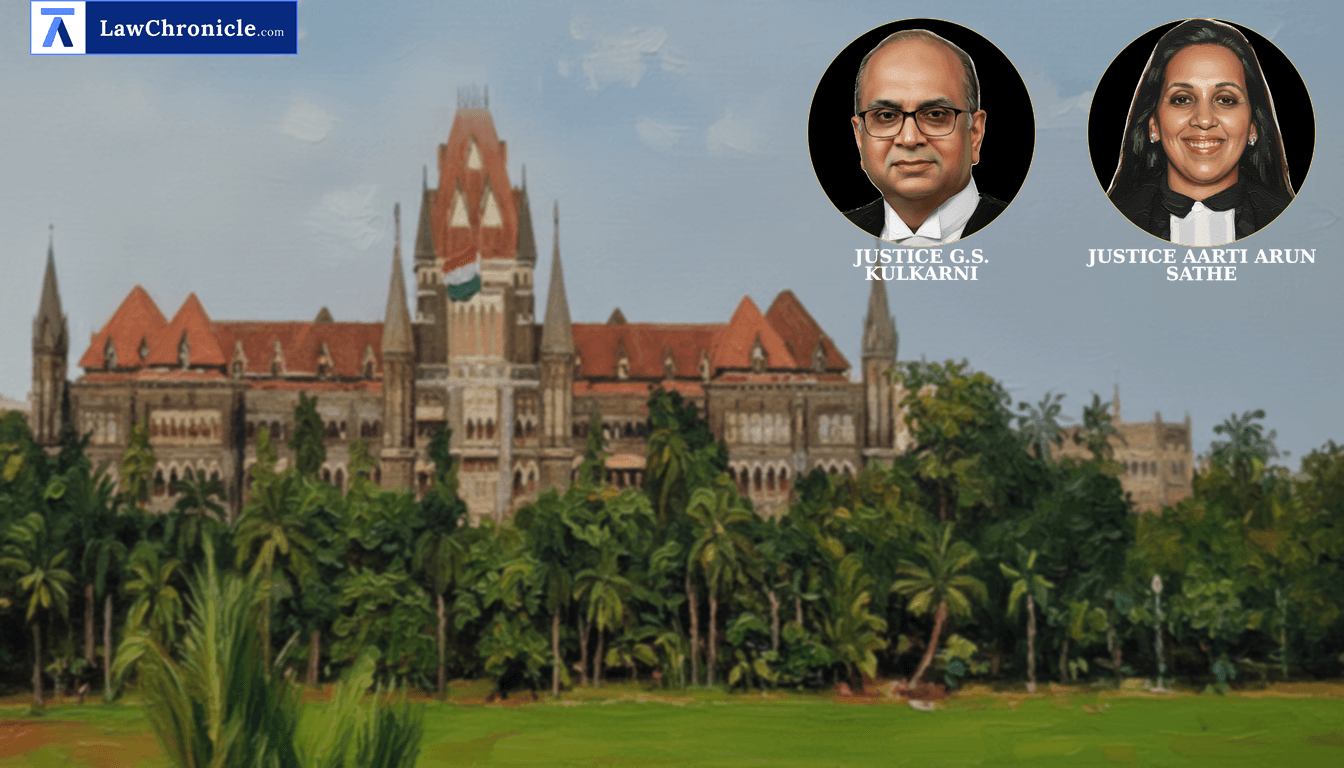
The Bombay High Court has barred Savitribai Phule Pune University from recovery of excess payment from a retired Class-III employee, affirming that such recoveries post-superannuation are iniquitous and arbitrary. In a significant victory for retired staff, the Bench ruled that administrative errors in pay fixation cannot be rectified by snatching away the retirement benefits of lower-grade employees who served for decades.
A Division Bench of Justice G. S. Kulkarni and Justice Aarti Sathe adjudicated the petition filed by a retired Data Entry Operator. The Petitioner challenged a recovery notice of nearly ₹40 lakh issued by the University months after his retirement, which had resulted in the withholding of his gratuity and leave encashment.
Key Takeaways
- Protection for Lower-Grade Employees: Reaffirms the legal immunity of Class-III and Class-IV employees against recovery of mistaken payments, preventing financial hardship post-retirement.
- Invalidity of Standard Undertakings: Holds that general undertakings signed during pay revisions do not grant employers a blanket right to recover amounts from retired lower-tier staff if the recovery is deemed harsh.
- Strict Adherence to Supreme Court Guidelines: Mandates that state authorities and universities must strictly follow the State of Punjab and others v. Rafiq Masih and Ors. principles regarding impermissible recoveries.
- Time-Barred Claims: Recognizes that attempting to recover salary dues after several years is effectively barred by the principles of equity and limitation.
Recovery of Excess Payment from Retired Employee
The Bombay High Court observed that the Petitioner, having retired as a Data Entry Operator, fell squarely within the protected categories defined by the Apex Court. The bench noted that the University's attempt to recover ₹39,94,343/- based on an alleged error in the 6th Pay Commission fixation was legally unsustainable.
The Bench explained the law through precedents that "Having examined a number of judgments rendered by this Court, we are of the view, that orders passed by the employer seeking recovery of monetary benefits wrongly extended to the employees, can only be interfered with, in cases where such recovery would result in a hardship of a nature, which would far outweigh, the equitable balance of the employer's right to recover."
Addressing the University's reliance on High Court of Punjab and Haryana v. Jagdev Singh ( "(2016) 14 SCC 267": 2016 CaseBase(SC) 640), the Bombay High Court clarified that the said precedent applied to Class-I officers (Judicial Officers) and could not be used against a Class-III employee. The bench emphasized that the Petitioner had already retired on December 31, 2022, and the recovery notice issued in April 2023 was an afterthought that trampled upon the Petitioner’s only source of income.
Directions Issued to Savitribai Phule Pune University
The Court has following directions:
"(i) Letter/notice dated 17th April 2023 issued to the Petitioner by Respondent No. 1-University is hereby quashed and set aside to the extent it directs recovery from the Petitioner. The amount, if recovered from the Petitioner under the letter/notice dated 17th April 2023, be refunded to the Petitioner within a period of three months from the date of uploading of this order.
(ii) Respondent No. 1-University is directed to pay to the Petitioner all the post-retiral benefits, including the benefits of the Assured Career Progression Scheme from June 2017, along with arrears and appropriate interest, and further, pay the accumulated leave encashment and the interest accrued on the Provident Fund to the Petitioner.
(iii) Respondent No. 1-University is directed to implement the 7th Pay Commission qua the Petitioner w.e.f. 1st June 2016, based on existing pay scale, i.e., Rs. 9300-34800 with Grade Pay Rs. 4300 (after awarding the benefits of Assured Career Progression Scheme-24 years’ continuous service).
(iv) These directions be complied by Respondent No.1- University within a period of three months from the date of uploading of this order."
Ratio
Recovery of excess payments made by an employer due to a mistaken pay fixation is impermissible in law when sought from employees belonging to Class-III and Class-IV services, or from retired employees, as such actions are deemed iniquitous, arbitrary, and violative of the mandate of equality under the Constitution of India, 1950. An undertaking given at the time of pay revision does not override the protection against hardship for lower-grade staff post-retirement.
Background
The Petitioner joined the Savitribai Phule Pune University in 1993 as a Data Entry Operator. Over his career, his pay was fixed according to various government notifications and the 5th and 6th Pay Commissions. Upon his superannuation in December 2022, the University claimed that his pay scale had been wrongly fixed at PB-2 (₹9300-34800) instead of PB-1 (₹5200-20200), resulting in an excess payment of nearly ₹40 lakh over several years. The University withheld his gratuity and other benefits, citing an undertaking signed by the Petitioner to refund excess payments.
The Petitioner approached the High Court under Article 226 of the Constitution of India, 1950, relying on State of Punjab and others v. Rafiq Masih and Ors. and Anil Pralhad Dhande v. The State of Maharashtra and Ors.. The Bombay High Court found that the Petitioner was a Class-III employee and that the recovery was initiated only after his retirement for a period exceeding five years, making it squarely covered by the prohibitions laid down by the Supreme Court.
Case Details:
Case No.: WRIT PETITION NO. 14168 OF 2024
Neutral Citation: 2026:BHC-AS:37589-DB
Case Title: Shrinivas Ganesh Kulkarni v. Savitribai Phule Pune University & Ors.
Appearances:
For the Petitioner(s): Mr. Vaibhav Kulkarni a/w Mr. Prathamesh Deshpande & Ms. Disha Rathod
For the Respondent(s): Mr. Rajendra Anbhule a/w Ms. Vaibhavi Shelar for R-1; Mr. P. P. Kakade, Addl. G.P. a/w Ms. Priyanka B. Chavan, AGP for State
Source: 2026 CaseBase(BOM) 5655
 Breaking News