


Bombay HC Clears Decks for Versova-Madh Bridge Amid Mangrove Protection Concerns
 Copy Link
 Share
 Save
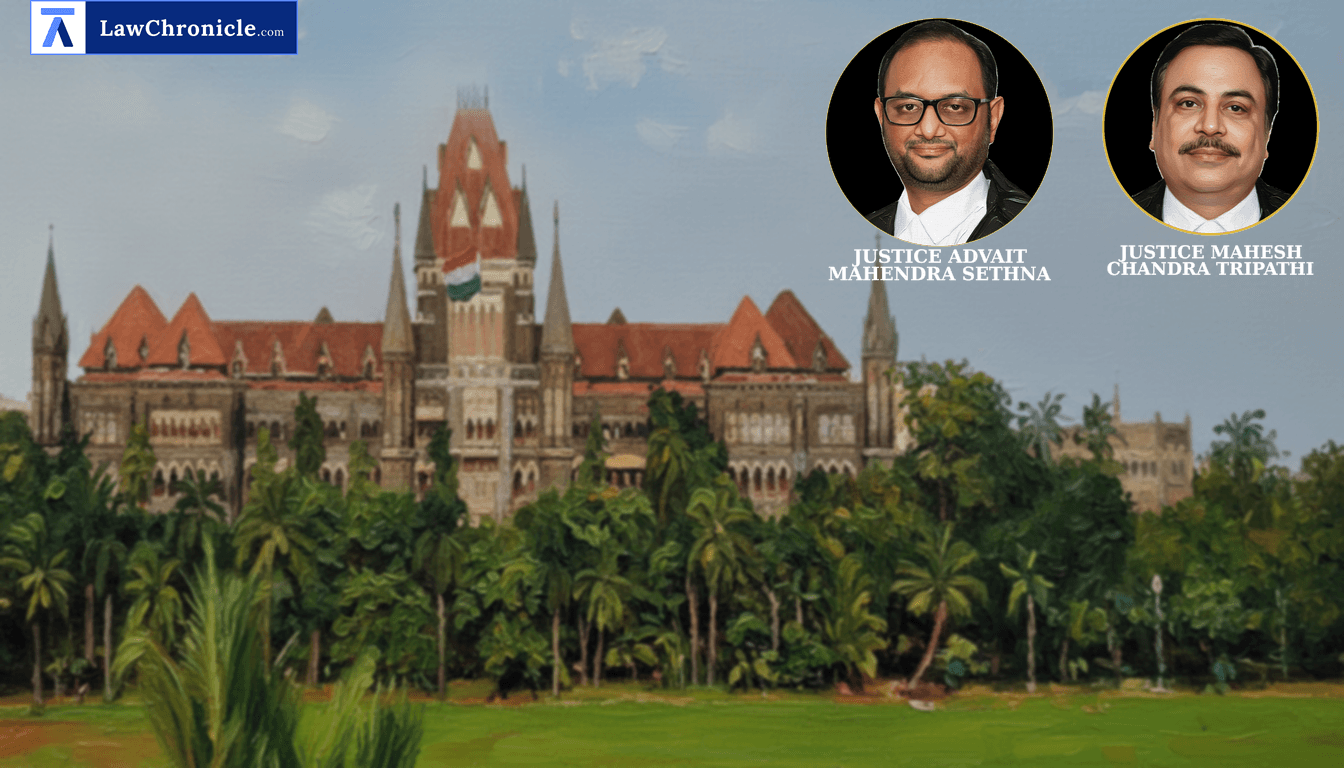
The Bombay High Court has granted permission for the removal of over 1,200 mangroves to facilitate the construction of a critical bridge connecting Versova and Madh Island, ruling that projects of immense public utility can proceed if backed by rigorous ecological restoration commitments.
A bench comprising Chief Justice Mahesh Chandra Tripathi and Justice Advait M. Sethna heard the petition filed by the Brihanmumbai Municipal Corporation (BMC) seeking permission to cut 1,237 mangroves across 2.7515 hectares for a 2,064-meter bridge over Malad Creek. The Bombay High Court balanced the environmental mandate established in Bombay Environmental Action Group Vs. The State of Maharashtra & Ors against the pressing need for civic infrastructure in the densely populated Mumbai Metropolitan Region.
Key Takeaways
Infrastructure as Public Good
The Bombay High Court emphasized that large-scale infrastructure projects aimed at reducing traffic congestion and travel time serve the public at large and do not constitute private commercial gain.
In Situ Restoration Mandate
The ruling reinforces that environmental damage must be mitigated through local restoration rather than distant afforestation, ensuring the ecological balance of the affected region remains intact.
Sustainable Development Synergy
The judgment affirms that the Right to Life under Article 21 of the Constitution of India, 1950 includes the right to a healthy environment, which must be balanced with developmental needs through strict adherence to statutory safeguards.
Court's Rationale on Public Utility and Environment
The Bombay High Court noted that the project is expected to reduce travel time from 1.5 hours to just 5 minutes, significantly lowering CO2 emissions by 93%. The bench observed that the bridge serves vital strategic interests, providing a link for the Air Force and Navy at INS Hamla. The Bench observed that "We are, therefore, of the view that the present case falls within the category of projects where the Court is required to reconcile environmental protection with a legitimate and substantial public welfare/ interest. The intervention sought is not being permitted merely because the project is characterized as a public project. It is the combination of the public utility of the project, the environmental assessment undertaken, permissions granted by statutory authorities and the restoration cum compensatory measures proposed by the Petitioner, which persuades us that the proposed project being in larger public interest, justifies the grant of relief."
Restoration and Mitigation Measures
The Petitioner committed to planting approximately 39,000 mangroves over 9 hectares and deposited ₹1.42 crores for their maintenance. The Bombay High Court highlighted that while 2.7515 hectares would be affected during construction, 2.5 hectares would be restored in situ, limiting permanent loss to only 0.20 hectares for bridge piers.
Ratio
The principle of sustainable development requires a symbiotic balance between the right to a healthy environment and the necessity of public infrastructure. When a project is demonstrably in the larger public interest, supported by statutory clearances, and accompanied by a robust, time-bound in situ restoration plan, it falls within the exceptions to the general prohibition against mangrove destruction established under the public trust doctrine.
Background
The dispute arose when the BMC sought clearance for a cable-stayed bridge to bridge a missing link in the road network. The project was resisted by an NGO, Bombay Environmental Action Group Vs. The State of Maharashtra & Ors, citing environmental degradation and potential impact on marine life. The NGO relied on M. C. Mehta Vs. Union of India & Ors. ( "1994 Supp (3) SCC 717": 1992 CaseBase(SC) 425) to argue that the state must ensure sustainable development.
In its analysis, the Court referred to Maharashtra Maritime Board v. Union of India, N.D. Jayal v. Union of India ( "(2004) 9 SCC 362": 2002 CaseBase(SC) 430), Vellore Citizens Welfare Forum v. Union of India ( "(1996) 5 SCC 356": 1996 CaseBase(SC) 961), and M.C. Mehta v. Union of India ( "2002 4 SCC 356": 2002 CaseBase(SC) 869), which established that developmental projects like dams or highways are integral to wholesome development. The Bombay High Court also noted the precedent in Brihanmumbai Municipal Corporation v/s Union of India & others regarding coastal road connectivity and Mumbai Metropolitan Region Development Authority Vs. Union of India & Ors. concerning the role of technical experts. The bench concluded that since all permissions under the Environment (Protection) Act, 1986 were obtained, the project could proceed subject to the BMC's 10-year monitoring undertaking.
Case Details:
Case No.: WRIT PETITION (L) NO. 17795 OF 2026
Case Title: Brihanmumbai Municipal Corporation Versus Union of India & Ors.
Appearances:
For the Petitioner(s): Mr. Aspi Chinoy, Senior Advocate a/w Mr. Joel Carlos and Ms. Oorja Dhond
For the Respondent(s): Mr. Manish Kelkar a/w Ms. Gauri Phadake for MCZMA; Smt. Jyoti Chavan, Addl. GP a/w Smt. Nazia Sheikh, AGP for State; Mr. Aditya Mehta i/by Bagla & Associates for Respondent No. 5
Source: 2026 CaseBase(BOM) 5663
Similar Articles

 Breaking News


