Bombay HC Quashes CBT Mandate for Regularization of Contractual Employees at VVMC
 Copy Link
 Share
Share Save
Save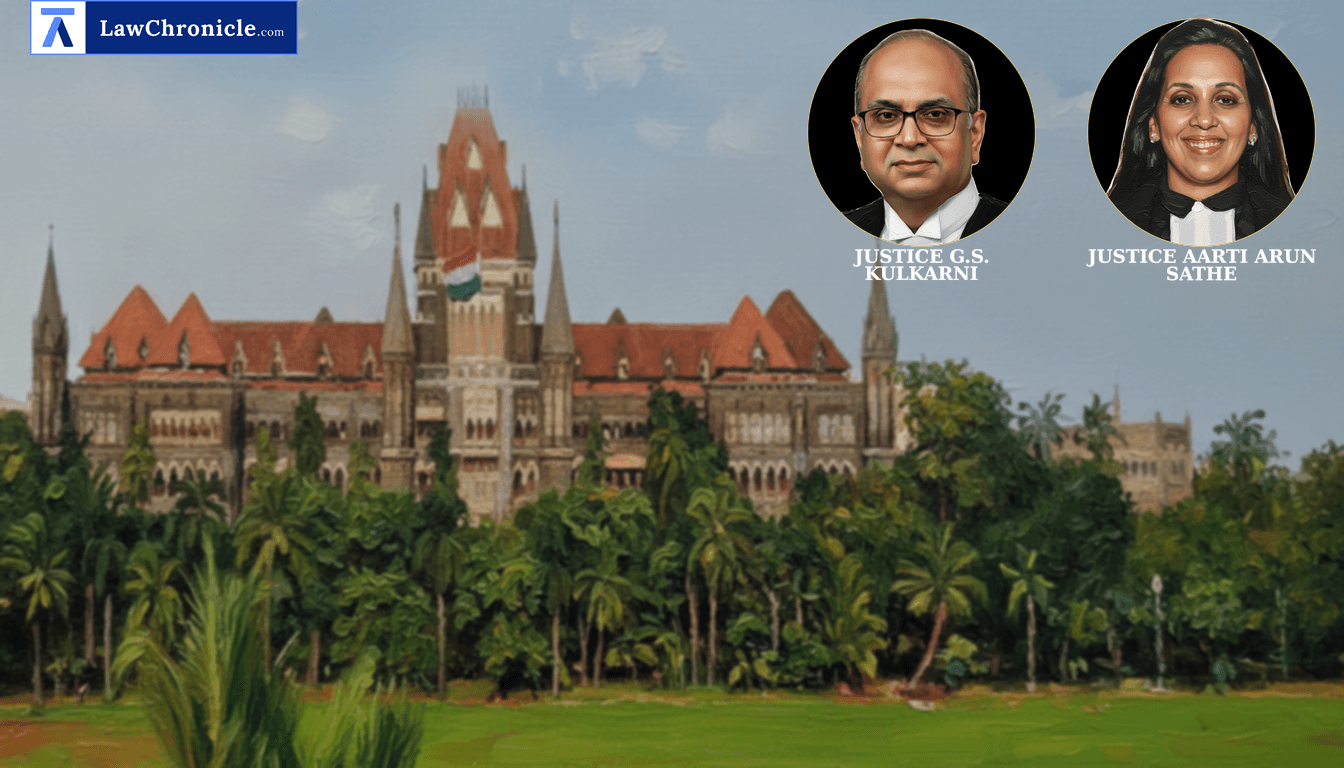
The Bombay High Court has slammed the door on exploitative 'ad-hocism' by ruling that the State cannot extract years of dedicated service from qualified professionals under temporary labels only to later foist arbitrary examinations as a condition for permanency. The Bombay High Court held that long-standing contractual employees who were recruited through transparent selection processes possess a 'legitimate expectation' of regularization that constitutional authorities cannot ignore.
A Division Bench comprising Justice G. S. Kulkarni and Justice Aarti Sathe adjudicated a batch of petitions filed by doctors and medical staff who had served the Vasai Virar City Municipal Corporation (VVMC) for 8 to 11 years. The petitioners challenged the State's insistence on a fresh Computer-Based Test for regularization, especially when their peers had already been absorbed without such hurdles.
Key Takeaways
Curbing Executive Arbitrariness
Standing as a bulwark against executive overreach, the court ruled that the State cannot apply different yardsticks to identically situated employees, labeling such discrimination a violation of Article 14.
End to Perpetual Ad-hocism
Public bodies are now cautioned that they cannot balance budgets or evade statutory obligations by maintaining a precarious workforce for perennial duties.
Protection of Livelihood
Recognizing the 'Lion and Lamb' power dynamic, the judgment protects mid-career professionals who have become age-barred for other public employment due to their decades of service to the State.
Validation of Legitimate Expectation
Contractual nomenclature no longer serves as a shield for the State to deny permanency to those whose initial recruitment followed proper legal procedures.
Discriminatory Regularization Norms for Contractual Employees
The Bench observed that the VVMC and the State had already regularized 33 similarly situated employees without requiring any examination. The court noted that the petitioners, who risked their lives during the COVID-19 pandemic, could not be subjected to a fresh, rigorous selection procedure after a decade of satisfactory service. The Bombay High Court suggested that "The law would be required to be applied uniformly to all such employees. In our opinion, the law certainly supports the petitioners’ case... serious prejudice is being caused to the petitioners by such inaction on the part of the VVMC in not regularizing the petitioners’ services. In fact, their continuous appointment on contractual posts and the petitioners discharging the services on such post held by them year after year and that too for a unduly long period has created a legitimate expectation of the petitioners being absorbed."
Ratio
The State, acting as a model employer, is prohibited from perpetuating precarious contractual employment where the work is perennial and the initial recruitment followed a transparent selection process. When a particular set of employees is granted regularization, the benefit must be extended to all identically situated persons; denying this or imposing fresh hurdles like examinations on long-serving staff constitutes manifest arbitrariness and a violation of the right to equality under the Constitution of India, 1950.
Background
The dispute originated when doctors and para-medical staff, appointed on six-month contracts under Section 53 of the Maharashtra Municipal Corporations Act, 1949, were continued for over a decade through 'technical breaks' to prevent claims of permanency. Despite there being 413 vacant sanctioned posts in the VVMC, the State Urban Development Department issued a letter in 2026 directing the Corporation to conduct a computer-based examination as a prerequisite for regularization of contractual employees. The petitioners argued this was unconscionable under Section 23 of the Indian Contract Act, 1872, as they had no meaningful bargaining power against the 'might of the State.'
Referring to Sheo Narain Nagar and Ors. Vs. State of Uttar Pradesh & Ors. ( "AIR 2018 SC 233": 2017 CaseBase(SC) 1120) and Sachin Ambadas Dawale Vs. State of Maharashtra & Ors., the Bombay High Court emphasized that Secretary, State of Karnataka & Ors. Vs. Umadevi & Ors. ( "(2006)4 SCC 1": 2006 CaseBase(SC) 148) cannot be used as a 'shield' to justify exploitation. The Bench also relied on the 'Lion and Lamb' analogy from Bhola Nath vs. State of Jharkhand & Ors. ( "2026 SCC OnLine SC 129": 2026 CaseBase(SC) 79) and State of U.P. & Ors. v. Arvind Kumar Srivastava & Ors. to strike down the unfair contractual conditions. The judgment followed the principles of parity established in Madhukar Bhavanrao Sadgir & Ors. Vs. State of Maharashtra & Ors. and Dharam Singh & Ors. Vs. State of U.P. & Anr. ( "2025 SCC OnLine SC 1735": 2025 CaseBase(SC) 621), ensuring that the petitioners receive the same benefits as those regularized in Secretary, State of Karnataka & Ors. Vs. Umadevi & Ors. ( "(2006)4 SCC 1": 2006 CaseBase(SC) 148) and Jaggo Vs. Union of India & Ors. ( "2024 SCC OnLine SC 3826": 2024 CaseBase(SC) 715). The Bombay High Court concluded that when work recurs year after year, the establishment must reflect that reality in its sanctioned strength rather than relying on opaque 'ad-hocism.'
Case Details:
Case No.: WRIT PETITION NO. 4079 OF 2021
Neutral Citation: 2026:BHC-AS:37648-DB
Case Title: Dr. Bhakti Deepak Chaudhary & Ors. vs. Vasai Virar Municipal Corporation & Anr.
Appearances:
For the Petitioner(s): Mr. Abhijeet Desai a/w Mohini Rehpade, Daksha Madhav, Vijay Singh, Karan Gajra and Deepesh Ramrakhiyani i/b Desai Legal LLP
For the Respondent(s): Mr. P. P. Kakade, Addl. G.P. a/w A. K. Naik, AGP, Smt. M. P. Thakur, AGP, N. M. Mehra, AGP and Smt. D. S. Deshmukh, AGP for State; Mr. Vishwanath Patil for VVMC; Mr. Arun Panickar for Respondent No. 5.
Source: 2026 CaseBase(BOM) 5653
 Breaking News