


Bombay HC Upholds 'Reasonable Accommodation' for 55% Disabled Candidate
 Copy Link
 Share
 Save
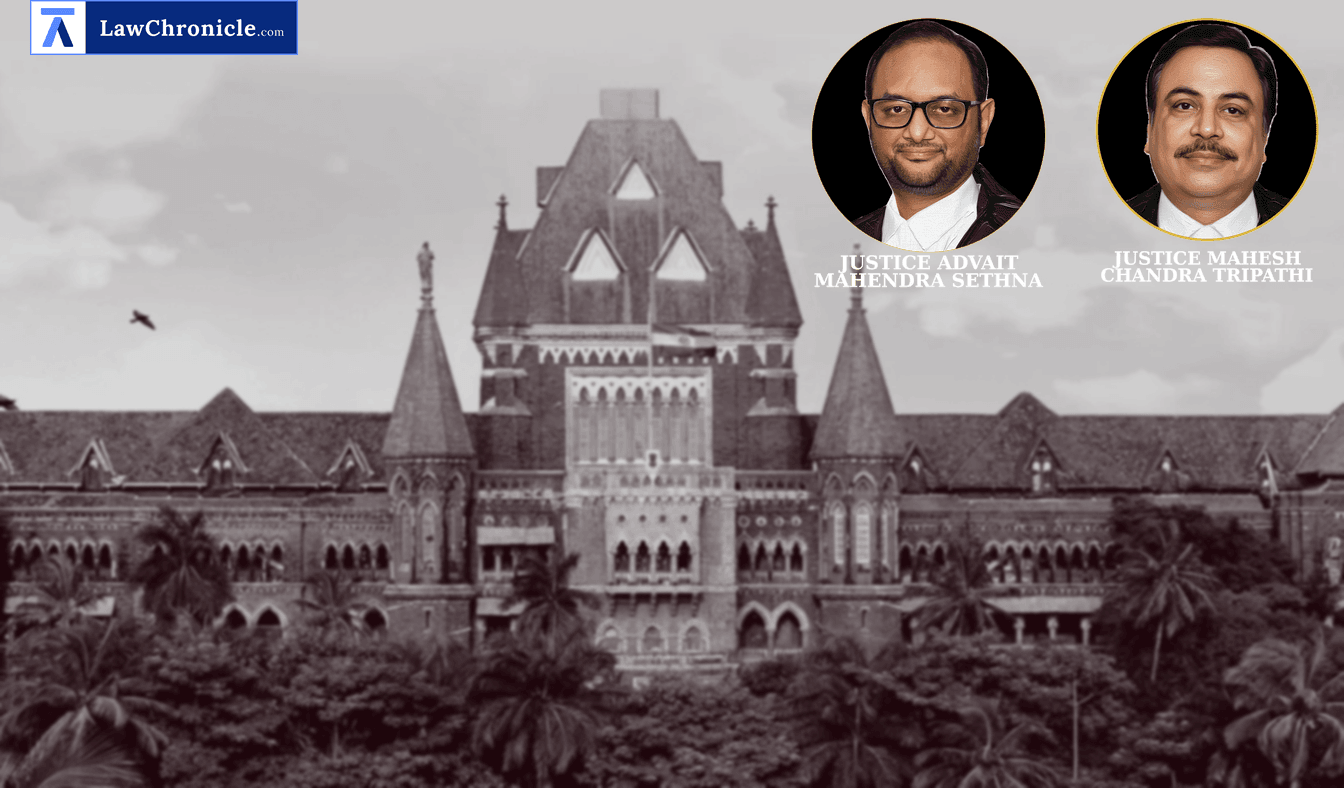
The Bombay High Court has mandated a de novo medical evaluation for a candidate with 55% disability in both legs, emphasizing that the principle of 'reasonable accommodation' must be broadly interpreted to ensure the effective participation of persons with disabilities in public services. The Division Bench underscored that scientific evaluation of functional capability must prevail over rigid classification when assessing fitness for technical roles like Geophysicists.
A Division Bench comprising Chief Justice Mahesh Chandra Tripathi and Justice Advait M. Sethna adjudicated upon a challenge against the Central Administrative Tribunal's (CAT) order which had summarily rejected a candidate’s claim to the post of Geophysicist despite being recommended by the UPSC.
Key Takeaways
Broadening Reasonable Accommodation
Reaffirms that the principle of reasonable accommodation is a fundamental right under the Constitution of India, 1950 and must be applied to individual needs rather than rigid categorization.
Primacy of Expert Functional Assessment
Establishes that medical boards must provide specific findings on whether a candidate’s disability actually prevents them from performing the 'functional requirements' of a specific post.
Judicial Deference to Science
Clarifies that while courts cannot substitute expert medical opinions, they must ensure those opinions are comprehensive, reasoned, and consistent with disability rights jurisprudence.
Court Observations and Directions
The Bench observed that the Tribunal’s dismissal was 'cryptic' and failed to address the contradiction in the medical report which declared the petitioner 'Fit' while simultaneously classifying him under a category (Both Legs affected) supposedly excluded by the recruitment notice. The Bombay High Court emphasized that for technical posts involving both field and office work, a 'thorough and overall medical evaluation' is of prime importance. It further observed that “The concept of reasonable accommodation would encompass within itself the deployment of a purposive and meaningful construction of the regulations in a manner as to further the objectives of the Rights of Persons with Disabilities Act, 2016. The reasonable accommodation as defined in Section 2(y) of the Rights of Persons with Disabilities Act, 2016 should not be understood narrowly to mean only the provision of assisting devices... a broad interpretation of the concept of reasonable accommodation which will further the objective of the Rights of Persons with Disabilities Act, 2016 and Article 41 of the Directive Principles of State Policy is mandated.”
Ratio
The principle of reasonable accommodation, rooted in the Constitution of India, 1950 and the Rights of Persons with Disabilities Act, 2016, mandates that eligibility for public employment should not be denied based on rigid functional classifications without a specific, expert-led de novo assessment of a candidate's actual ability to perform the duties of the post.
Background
The Petitioner, a student belonging to the Scheduled Caste category with 55% locomotor disability (both legs affected), qualified all three stages of the Combined Geo-Scientist Examination 2022. Despite his recommendation for the post of Geophysicist (Group 'A'), the Ministry of Mines rejected his candidature. The rejection was based on the ground that the post's functional requirements only permitted candidates with 'One Leg affected' (OL) or 'One Arm affected' (OA), whereas the Petitioner had 'Both Legs affected' (BL).
The Petitioner argued that 70% of a Geophysicist’s duties are office-based and that he had successfully completed field work during his academic course. He relied on the Anmol Vs. Union of India ( "2025 SCC OnLine SC 387": 2025 CaseBase(SC) 71) and Omkar Ramchandra Gond to argue that the state must accommodate his disability. The Bombay High Court found that the CAT had failed to consider these precedents or the fact that the Central Standing Medical Board had initially marked the petitioner as 'Fit' under the PH category. Consequently, the High Court set aside the CAT order and remanded the matter for a fresh functional medical assessment.
Case Details:
Case No.: WRIT PETITION NO. 2665 OF 2025
Neutral Citation: 2026:BHC-AS:44811-DB
Case Title: Teklal Kumar Das Vs. The Secretary, Union Public Service Commission & Others
Appearances:
For the Petitioner(s): Mr. Anjani Kumar Singh a/w Ms. Vritika Bhatia i/by Ms. Shilpa Prashant Gaikwad
For the Respondent(s): Dr. Vinod Joshi a/w Ms. Gayatri Khanwilkar, Ms. Roma Salunke & Ms. Valissa Alphanso for R-1; Mr. Pranil Sonawane a/w Ms. Vedashree Phadke & Ms. Vaishnavi Dalvi for R-2, 3 & 5
Source: 2026 CaseBase(BOM) 7154
Similar Articles



 Breaking News


