Bombay High Court Shields Long-Term ONGC Workers From Backdoor Entry Stigma
 Copy Link
 Share
Share Save
Save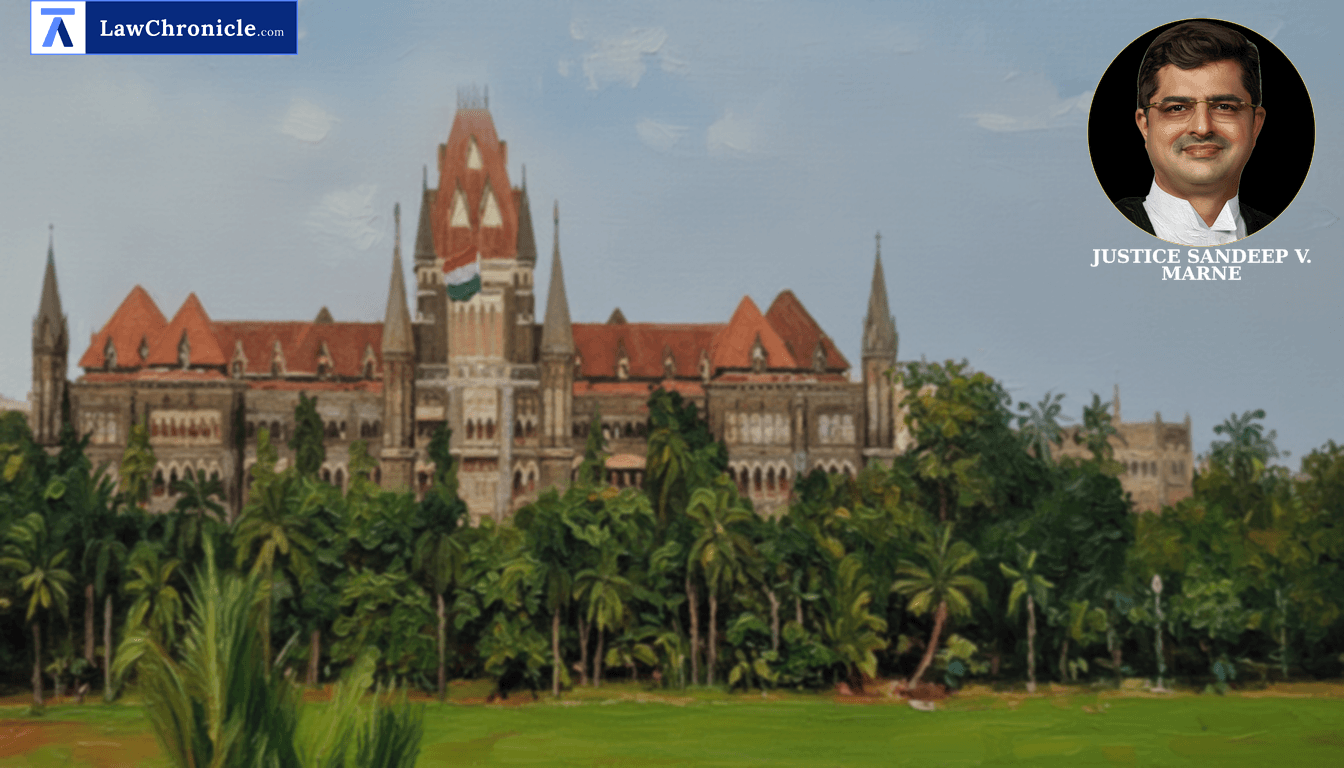
The Bombay High Court has fortified the rights of long-term contract employees in public sector undertakings, ruling that workers who have served for over a quarter of a century cannot be discarded as 'backdoor entrants' if their initial recruitment followed a transparent selection process. In a significant modification to a tribunal award, the Court held that while automatic permanency after 240 days is not a vested right in public employment, a ten-year continuous service threshold creates a legitimate entitlement for regularization.
A single-judge bench of Justice Sandeep V. Marne heard the challenge brought by Oil & Natural Gas Corporation Ltd. (ONGC) against an industrial tribunal's award that directed the regularization of nine field operators. The Court balanced the strict constitutional requirements for public employment with the equitable necessity of recognizing decades of uninterrupted service in harsh offshore conditions.
Key Takeaways
Redefining Backdoor Entry
Selection through employment exchanges followed by written tests and interviews prevents an appointment from being classified as an illegal 'backdoor' entry, even if the tenure was originally fixed.
Jurisdictional Reach Over Offshore Rigs
Indian labor laws, specifically the Industrial Disputes Act, 1947, remain fully applicable to employees stationed on offshore rigs if the administrative and disciplinary control is exercised from Indian soil.
Modification of Permanency Timelines
Industrial adjudicators cannot create posts or grant permanency merely upon the completion of 240 days of service in public sector units; instead, they must adhere to the ten-year threshold established by the Supreme Court.
Estoppel Does Not Bar Regularization
Workers do not lose their right to claim regularization simply because they participated in subsequent regular recruitment drives and failed.
Legal Applicability to Offshore Installations
ONGC argued that the Industrial Disputes Act, 1947 did not apply to workers on rigs located beyond 12 nautical miles. The Bombay High Court rejected this, noting that all service decisions, disciplinary actions, and even criminal reporting occurred at Mumbai. The Bench distinguished the precedent in Aban Loyd Chilies Offshore Limited and another Versus. Union of India, clarifying that customs duty laws for offshore zones do not strip workers of their statutory labor protections when their employment is rooted in Indian territory.
The Mandate of Umadevi and the Ten-Year Exception
The Bombay High Court extensively analyzed the landmark ruling in Secretary, State of Karnataka and others Versus. Umadevi (3) and others. While ONGC argued that the workers were merely tenure-based and thus ineligible for permanency, the Court found that they met the 'irregular' rather than 'illegal' appointment criteria.
The Bombay High Court noted the fact that nine workers had been in continuous service for over a quarter of a century. The Bench found itdifficult to believe that their engagement was solely for the limited purpose of any specific project or that ONGC did not require their services. The Court highlighted evidence on record which suggested that the concerned workers proved to be an asset for ONGC who worked for over a quarter of century in adverse conditions at the oil rigs.
The Court modified the award passed by CGIT and directed the nine workers to be treated in regular service w.e.f. the date of completion of 10 years of service from their initial engagements.
Regarding the distinction between regularization and permanency, the Court referenced R. N. Nanjundappa vs T. Thimmiah & Anr ( "1972 2 SCR 799": 1971 CaseBase(SC) 714) and B.N. Nagarajan Versus. State of Karnataka ( "1979 4 SCC 507": 1979 CaseBase(SC) 480), noting that while the concepts differ, long-term service against an apparent perennial need justifies legal relief.
Ratio
In public sector employment, appointments made after following a selection process (requisition via employment exchange, written tests, and medical fitness) are 'irregular' rather than 'illegal'. Such employees, if they continue in service for over ten years without the protection of court orders, are entitled to regularization as a one-time measure under the exception carved out in the Secretary, State of Karnataka and others Versus. Umadevi (3) and others judgment. An industrial adjudicator cannot grant permanency based solely on 240 days of service (Model Standing Orders) if it results in the unauthorized creation of posts in a State instrumentality.
Background
The dispute originated in 2000-01 when ONGC recruited technical personnel for offshore drilling on a fixed-tenure basis. Despite the 'fixed-term' labels, the nine respondents continued working for over 25 years through successive renewals. In 2008, a dispute was raised for regularization. The Central Government Industrial Tribunal (CGIT) initially ruled in favor of the workmen, granting them permanency from the date they completed 240 days of service.
ONGC challenged this in the High Court, relying on State of Punjab and others Versus. Jagit Singh and others ( "2017 1 SCC 148": 2016 CaseBase(SC) 490) and Registrar General of India and another Versus. Thippa Shetty and others ( "1998 8 SCC 690": 1996 CaseBase(SC) 1821) to argue that the tribunal overstepped its jurisdiction and that the Constitution of India and Employment Exchange (Compulsory Notification of Vacancies) Act, 1959 requirements for public recruitment were not fully met. The Bombay High Court, however, found that since the workers were qualified and had served for 25 years, they fell under the exception for regularization. The Bombay High Court followed the principles laid down in Maharashtra State Road Transport Corporation and others Versus. Casteribe Rajya P Karmachari Sanghatana ( "2009 8 SCC 556": 2009 CaseBase(SC) 275) and Hari Nandan Prasad and others Versus. Employer I/R to Management of FCI and others regarding the limits of industrial adjudication in public employment, ultimately modifying the Tribunal’s award to grant regularization after ten years of service rather than 240 days.
Case Details:
Case No.: WRIT PETITION NO. 13673 OF 2025
Neutral Citation: 2026:BHC-AS:37194
Case Title: Oil & Natural Gas Corporation Ltd. v. Central Government Industrial Tribunal-II and another
Appearances:
For the Petitioner(s): Mr. J.P. Cama, Senior Advocate with Ms. Mallika Joshi & Mr. Akshay Gupte i/b Solomon & Co.
For the Respondent(s): Mr. Lilesh P. Sawant, for Respondent No. 2
Source: 2026 CaseBase(BOM) 5646
 Breaking News