Bona Fide Passenger Status No Guarantee Of Untoward Incident Claim: Delhi HC
 Copy Link
 Share
 Save
Deboarding a stationary train to stand near active tracks constitutes a fatal risk that excludes a death from the definition of an 'untoward incident', even if the victim holds a valid ticket. The Delhi High Court has clarified that contemporaneous railway records and loco-pilot statements can effectively override a claimant’s plea of an accidental fall from a moving train.
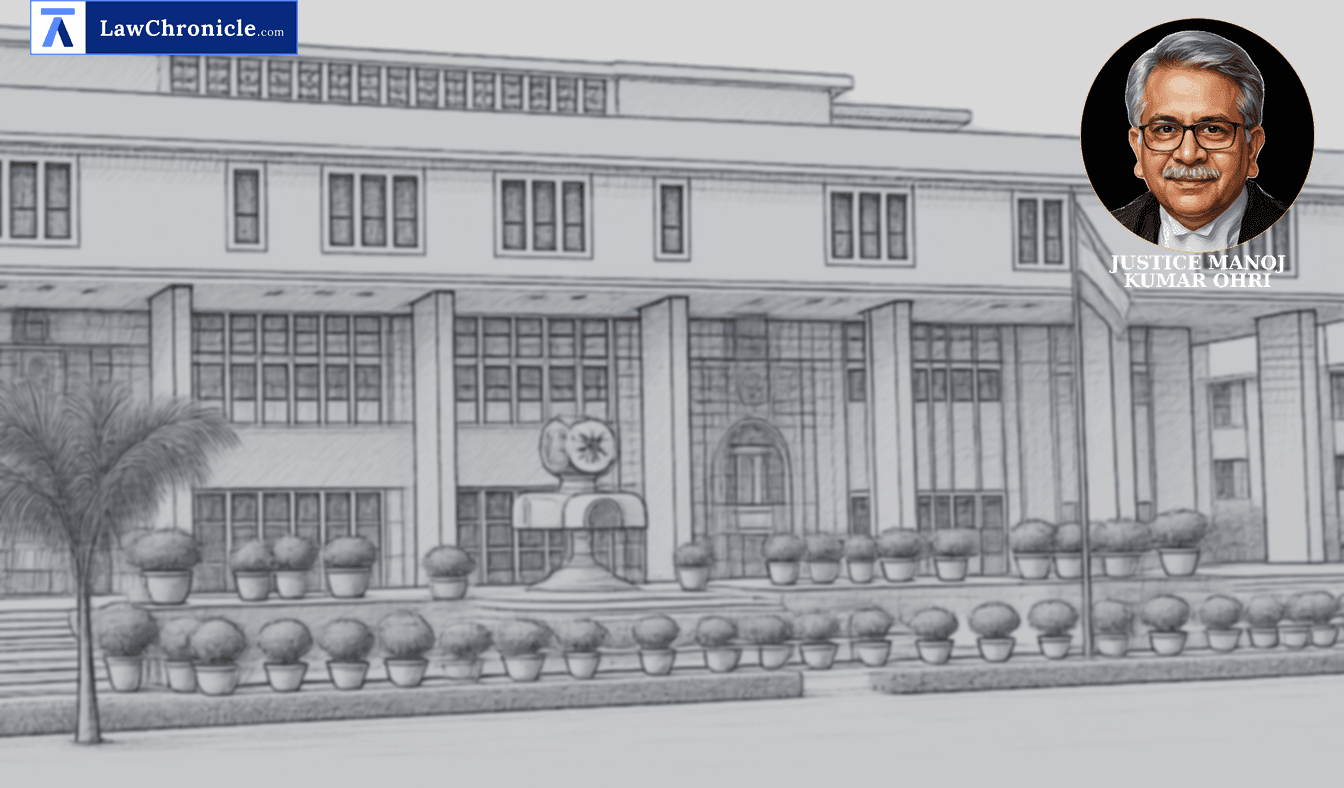
In a significant appellate challenge, Justice Manoj Kumar Ohri presided over the matter, examining whether the Railway Claims Tribunal was justified in dismissing a compensation claim despite the victim's undisputed status as a bona fide passenger. The Court was tasked with determining the evidentiary weight of internal railway inquiry reports against the narrative provided by the legal heirs of the deceased.
Key Takeaways
Evidentiary Value of DRM Reports
Contemporaneous records, including Guard Book entries and Station Master memos, serve as crucial evidence to reconstruct the sequence of events in railway accidents.
Strict Interpretation of 'Untoward Incident'
Merely possessing a valid ticket does not automatically qualify a death as an 'untoward incident' under Section 123(c) of the Railways Act, 1989 if the evidence suggests voluntary deboarding.
Loco-Pilot Statements
Statements of loco-pilots recorded during internal inquiries carry significant weight when corroborated by train movement timings, even if they are not formally examined before the Tribunal.
Court's Rationale on 'Untoward Incident'
The Court observed that while the deceased was a bona fide passenger, the circumstances of the death must strictly fall within the statutory definition provided under Section 123(c) of the Railways Act, 1989. The bench noted that the timings recorded in the DRM inquiry report showing the train stationed on a loop line to facilitate the passage of through trains aligned perfectly with the Loco Pilot's account of striking a person standing near the main line.
The Court, in its reasoning, observed: "The material, when read cumulatively, supports the conclusion that the deceased was not struck after accidentally falling from a moving train between Banchari and Hodal, as pleaded by the appellants, but was struck while standing near the Main Line at Hodal after deboarding the stationary train."
Addressing the reliance on precedent, the Court noted that a similar approach was adopted in Vijender Singh & Anr. v. Union of India ( "FAO 206/2022, decided on 24.04.2026": 2020 CaseBase(ALL) 1078), where the statement of the Loco Pilot, considered alongside contemporaneous records, was sufficient to sustain a finding that the deceased was run over while crossing tracks rather than falling from a train.
The Court has following directions:
"Accordingly, in light of the reasoning given in the impugned order and the submissions put forth, I do not find force in the merits of the contentions and hence, there is no reason to interfere with the impugned order. The present appeal is, accordingly, dismissed."
Ratio
A passenger’s death resulting from being struck by a train while standing on or near the tracks after voluntarily deboarding a stationary train does not constitute an 'untoward incident' under the Railways Act, 1989. The status of being a 'bona fide passenger' is a necessary but not a sufficient condition for compensation; the claimant must prove that the death resulted specifically from an accidental fall or a defined untoward act as per the statute.
Background
The dispute originated from the death of one Girraj Singh on August 25, 2018. The appellants claimed that the deceased, a regular commuter holding a valid Monthly Season Ticket, fell accidentally from Train No. 14212 (Intercity Express) between Banchari and Hodal and was subsequently struck by another train.
However, the Railway Claims Tribunal dismissed the claim application filed under Section 23 of the Railway Claims Tribunal Act, 1987. The Tribunal relied on the DRM inquiry report and the statement of the Loco Pilot of Train No. 12616 (GT Express), who testified that the deceased was standing near the Main Line while his original train was stationary on the loop line. The appellants challenged this, arguing that the Loco Pilot was not examined before the Tribunal and that the DRM report was insufficient to displace their claim. The High Court, after perusing the movement records and Section 191 of the Railways Act, 1989, upheld the Tribunal's findings and dismissed the appeal.
Case Details:
Case No.: FAO 108/2022
Case Title: Geeta Devi & Ors. V. Union Of India
Appearances:
For the Petitioner(s): Mr. Rajan Sood, Ms. Ashima Sood and Ms. Megha Sood, Advocates
Source: 2026 CaseBase(DEL) 8398
 Breaking News