


Branding Victims as Witches No Shield for Brutal Double Murder: Jharkhand HC
 Copy Link
 Share
 Save
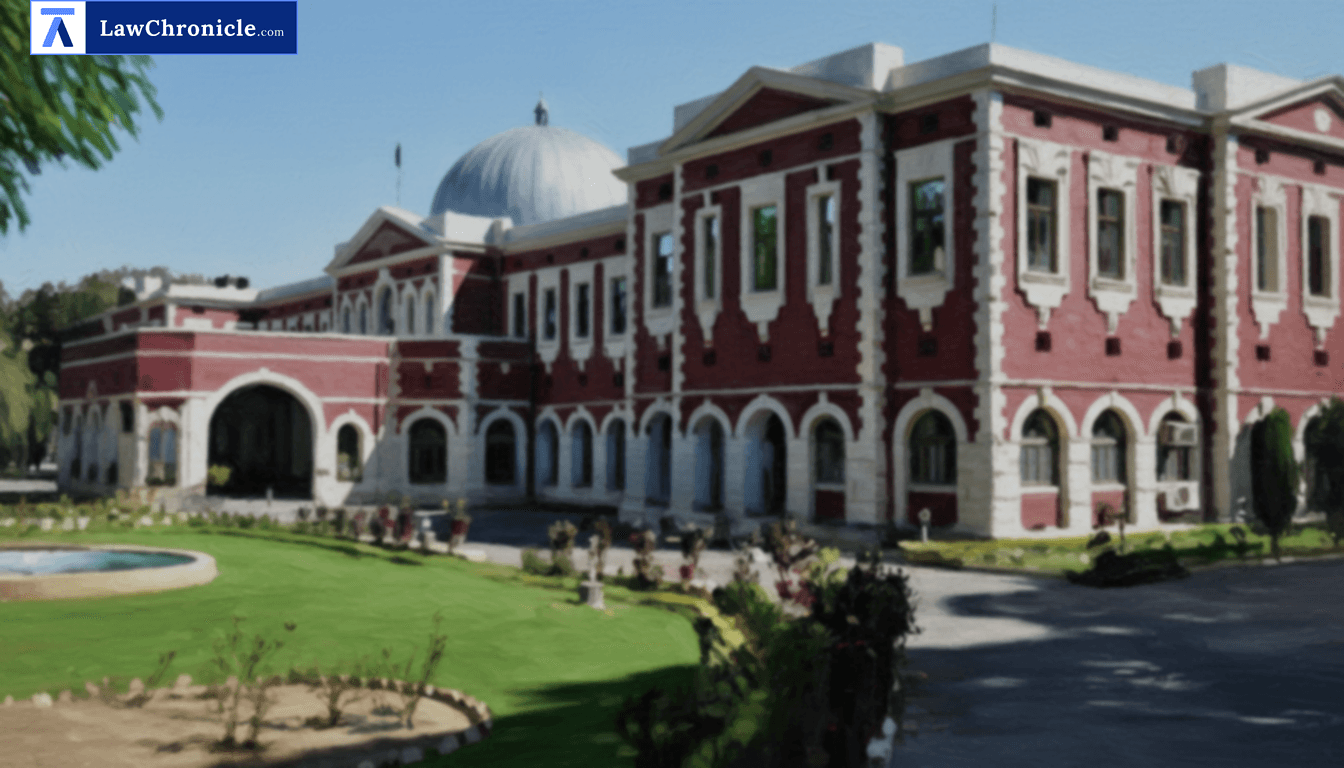
In a stern crackdown on the regressive practice of witch-hunting, the Jharkhand High Court upheld the life imprisonment of three men for the gruesome double murder of an elderly couple, ruling that familial testimony remains a primary and reliable source of evidence when ocular accounts are consistent and corroborate medical findings.
A Division Bench comprising Justice Ananda Sen and Justice Pradeep Kumar Srivastava heard the appeals challenging the conviction of three individuals found guilty of murdering an elderly couple on the pretext of 'witchcraft' (Daain) practices. The Court scrutinized whether the reliance on 'interested witnesses' and the absence of village testimony could invalidate a trial resulting in convictions under the IPC and the Prevention of Witch (Daain) Practices Act, 1999.
Key Takeaways
Credibility of Related Witnesses
Evidence from close relatives cannot be discarded as 'tainted' solely due to their relationship with the victim; such witnesses are often the most natural presence at a crime scene and unlikely to shield actual culprits.
Rejection of Witchcraft as a Defense
Labeling victims as 'witches' to justify lethal violence is a heinous aggravation of the offence, and the lack of village-level witnesses due to fear does not weaken a well-corroborated prosecution case.
Forensic Confirmation
Physical recovery of murder weapons (Tangi) from an accused's residence, combined with FSL reports matching the blood of the deceased, serves as a conclusive link in establishing the 'consorted manner' of the attack.
Court's Analysis on Witness Reliability
The Court observed that while several independent villagers were declared hostile, the testimony of the informant and his son remained unshaken. The bench emphasized that minor discrepancies are bound to occur in natural narratives and do not shatter the substance of the prosecution’s case.
The Court, in its reasoning, observed: "As regards the contention that the eyewitnesses are close relatives of the deceased, it is by now well-settled that a related witness cannot be said to be an 'interested' witness merely by virtue of being a relative of the victim... Ordinarily, a close relative would be the last to screen the real culprit and falsely implicate an innocent person."
Addressing the lack of independent witnesses, the Court referred to the reality of witness intimidation in rural crimes. It noted that when accused persons act in a manner that terrifies a locality, the testimony of survivors who have directly witnessed the horror is sufficient for conviction.
The Court has the following directions:
"Therefore, we do not find any merits in these appeals, which stands dismissed. The appellants are in custody. Let a copy of this judgment be furnished forthwith to the appellants through learned counsel for the State. Let a copy of this judgment be sent to the court concerned for information and needful."
Ratio
A witness is considered 'interested' only if they derive a specific benefit from the litigation or possess a motive to falsely implicate the accused due to prior enmity; the mere status of being a 'related witness' does not render testimony inherently unreliable if the account is probable, cogent, and consistent with medical and forensic evidence.
Background
The dispute originated in December 2016 when the appellants arrived at the informant's house, accusing his brother and sister-in-law of practicing witchcraft which allegedly caused illnesses in their family. The accused subsequently locked the informant and his family in a room, dragged his elderly parents out, and brutally assaulted them with a 'Tangi' (axe) before setting them on fire.
The prosecution relied heavily on Laltu Ghosh v. State of W.B. and Ramji Singh v. State of U.P. to argue that the testimony of the informant and his son (P.W.9 and P.W.12) should be accepted despite their relation to the deceased. The defense contended that the injuries found did not align with burn marks and suggested false implication due to jealousy. However, the medical board (P.W.4, P.W.5, and P.W.6) confirmed death due to hemorrhage and neurogenic shock from sharp-cutting injuries before the bodies were subjected to a 'fiery death.'
The High Court found no illegality in the trial court's judgment, noting that the weapons seized from the house of the accused matched the blood of the victims, thereby dismissing the appeals and affirming the life sentences.
Case Details:
Case No.: Cr. Appeal (D.B.) No. 686 of 2018 with Cr. Appeal (D.B.) No. 1161 of 2018
Neutral Citation: 2026:JHHC:32626-DB
Case Title: Vijay Singh v. The State of Jharkhand
Appearances:
For the Petitioner(s): Mr. Praveen Shankar Dayal, Advocate; Mr. Shailesh Poddar, Advocate; Mr. Sheo Kumar Singh, Advocate
For the Respondent(s): Mr. Anup Pawan Topno, A.P.P.; Mr. Bhola Nath Ojha, A.P.P.
Source: 2026 CaseBase(JHKD) 3398
Similar Articles
 Breaking News


