


Breach of Promise to Marry is not Rape: Allahabad HC Quashes Criminal Case
 Copy Link
 Share
 Save
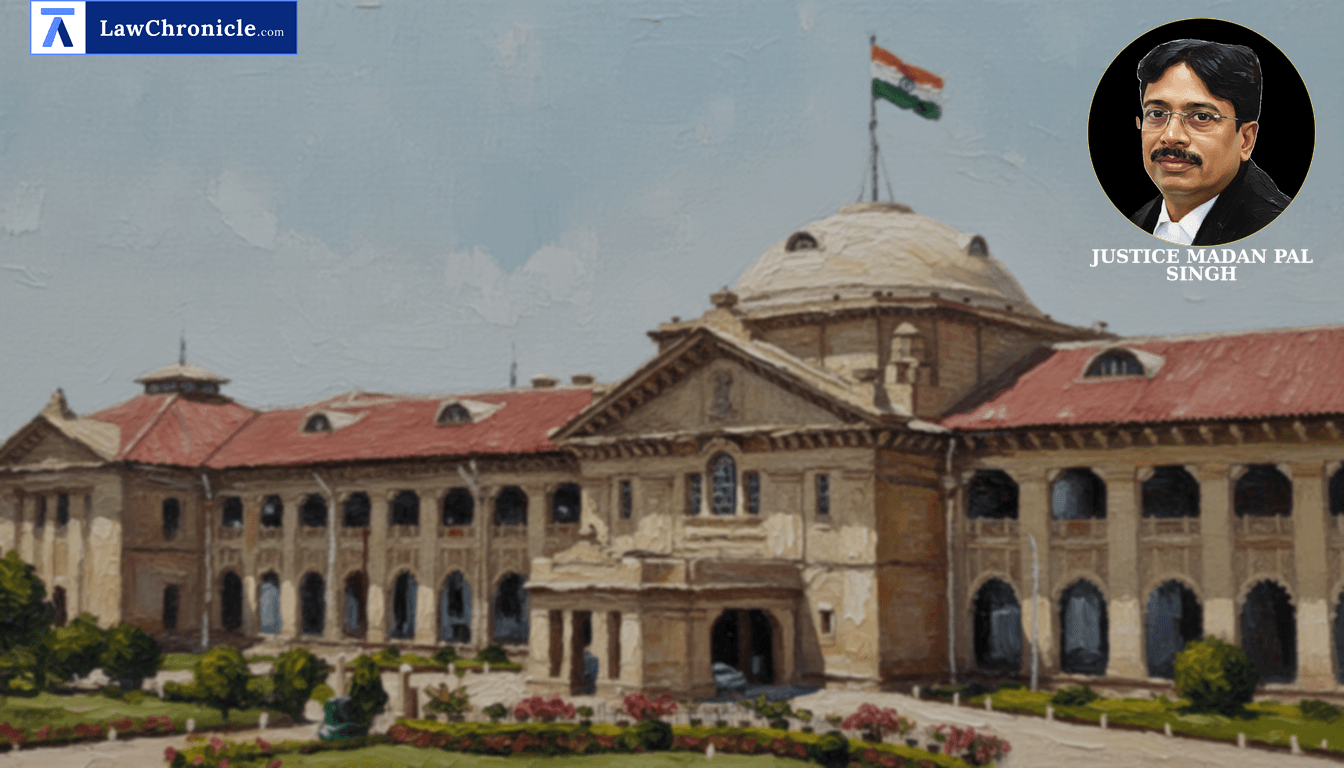
The Allahabad High Court recently clarified that a consensual relationship followed by a refusal to marry does not automatically amount to rape, distinguishing between a false promise from inception and a subsequent breach of promise.
Justice Madan Pal Singh, presiding over the bench, quashed the proceedings against a father-son duo, emphasizing that the criminal justice system should not be overburdened by soured relationships where no genuine sexual offence exists. The court observed that the prosecutrix, a 24-year-old major, had engaged in a long-term relationship with the appellant of her own free will.
Legal Distinction Between False Promise and Breach of Promise
In its analysis, the court delved into the definitions of consent under Section 90 of the Indian Penal Code, 1860 and rape under Section 375. The court relied on the principles set by the Supreme Court in Pramod Suryabhan Pawar vs The State Of Maharashtra ( "AIR 2019 S C 4010": 2019 CaseBase(SC) 305), noting that for consent to be vitiated by a "misconception of fact," the promise of marriage must have been false from the very beginning.
The Court, in its reasoning, observed: "A consensual sexual relationship followed by a subsequent refusal to marry does not render the accused liable for rape. This position finds consistent support in the jurisprudence of the Supreme Court, as laid down in Deepak Gulati v. State of Haryana ( "AIR 2013 SC 2071": 2013 CaseBase(SC) 323) and Pramod Suryabhan Pawar vs The State Of Maharashtra ( "AIR 2019 S C 4010": 2019 CaseBase(SC) 305), wherein it has been emphatically held that mere breach of promise to marry, in absence of initial dishonest intent, cannot convert consensual physical relations into rape. Treating every such refusal to marriage as vitiated consent would dilute the sanctity of Section 375 Indian Penal Code, 1860 and overburden the criminal justice system with cases arising from soured relationships rather than genuine sexual offences."
Failure to Establish Offences under Special Acts
The High Court further observed that the allegations under the Scheduled Castes and Scheduled Tribes (Prevention of Atrocities) Act, 1989 were unsustainable as the FIR and statements lacked specific details of caste-based slurs or public humiliation. Additionally, the court noted that since the alleged incidents occurred between 2022 and 2023, the provisions of the Bhartiya Nyay Sanhita, which came into force on July 1, 2024, could not be applied retrospectively. Therefore, the charge under Section 69 of the Bhartiya Nyay Sanhita was held to be inapplicable.
Background:
The case originated from an FIR lodged in May 2025 by the prosecutrix, alleging that she met the appellant through Instagram three years prior. She claimed that the appellant established physical relations with her on a false promise of marriage and later deceived her into signing a stamp paper as a marriage registration. She further alleged that the appellant's father (appellant no. 2) raped her and that both appellants swindled money from her and abused her using caste-based slurs when she insisted on marriage.
The appellants argued that the relationship was entirely consensual and that the prosecutrix had stayed with the appellant for over a year without protest. They contended the FIR was an afterthought, filed over two years after the alleged start of the relationship. Referring to Abbas Ahmed Choudhury v. State of Assam and Mahesh Damu Khare Vs. The State of Maharashtra & Others ( "2024 SCC OnLine SC 347": 2024 CaseBase(SC) 932), they argued that a prolonged relationship indicates consent. The High Court agreed, finding that the woman's decision to move in with the appellant almost immediately and the long duration of their stay together pointed toward a consensual affair rather than one built on a deceptive promise.
Case Details:
Case No.: CRIMINAL APPEAL No. - 2737 of 2026
NeutralCitation: 2026:AHC:121264
Case Title: Kapil Som and another Vs. State of U.P. and another
Appearances:
For the Petitioner(s): Aditya Prasad Mishra
For the Respondent(s): G.A.
Source: 2026 CaseBase(ALL) 205
Similar Articles

 Breaking News


