Brij Bhushan Sharan Singh Acquitted; Can Delhi High Court Reverse It?
 Copy Link
 Share
Share Save
Save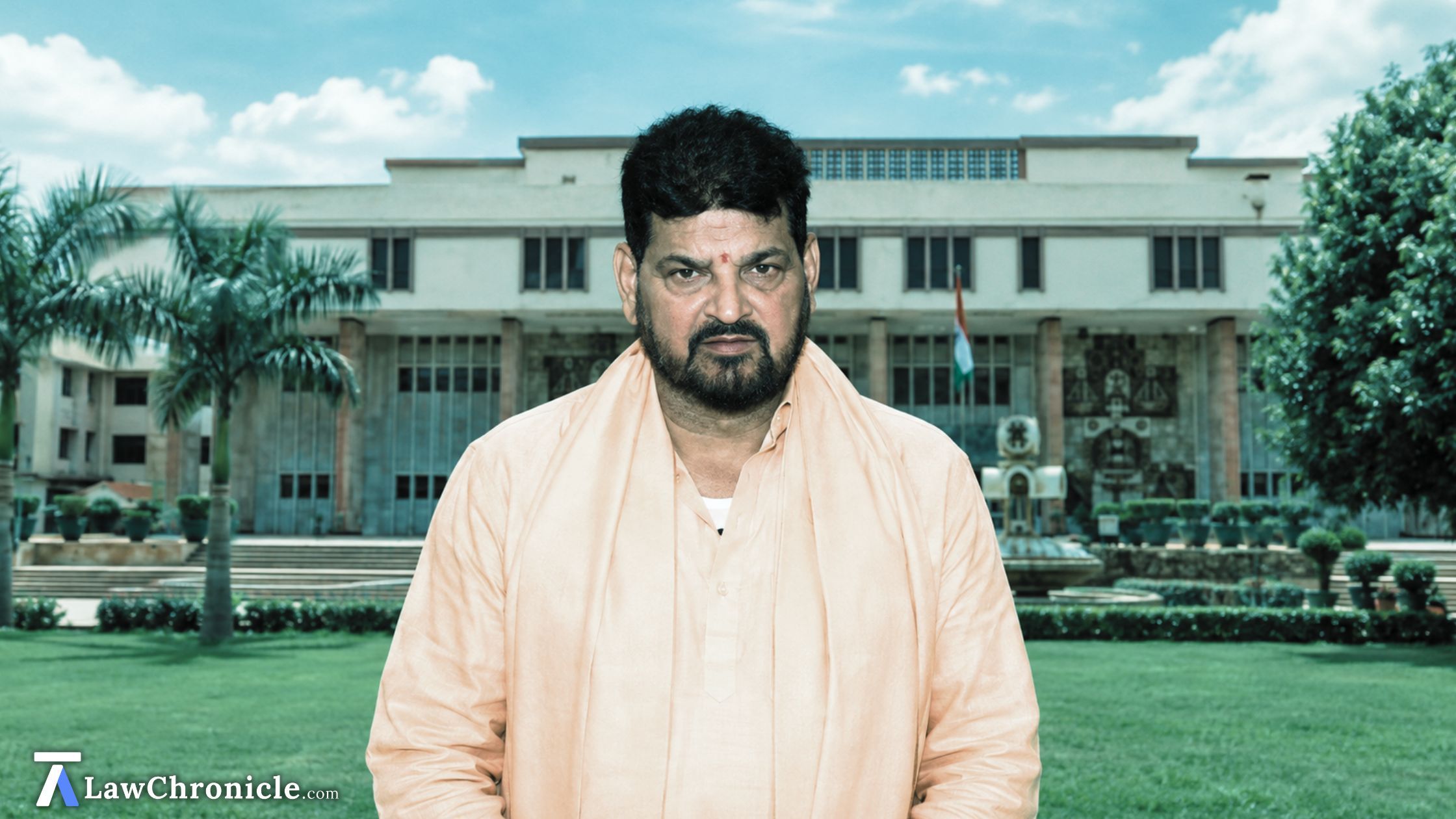
After Brij Bhushan Sharan Singh acquitted, will the matter be taken up to the Delhi High Court? Former BJP MP and ex-Wrestling Federation of India (WFI) chief Brij Bhushan Sharan Singh has, as per news reports, been acquitted by a Delhi court in the sexual harassment case filed by women wrestlers. Additional Chief Judicial Magistrate (ACJM) Ashwini Panwar of the Rouse Avenue Courts passed the order of acquittal on Monday.
As per the reports, the Brij Bhushan Singh case verdict was reserved after hearing the parties at length, and the proceedings took place in camera. This development has triggered a wave of searches around Brij Bhushan Sharan Singh news, given the case's high public profile since the 2023 wrestlers' protest at Jantar Mantar.
Background of the Brij Bhushan Singh Case
The case pertains to sexual harassment allegations raised by six women wrestlers against Brij Bhushan Singh, based on which the police had registered an FIR against him. On June 15, 2023, the Delhi Police filed a chargesheet against Brij Bhushan Sharan Singh for offences under Sections 354 (outraging modesty), 354A (sexually coloured remarks), 354D (stalking) and 506(1) (criminal intimidation) of the Indian Penal Code.
The trial Court framed charges of sexual harassment and outraging the modesty of women against Singh for allegedly harassing five women wrestlers, holding that there was sufficient material on record to frame charges under Sections 354 and 354A IPC. The Court also found sufficient material to frame a charge under Section 506(1) IPC with respect to two of the wrestlers, and charged the co-accused with criminal intimidation for allegedly threatening one of the victims.
A minor wrestler had also made allegations against Brij Bhushan, invoking the POCSO Act. As per reports, she later withdrew her complaint, the Delhi Police filed a cancellation report, and that case was subsequently closed.
Can the Delhi High Court Reverse the Acquittal?
The Brij Bhushan Singh case is far from procedurally closed merely because a trial court has returned a verdict of acquittal. Under Indian criminal procedure, an order of acquittal by a Magistrate's court is appealable, and the Delhi High Court does possess the jurisdiction to reverse it, though the legal threshold for doing so is deliberately high.
Who can appeal?
Ordinarily, it is the State (through the public prosecutor, with government sanction) that appeals an acquittal before the High Court. A private complainant also has a statutory right to appeal, subject to obtaining "special leave" from the High Court, a filter meant to weed out appeals lacking merit. Since the complainants here are private parties, any challenge by them would likely proceed through this special-leave route, while the Delhi Police/State could separately examine whether to appeal.
The legal standard for reversal
Indian appellate jurisprudence recognizes a "double presumption of innocence" in acquittal appeals, operating in the accused's favour both at trial and again on appeal. Courts have repeatedly cautioned against interference merely because another view of the evidence is possible. Reversal is warranted only where the trial court's findings are perverse, based on an incorrect or incomplete appreciation of evidence, contrary to settled law, or where the acquittal amounts to a clear miscarriage of justice. Mere disagreement with witness-credibility findings is ordinarily insufficient.
What could form the basis of a challenge?
With the proceedings held in camera and detailed reasoning not yet public, an appeal would likely focus on the trial court's appreciation of the wrestlers' testimony, its treatment of corroborative material, and the reasoning behind the partial discharge before eventual acquittal on all counts.
Timeline
An appeal against acquittal must typically be filed within limitation, around 90 days for the State and 60 days (extendable) for a private appellant seeking special leave, subject to condonation for sufficient cause. Until such an appeal is filed and admitted, the acquittal stands, and Singh and co-accused remain free in the eyes of the law.
Conclusion
While the Rouse Avenue Court's acquittal marks the conclusion of the trial stage in the Brij Bhushan Singh case, it does not foreclose the matter altogether. The Delhi High Court retains the power to reverse Brij Bhushan Sharan Singh acquittal, but only within the tightly circumscribed limits that appellate courts apply to such orders. Whether the complainant-wrestlers or the State choose to pursue that route, and whether the High Court finds grounds meeting the high threshold for interference, will determine the next chapter in one of India's most closely watched sports-and-law controversies.
 Breaking News