Bringing Police to Office to Question Transfer Is Misconduct: Bombay HC
 Copy Link
 Share
Share Save
Save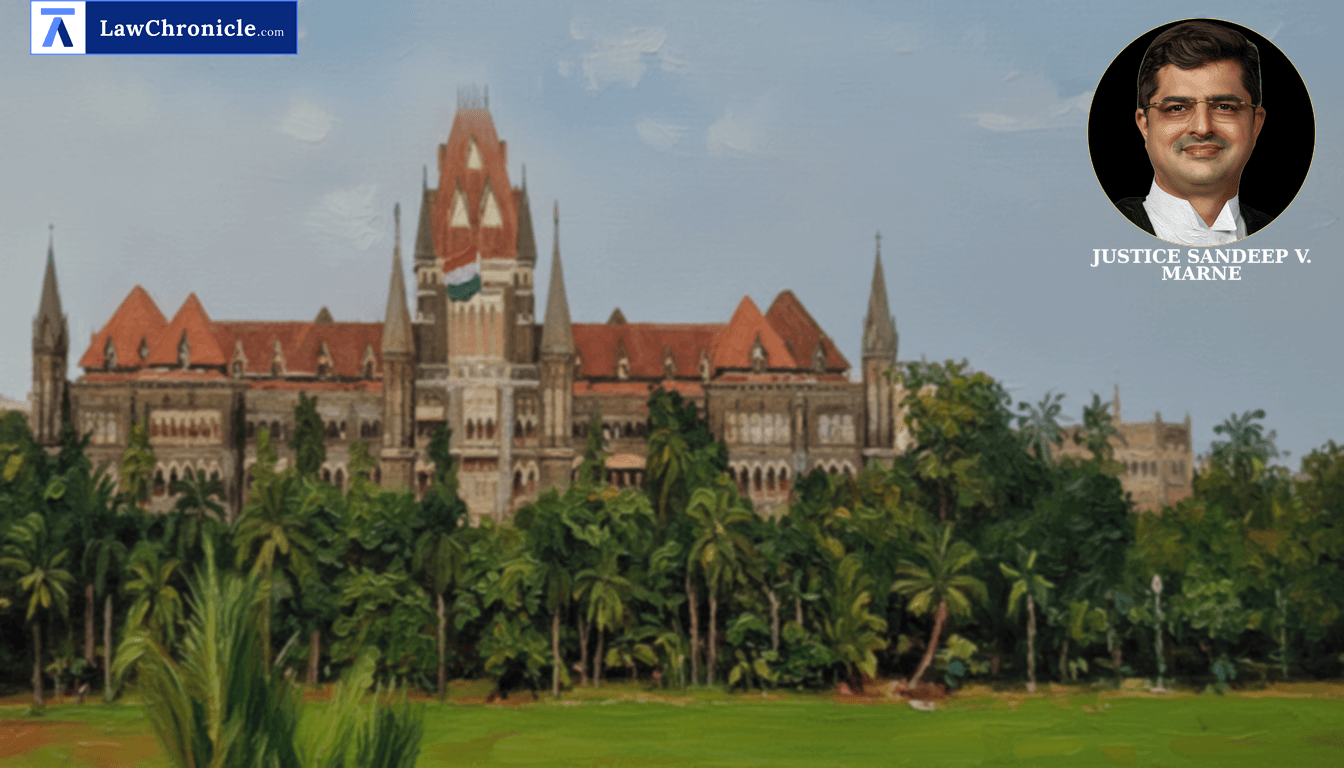
The Bombay High Court has set aside the orders of the Labour and Industrial Courts which had termed the findings of a domestic enquiry 'perverse' simply because no violence occurred when an employee brought police to confront a manager over a transfer order.
A single-judge bench of Justice Sandeep V. Marne set aside the concurrent findings that favored the respondent-employee, clarifying that the absence of physical violence or abusive language does not absolve an employee of misconduct when they bypass internal grievance channels to intimidate superiors using external authorities. The court emphasized that in a domestic enquiry, the standard of proof is the preponderance of probability, not proof beyond reasonable doubt.
Domestic Enquiry Findings and Judicial Scrutiny
The Court observed that the Respondent, a clerk, had brought two policemen to the bank's HRM department to interrogate a manager regarding her routine transfer. While the lower courts found no misconduct due to the lack of 'hot discussion' or 'violence,' the High Court held this view to be fundamentally flawed. The Court, in its reasoning, observed: "The act of the Respondent in bringing policemen to Bank’s office to question her transfer is viewed as misconduct by the Bank and therefore the simple issue before the Labour Court was whether approaching police with grievance of transfer and bringing policemen to Bank’s office and subjecting officer to interrogation amounted to misconduct or not. Instead of concentrating on this aspect, the Labour Court completely misdirected itself and has erroneously given clean cheat to the Respondent only on account of absence of violence and abusive language."
Regarding the second charge of making multiple complaints to high-level authorities like the Chief Minister and the Banking Ombudsman, the Court noted that while airing service grievances is a right, crossing the line to level allegations about the bank's functioning to unrelated external bodies can constitute misconduct. The Court relied on M.H. Devendrappa v. Karnataka State Small Industries Development Corpn. to reiterate that actions detrimental to the prestige of the employer undermine discipline.
Scope of Interference in Revisional Jurisdiction
Justice Marne noted that the Industrial Court, while exercising jurisdiction under Section 44 of the Maharashtra Recognition of Trade Unions and Prevention of Unfair Labour Practices Act, 1971, failed to identify the clear perversity in the Labour Court’s findings. The Court highlighted that as long as there is some evidence logically probative for a prudent mind, as discussed in State of Haryana and Another V/s. Rattan Singh ( "1977 2 SCC 491": 1977 CaseBase(SC) 199) and Kuldeep Singh V/s. The Commissioner of Police and Ors. ( "1999 2 SCC 10": 1998 CaseBase(SC) 814), the findings of an enquiry officer should not be interfered with as 'perverse.'
The Court has the following directions:
"(i) Order passed by the Labour Court on 1 September 2023 as upheld by the Industrial Court by its order dated 11 June 2024 are set aside.
(ii) It is held that findings recorded by the Enquiry Officer (except relating to charge of misbehaviour with Mr. Bhat) are not perverse and are well supported by evidence on record. (iii) The Labour Court shall accordingly proceed to decide the remaining issues uninfluenced by any of the findings recorded by this Court in the present judgment.
(iv) Considering the fact that the Complaint is pending since the year 2014, and that the Respondent is dismissed from service on 28 January 2015, the Labour Court shall proceed to decide the remaining issues in an expeditious manner, preferably within a period of six months."
Background:
The dispute originated when the Respondent, originally an employee of Citizens Cooperative Bank (later merged with the Petitioner-Bank), was transferred to the Vashi branch in 2012. Instead of reporting directly, she allegedly brought two policemen to the HRM department to confront the manager. Subsequently, she filed numerous complaints against the bank with various statutory and political authorities. Following a domestic enquiry, she was dismissed in 2015. She challenged this under the Maharashtra Recognition of Trade Unions and Prevention of Unfair Labour Practices Act, 1971. The Labour Court held the enquiry was fair but termed the findings 'perverse' because the respondent eventually joined the Vashi branch and hadn't used violence. The Industrial Court upheld this, leading the Bank to approach the High Court under Article 227 of the Constitution of India, 1950.
Case Details:
Case No.: WRIT PETITION NO.10929 OF 2024
NeutralCitation: 2026:BHC-AS:24526
Case Title: Abhyudaya Co-operative Bank Ltd. V/s. Smita Virendra Patil
Appearances:
For the Petitioner(s): Ms. Rita K. Joshi with Mr. Ashok D. Shetty & Ms. Bushra Moughal
For the Respondent(s): Mr. Ravindra B. Nair
Source: 2026 CaseBase(BOM) 239
 Breaking News