Broken Chain of Circumstantial Evidence Entitles Accused to Benefit of Doubt: SC Reiterates
 Copy Link
 Share
 Save
In a stern re-affirmation of settled criminal jurisprudence, the Supreme Court ruled that a conviction based solely on circumstantial evidence cannot stand when the evidentiary chain is fractured and fails to exclude every hypothesis consistent with the innocence of the accused.
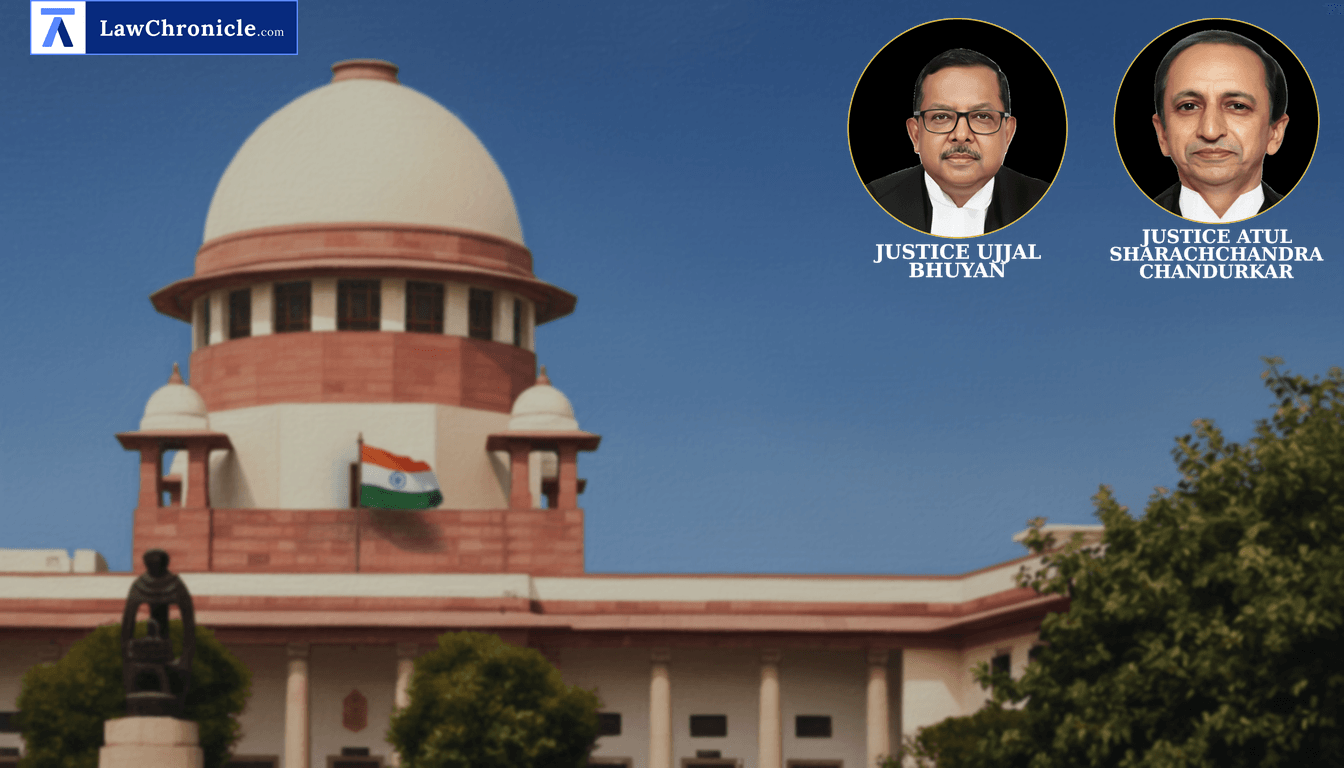
A bench of Justice Ujjal Bhuyan and Justice Atul S. Chandurkar set aside the concurrent conviction and life sentence imposed on an accused charged with rape and murder, observing that suspicion, no matter how grave, cannot substitute for conclusive legal proof.
Key Takeaways
Circumstantial Chain Must Be Complete: A conviction cannot be sustained on circumstantial evidence if the links in the chain are broken or leave reasonable doubt.
Rigid Application of 'Last Seen' Theory: The 'last seen' doctrine applies only when the time gap between the accused and victim being seen together and the discovery of death is so narrow as to rule out third-party intervention.
Section 27 Recoveries from Open Places Require Caution: Seizures under Section 27 of the Indian Evidence Act, 1872 made from public or easily accessible locations lose evidentiary strength if ordinarily visible.
Section 313 Explanations Are Not Substantive Evidence: Answers given by an accused under Section 313 of the Code Of Criminal Procedure, 1973 cannot fill gaps in the prosecution's case or serve as the sole basis for conviction.
Court Observations and Directions
The Supreme Court emphasized that the prosecution failed to establish even a single circumstance conclusively. Assessing the scientific evidence, the Court noted that the DNA analysis contradicted the prosecution's narrative, as the recovered human bones were identified as male origin, whereas the victim was female.
The Bench emphasized that “In dealing with circumstantial evidence the rules specially applicable to such evidence must be borne in mind. In such cases there is always the danger that conjecture or suspicion may take the place of legal proof... the circumstances from which the conclusion of guilt is to be drawn should in the first instance be fully established, and all the facts so established should be consistent only with the hypothesis of the guilt of the accused.” Addressing the scope of statement under Section 313 of the Code Of Criminal Procedure, 1973, the Supreme Court reiterated that an accused's silence or answers cannot be used to bridge missing evidentiary links when the primary prosecution evidence itself fails to inspire confidence.
Ratio
A conviction founded exclusively on circumstantial evidence requires a complete and unbroken chain of evidence pointing solely to the guilt of the accused. Inculpatory statements or failure to offer explanations under Section 313 of the Code Of Criminal Procedure, 1973 cannot be converted into substantive evidence to cure foundational deficiencies in the prosecution's case.
Background
The prosecution alleged that on November 6, 2013, the appellant took his minor maternal niece from their home, after which she went missing. A missing report was lodged on November 12, 2013, at Rongli Police Station, Sikkim. The appellant was traced months later in Siliguri and allegedly made an extra-judicial confession during transit. An FIR was subsequently registered on May 13, 2014, under Sections 376(2)(i), 302, and 201 of the Indian Penal Code, 1860, alongside Sections 4 and 6 of the Protection Of Children From Sexual Offences Act, 2012.
Based on alleged disclosures under Section 27 of the Indian Evidence Act, 1872, police recovered bones, teeth, clothes, and a brown shawl. The trial court convicted the appellant and sentenced him to life imprisonment, which was later upheld by the High Court of Sikkim on appeal under Section 374 of the Code Of Criminal Procedure, 1973.
Appealing to the Supreme Court, the appellant argued that the chain of circumstantial evidence was severely broken. The Court relied on established precedents, including Hanumant Vs. The State of Madhya Pradesh ( "1952 INSC 41": 1952 CaseBase(SC) 59), to reiterate the strict principles governing circumstantial evidence. Analyzing the 'last seen' theory, the Apex Court cited State of U.P. Vs. Satish ( "2005 INSC 68": 2005 CaseBase(SC) 208) to highlight that a long gap between the last seen event and the recovery of remains makes it hazardous to conclude guilt. Regarding recoveries under Section 27 of the Indian Evidence Act, 1872, the Supreme Court drew upon State of Himachal Pradesh Vs. Jeet Singh ( "1999 INSC 104": 1999 CaseBase(SC) 362) to note that items found in open, visible places lack reliability. Furthermore, citing Raj Kumar Singh @ Raju @ Batya Vs. State of Rajasthan ( "2013 INSC 313": 2013 CaseBase(SC) 309), the Supreme Court reiterated that Section 313 statements cannot substitute for substantive evidence.
Concluding that the prosecution failed to establish guilt beyond reasonable doubt, the Supreme Court allowed the appeal, quashed the lower courts' judgments, and acquitted the appellant.
Case Details:
Case No.: Criminal Appeal No.107 of 2018
Neutral Citation: 2026 INSC 1073
Case Title: Santosh Gurung v. State of Sikkim
Appearances:
For the Petitioner(s): Ms. Sangeeta Kumar, Advocate
For the Respondent(s): Mr. Sameer Abhyankar, Advocate
Source: 2026 CaseBase(SC) 8193
 Breaking News