


Call Details And Co-Accused Confessions Insufficient To Deny Bail: Himachal Pradesh HC
 Copy Link
 Share
 Save
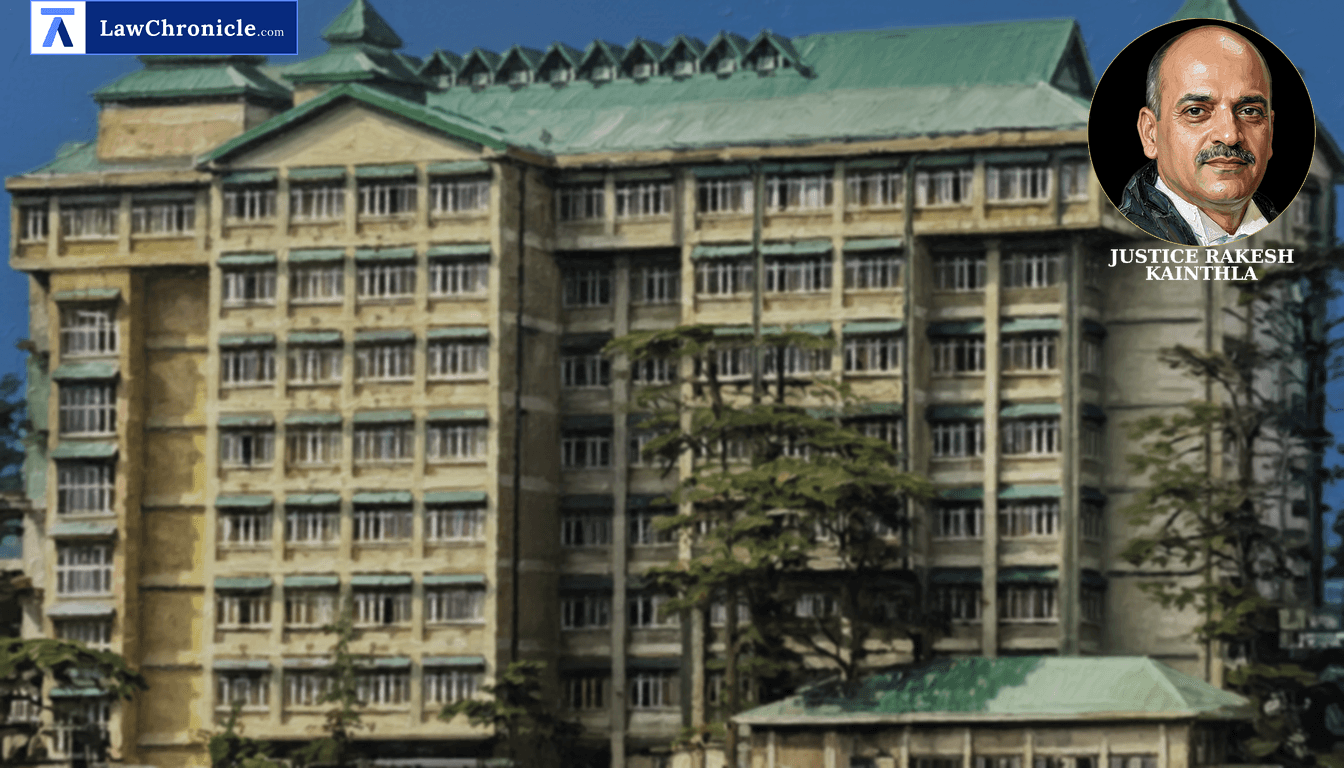
Call detail records and disclosure statements of co-accused cannot form the sole foundation for denying bail under drug laws. The High Court of Himachal Pradesh ruled that monetary transactions and phone logs, without independent corroborative material, fail to establish a legally admissible prima facie link in narcotics offenses.
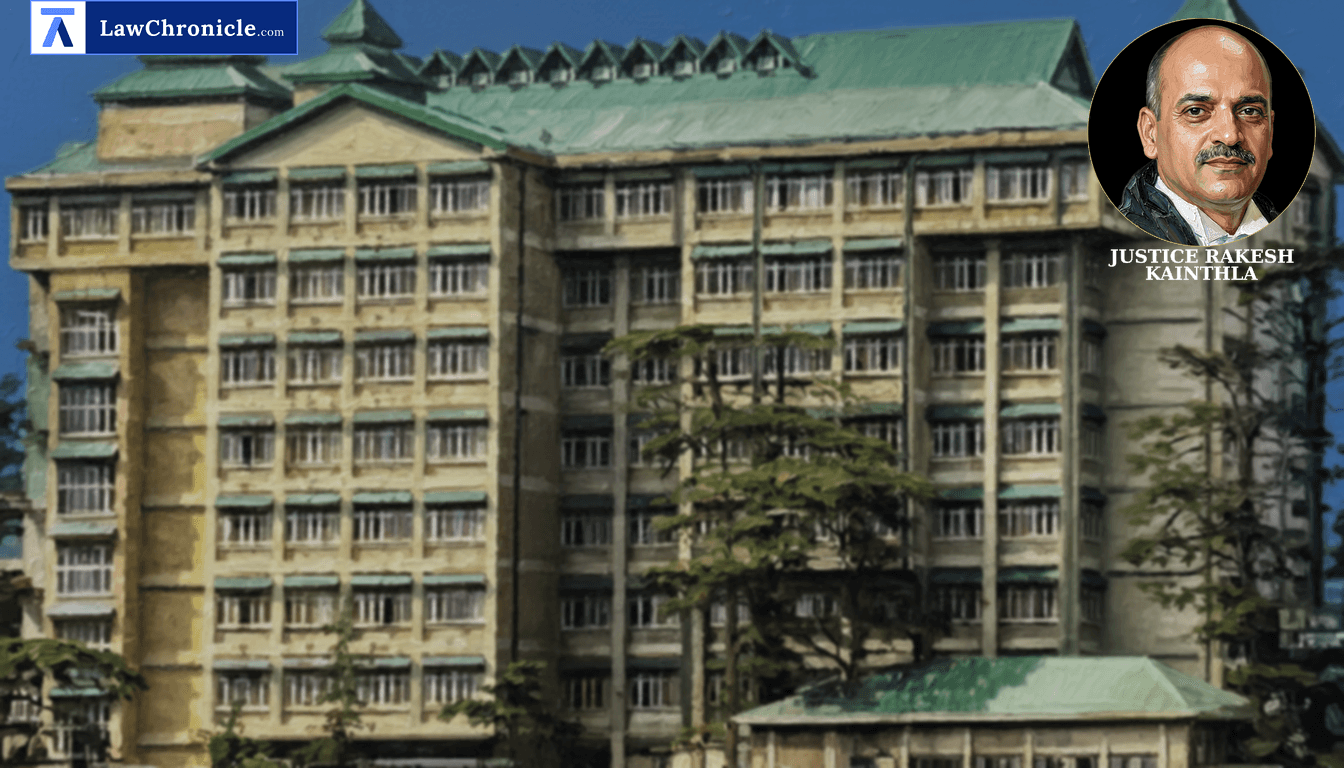
In a single-judge bench presided over by Justice Rakesh Kainthla, the High Court adjudicated a regular bail application arising out of an FIR under Sections 21 and 29 of the Narcotic Drugs and Psychotropic Substances Act. The petitioner contended that his arrest was anchored entirely on an inadmissible confessional statement of a co-accused and electronic call records.
Key Takeaways
Inadmissibility of Co-Accused Confession: Statements made to police officers by co-accused cannot serve as substantive evidence against another accused.
CDR Insufficiency: Call detail records without underlying material do not meet the evidentiary threshold to establish a prima facie case.
Monetary Transactions Unproven: Financial exchanges alone fail to prove illicit drug transactions in the absence of independent evidence.
Parity in Bail: Co-accused release on bail strengthens the entitlement to relief when allegations are identical.
Evaluating the evidentiary weight of the prosecution's record, the single-judge bench noted that the material compiled failed to link the accused directly to the seized contraband. The Court observed that financial logs and electronic trail alone do not displace the presumption of innocence in bail proceedings.
The Court has following directions:
"(i) The petitioner will not intimidate the witnesses, nor will he influence any evidence in any manner whatsoever.
(ii) The petitioner shall attend the trial on each and every hearing and will not seek unnecessary adjournments.
(iii) The petitioner will not leave the present address for a continuous period of seven days without furnishing the address of the intended visit to the SHO concerned, the Police Station concerned and the Trial Court.
(iv) The petitioner will surrender his passport, if any, to the Court; and
(v) The petitioner will furnish his mobile number and social media contact to the Police and the Court and will abide by the summons/notices received from the Police/Court through SMS/WhatsApp/Social Media Account. In case of any change in the mobile number or social media accounts, the same will be intimated to the Police/Court within five days from the date of the change."
The Court, in its reasoning, observed: "...except for the existence of CDRs and the disclosure statement of the co-accused, no other material appears to have been collected against the petitioner. The disclosure made by the co-accused cannot be read against the petitioner..."
Ratio
Confessions to police officers during investigation are hit by Section 25 of the Indian Evidence Act and Section 162 of the Cr.P.C.. Mere exchange of call detail records or financial transactions between accused individuals, without independent evidence linking them to the sale or possession of contraband, is legally insufficient to deny bail under Section 37 of the Narcotic Drugs and Psychotropic Substances Act.
Background
The dispute originated from an interception by police personnel who searched a vehicle at Bithal and recovered 10.92 grams of heroin. Following the arrest of the vehicle occupants, interrogations revealed they purchased the drug at Zirakpur. Relying on call detail logs and mobile extraction reports, authorities subsequently arrested the petitioner, citing suspect communication history and prior financial transactions.
In considering the jurisprudence on bail parameters, the Court referenced Pinki v. State of U.P., Gudikanti Narasimhulu v. High Court of A.P., Prahlad Singh Bhati v. State (NCT of Delhi), Ram Govind Upadhyay v. Sudarshan Singh ( "(2002) 3 SCC 598: 2002 SCC (Cri) 688": 2002 CaseBase(SC) 878), Kalyan Chandra Sarkar v. Rajesh Ranjan ( "(2004) 7 SCC 528: 2004 SCC (Cri) 1977": 2004 CaseBase(SC) 77), Prasanta Kumar Sarkar v. Ashis Chatterjee ( "(2010) 14 SCC 496: (2011) 3 SCC (Cri) 765": 2010 CaseBase(SC) 291), and Brijmani Devi v. Pappu Kumar ( "(2022) 4 SCC 497: (2022) 2 SCC (Cri) 170": 2021 CaseBase(SC) 606). The principle of personal liberty as the general rule was reiterated with reference to Article 21 of the Constitution of India and State of Rajasthan v. Balchand.
Regarding the admissibility of evidence, the Court relied on Dipakbhai Jagdishchandra Patel v. State of Gujarat ( "(2019) 16 SCC 547: (2020) 2 SCC (Cri) 361: 2019 SCC OnLine SC 588": 2019 CaseBase(SC) 3174) to emphasize the bar under procedural law, as well as Surinder Kumar Khanna vs Intelligence Officer Directorate of Revenue Intelligence and Tofan Singh Versus State of Tamil Nadu ( "2021 (4) SCC 1": 2020 CaseBase(SC) 1147) regarding co-accused confessions. Local precedents including Dinesh Kumar @ Billa Versus State of H.P. ( "2020 Cri. L.J. 4564": 2020 CaseBase(HP) 341), Saina Devi vs State of Himachal Pradesh ( "2022 Law Suit (HP) 211": 2022 CaseBase(HP) 497), Dabe Ram vs. State of H.P., Parvesh Saini vs State of H.P., and Relu Ram vs. State of H.P. were considered alongside the Kerala High Court ruling in Amal E vs State of Kerala regarding financial logs. Concluding that no legally admissible evidence linked the petitioner, the High Court granted regular bail on personal bonds of ₹1,00,000 with one surety.
Case Details:
Case No.: Cr. MP(M) No. 1320 of 2026
Neutral Citation: 2026:HHC:34855
Case Title: Vijay Bihari v. State of Himachal Pradesh
Appearances:
For the Petitioner(s): M/s Manish Behl, Anki Ahluwalia and T.K. Verma, Advocates
For the Respondent(s): Mr Prashant Sen, Deputy Advocate General
Source: 2026 CaseBase(HP) 4595
Similar Articles
 Breaking News


