


Caste Status Is a Fact of Birth, Not Procedure: Patna High Court
 Copy Link
 Share
 Save
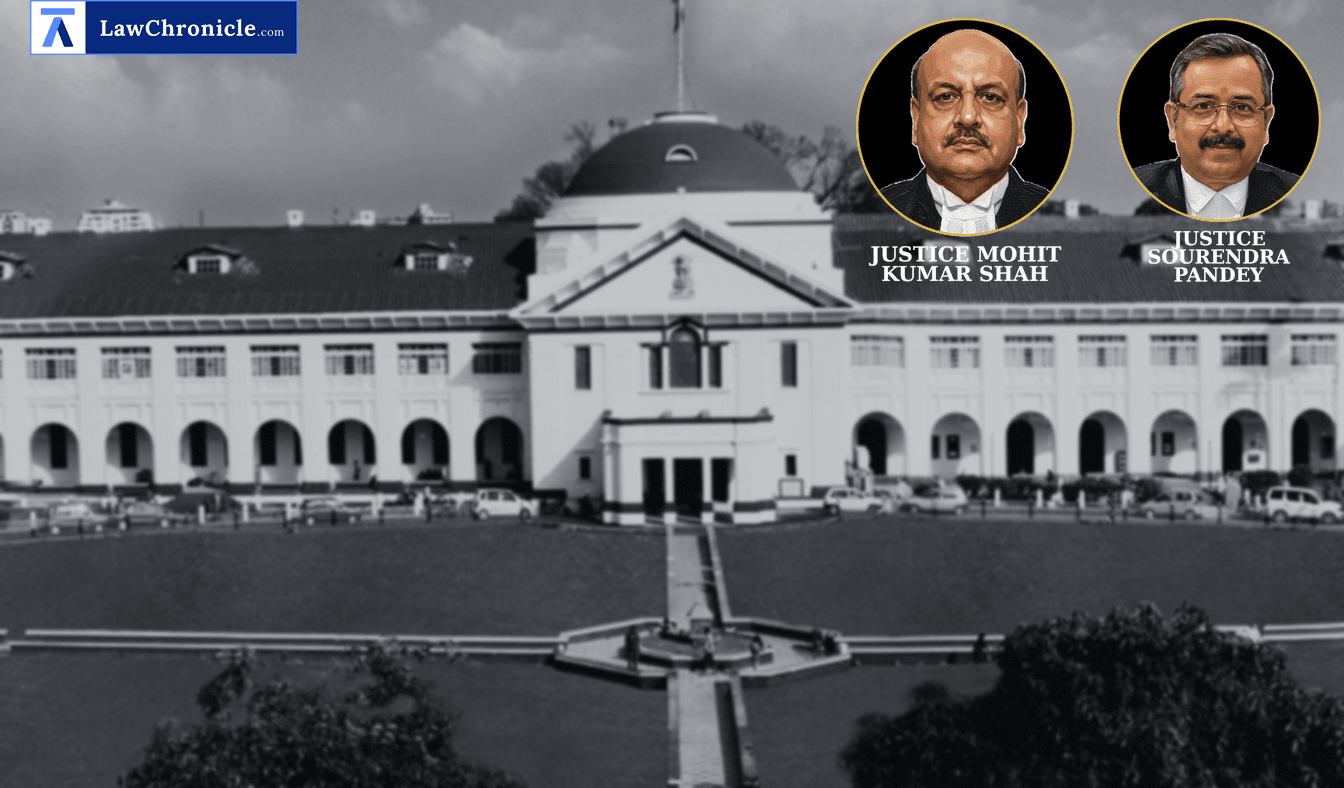
The Patna High Court has dismantled bureaucratic hurdles in public employment, ruling that a caste certificate is merely an affirmation of a pre-existing birthright that cannot be negated by technical errors in documentation. The Court held that denying reservation benefits to a candidate solely because a certificate listed a husband's name instead of a father's constitutes a violation of the constitutional mandate for equal opportunity.
A division bench comprising Justice Mohit Kumar Shah and Justice Sourendra Pandey delivered the judgment while dismissing an appeal by the Bihar Public Service Commission (BPSC). The case centered on the recruitment of Assistant Professors, where a candidate was excluded from the Scheduled Caste category due to clerical discrepancies in her caste certificate.
Key Takeaways
Substance Over Form
Caste status is an inherent fact of birth and cannot be invalidated by minor procedural errors or the rank of the issuing officer if they are competent.
Married Women's Rights
In the absence of specific prohibitory rules in advertisements, a married woman's caste certificate naming her husband rather than her father is valid for reservation benefits.
Constitutional Mandate
Articles 14 and 16 require authorities to facilitate, not obstruct, the participation of backward classes in public employment through flexible documentation norms.
Judicial Intervention
High Courts can exercise writ jurisdiction to prevent extreme hardship or injustice caused by rigid adherence to technicalities beyond a candidate's control.
Court Rejects BPSC’s Rigid Technicality
The Court observed that the advertisement for the post of Assistant Professor did not explicitly mandate that certificates must only contain the father's name. It emphasized that the objective of reservation under Constitution of India, 1950 is to remove inequality, and such goals cannot be defeated by non-existent technical requirements.
The Court, in its reasoning, observed: "It is a well-settled law that a certificate issued by the competent authority regarding a person belonging to a scheduled caste category by birth is only an affirmation of the fact which is already in existence and the purpose of such certificate is to enable the authorities to believe in the assertion of the candidate... the candidature of respondent no.1 could not have been rejected as a scheduled caste category candidate merely on the ground of non-existent technicalities/reasons."
The Court has the following directions:
"consider the case of the respondent no.1 for appointment on the post of Assistant Professor in the department of Obstetrics and Gynecology under scheduled caste category on the basis of her merit, if she is found otherwise suitable and then it has been directed that she shall be offered appointment from the date similarly placed persons having lower merit than her have been appointed, however without all consequential benefits"
Ratio
A caste certificate issued by a competent authority is a formal recognition of a pre-existing status acquired by birth. Procedural infractions or the lack of specific formatting (such as father’s name vs. husband’s name) do not extinguish a candidate's right to reservation benefits under Constitution of India, 1950, especially when the underlying caste status is undisputed.
Background
The dispute arose when the BPSC published Advertisement No. 20/2017 for 74 Assistant Professors. The respondent, a candidate belonging to the Scheduled Caste category, submitted a certificate from 2006 issued by a Sub-divisional Officer. Despite appearing for the interview, she was excluded from the reserved list because her certificate mentioned her husband's name, not her father's. The BPSC argued that subsequent notices required certificates to be in the father's name and issued by a Circle Officer.
The respondent challenged this in a writ petition, which was allowed by a Single Judge. The BPSC appealed, relying on Braj Kishore Prasad vs. the State of Bihar & Ors. ( "1998 (3) PLJR 34": 1996 CaseBase(SC) 281) to argue that documents submitted after deadlines must be rejected. However, the respondent cited Ram Kumar Gijroya vs. Delhi Subordinate Services Selection Board & Anr. ( "(2016) 4 SCC 754": 2016 CaseBase(SC) 500) to argue that late submission of caste certificates should not result in denial of equality. The High Court upheld the Single Judge's decision, noting that the Sub-divisional Officer was higher in rank than the Circle Officer and that the respondent's status as a member of the Scheduled Caste was never in doubt.
Case Details:
Case No.: Letters Patent Appeal No.472 of 2023 In CWJC No.18940 of 2019
Case Title: The Bihar Public Service Commission & Anr. vs. Dr. Sushma Sharan & Ors.
Appearances:
For the Appellants: Mr. Kaushal Kumar Jha, Advocate; Mr. Amish Kumar, Advocate
For the Respondent No.1: Mr. Chitranjan Sinha, Sr. Advocate; Mr. P. N. Pathak, Advocate
For the State: Mr. Anil Kumar Verma, AC to AAG-9
Source: 2026 CaseBase(PAT) 3970
Similar Articles




 Breaking News


