


Casual Labour Status No Bar to Statutory Retrenchment Protection: Allahabad HC
 Copy Link
 Share
 Save
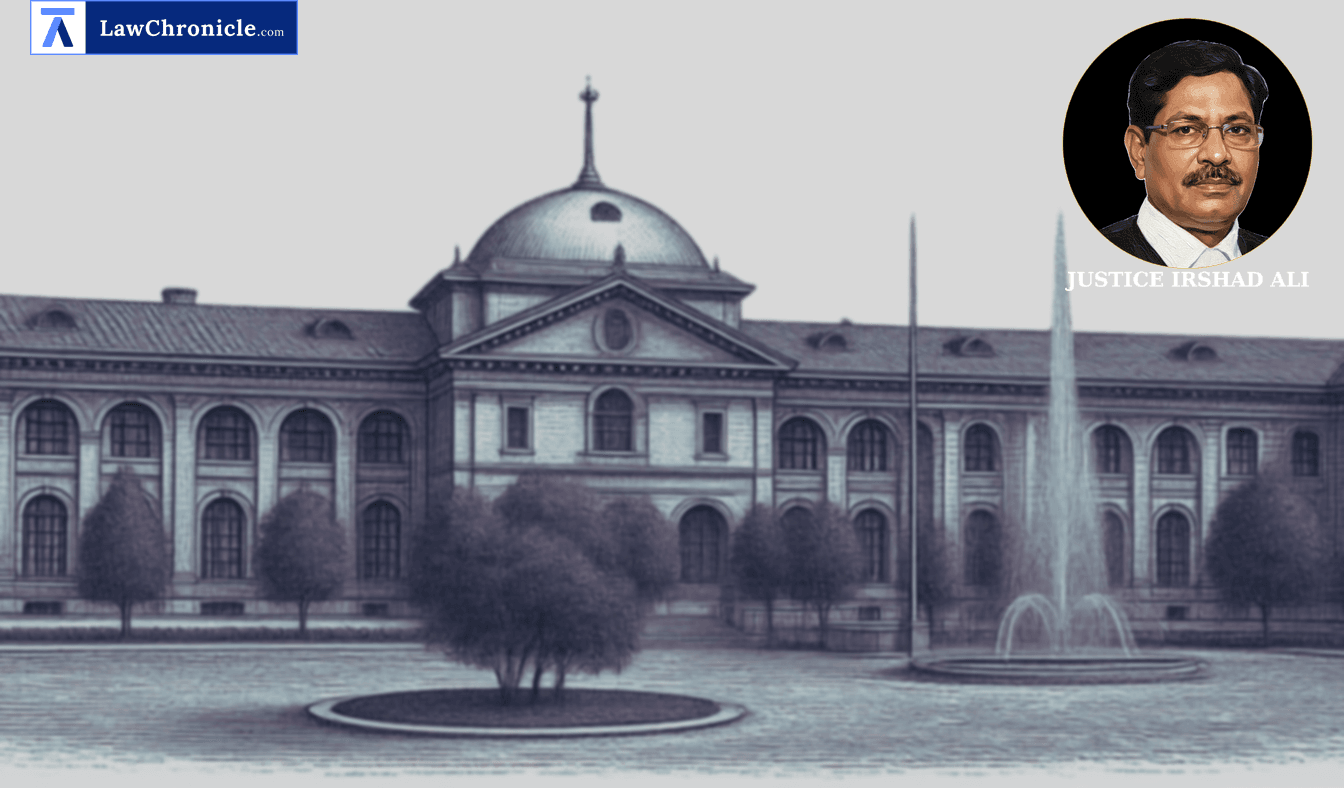
The Allahabad High Court has reinforced the statutory shield for casual workers, ruling that the mere label of 'casual labour' or engagement against temporary sanctions cannot be weaponized by employers to bypass the mandatory retrenchment protections of industrial law. In a major affirmation of labour rights, the Court held that once a workman establishes continuous service, the employer's failure to follow due process under the Industrial Disputes Act, 1947 renders the termination inherently illegal, regardless of the worker's non-regular status.
Justice Irshad Ali, presiding over the Lucknow bench, delivered this significant verdict while adjudicating a challenge brought by the Northern Railway Administration against an Industrial Tribunal award. The Bench critically examined the intersection of administrative records-retention policies and the substantive rights of workmen, ultimately siding with the employee despite a nearly eight-year delay in raising the industrial dispute.
Key Takeaways
Substance Over Nomenclature
Classifying an employee as 'casual labour' does not exempt the employer from complying with Section 25-F of the [Industrial Disputes Act, 1947 if the worker has completed 240 days of service.
Delayed Claims Not Fatally Barred
While delay is a relevant factor for moulding relief, it does not automatically extinguish a workman’s right to seek adjudication, as no specific limitation period is prescribed under industrial law.
Burden of Proving Exceptions
Employers seeking to invoke the 'fixed-term contract' exception under Section 2(oo)(bb) must provide specific evidence of contractual stipulations, rather than general claims of temporary work sanctions.
Prejudice Must Be Demonstrated
Employers cannot merely cite the lawful destruction of old records as a ground to dismiss claims; they must establish actual prejudice that renders a fair adjudication impossible.
Court Rejects Railway's Defense on 'Casual' Nature
The Allahabad High Court dismissed the Railway's argument that the worker, being a casual labourer engaged for intermittent work, had no right to protection. The bench observed that the determinative factor is the actual duration of service rather than the description assigned by the management. It was noted that the Railway failed to prove that the termination fell under the exceptions of the Industrial Disputes Act, 1947, which would have required clear evidence of a fixed-term contract.
Regarding the 240-day service requirement, the Allahabad High Court relied on the testimony of the Management’s own witness before the Tribunal. The Court explained that "The mere existence of different sanctions or the recording of attendance in muster rolls does not conclusively establish that the workman had accepted a fixed-term contract containing a stipulation that his engagement would automatically come to an end upon expiry of a specified period. In the absence of satisfactory proof of such contractual stipulation, the petitioner-Management cannot claim the benefit of Section 2(oo)(bb) merely by describing the engagement as intermittent or work-oriented."
On Delay and Records Preservation
Addressing the Railway's plea that records had been destroyed after the five-year retention period prescribed by the Railway Board, the Court held that such administrative policies cannot override statutory rights. Referencing Ajaib Singh Vs. Sirhind Cooperative Marketing cum Processing Service Society Ltd. And another, the Court noted that while delay is a factor for moulding back wages, it does not invalidate a reference.
Ratio
The classification of an employee as a casual or muster-roll worker does not dispense with the employer's obligation to comply with Section 25-F of the Industrial Disputes Act, 1947. Once 240 days of continuous service is established, termination without statutory notice or compensation is illegal. Furthermore, delay in raising an industrial dispute is not a bar to adjudication but a factor to be considered by the Tribunal while moulding the appropriate relief.
Background
The dispute originated when respondent Nasruddin, engaged as a casual labourer in December 1975, was allegedly orally terminated in February 1978. The Northern Railway Administration contended that the worker never completed 240 days of continuous service and was engaged only for specific, intermittent work sanctions. The Railway further argued that the worker raised the dispute in 1986 after a delay of eight years, by which time relevant muster rolls and vouchers had been destroyed as per the Railway Accounts Code.
The Central Government Industrial Tribunal, Kanpur, had ruled in favor of the workman, directing reinstatement. The Railway challenged this award, relying on Assistant Engineer, Rajasthan State Agriculture Marketing Board, Sub- Division, Kota Vs. Mohan Lal and Mohd. Ali vs. State of H.P. and others to argue that compensation is more appropriate than reinstatement for casual workers after such a delay. Conversely, the workman relied on Ajaib Singh Vs. Sirhind Cooperative Marketing cum Processing Service Society Ltd. And another and Jeetubha Khansangji Jadeja Vs. Kutchh District Panchayat ( "2022 SCC Online SC 1284": 2022 CaseBase(SC) 165) to argue that delay doesn't bar relief. The Allahabad High Court, after reviewing the evidence and precedents, found no perversity in the Tribunal's findings and dismissed the Railway's petition.
Case Details:
Case No.: WRIT - A No. - 6390 of 1988
Neutral Citation: 2026:AHC-LKO:80565
Case Title: Northern Railway Administration v. Nasruddin and another
Appearances:
For the Petitioner(s): B.k. Shukla, Vinay Tripathi, Advocates
For the Respondent(s): R.k. Shukla, J.k. Saxena, Manju Nagaur, Mohd Burhanuddin Khan, S.k. Bartarya, Sakshi Singh, Sameer Singh, Umajeet Gupta, Advocates
Source: 2026 CaseBase(ALL) 1363
Similar Articles


 Breaking News


