


CBI Constitution Challenge Deferred Pending Supreme Court Verdict: Jammu & Kashmir HC
 Copy Link
 Share
 Save
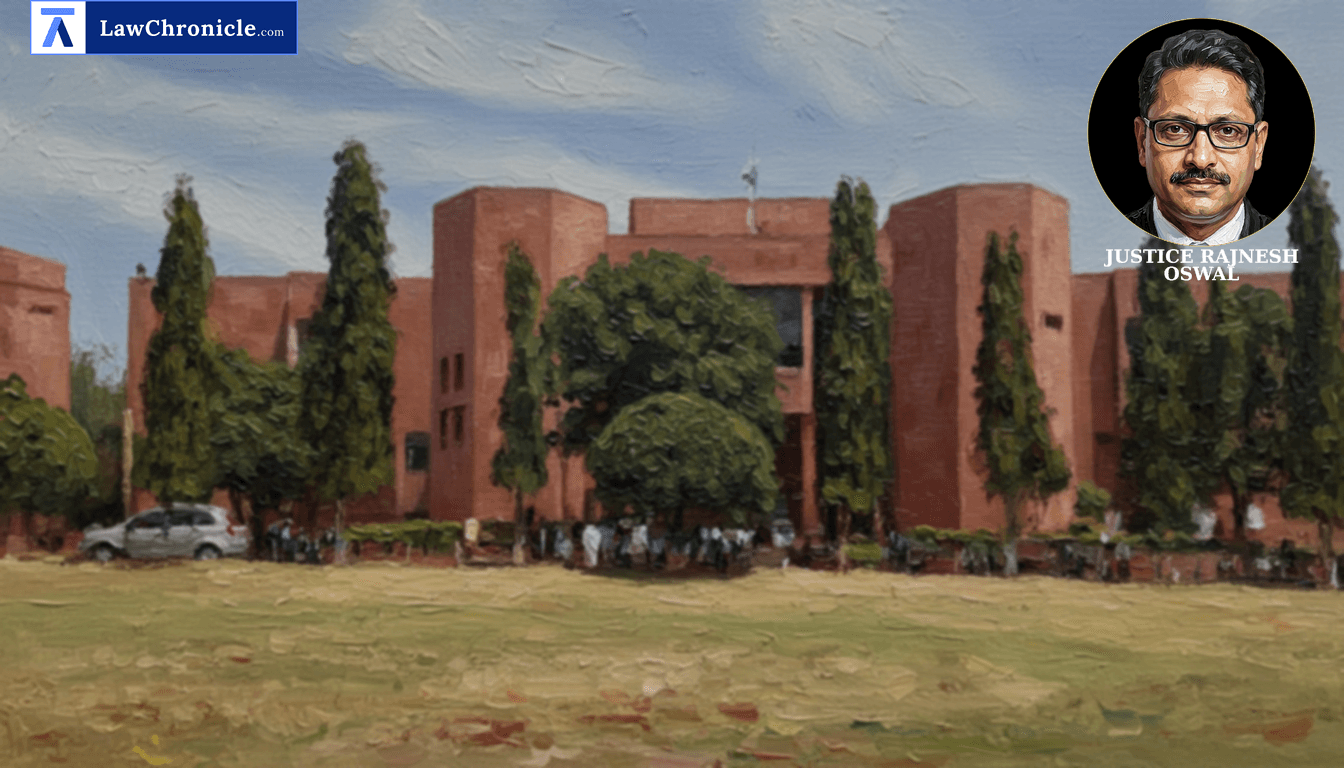
The High Court of Jammu & Kashmir and Ladakh has cleared the path for trial in a decade-old bank fraud case, ruling that the Central Bureau of Investigation (CBI) maintains its operational authority while the apex court finalizes the debate on the agency's constitutional validity. The decision reinforces that criminal proceedings involving alleged forgery of revenue records to secure fraudulent bank loans cannot be stalled indefinitely on procedural technicalities.
A single-judge bench comprising Justice Rajnesh Oswal adjudicated a petition seeking the quashing of a CBI chargesheet and a challenge to the agency's very creation. The petitioner, accused of conniving with revenue officials to mortgage non-existent or shared land for a CC limit, argued that the CBI lacked the jurisdiction to investigate crimes within the State without specific statutory backing and case-to-case consent.
Key Takeaways
Validity of CBI Stays Intact
Until the Supreme Court delivers its final verdict on the Gauhati High Court's stay, the CBI's power to register FIRs and file chargesheets remains legally enforceable.
Signing Own Name Can Be Forgery
Legal liability for forgery is not limited to faking another's signature; executing a document in one's own name with fraudulent intent to deceive others falls under the ambit of Section 464 of the RPC.
Trial Cannot Be Indefinitely Stalled
Interim stays on criminal trials for over a decade are discouraged; courts must prioritize the progression of trial proceedings in matters of public exchequer loss.
Court Rationale on CBI Constitution and Jurisdiction
The petitioner challenged the executive resolution dated 01.04.1963, claiming it was ultra-vires to the Constitution of India, 1950 and that the CBI is not a valid police force under the Delhi Special Police Establishment Act, 1946. However, the Court noted that the Delhi Special Police Establishment Act, 1946 had been extended to the erstwhile state since 1958, and the validity of this extension was previously upheld in Susheel Kumar Khajuria Vs CBI. The Court observed that since the Gauhati High Court judgment striking down the CBI's constitution is currently stayed by the Supreme Court, judicial propriety demands waiting for the final word from the apex court.
Observations on Forgery and Cheating
The Court scrutinized the allegations that the petitioner, in conspiracy with a Patwari, used forged revenue extracts (Fard Intikhab) to portray shared family land as his exclusive property to obtain a loan from UCO Bank. The Court, in its reasoning, observed: "From these two Illustrations (h) and (e) and Explanation 1 it will be clear that legislature intended to cover cases under the offence of forgery whenever the person was the creator of, a document even though the document was made by himself in his own name and signed in his own name. These two illustrations with Explanation 1, therefore, make the scope of the definition 'Making a false document' very wide."
The Court further noted that misrepresenting a plot under one survey number as another to a bank valuer prima facie establishes the offence of cheating.
The Court has the following directions:
"(I) further proceedings arising from the chargesheet shall remain subject to the outcome of the SLP, wherein the judgment of the Gauhati High Court currently stands stayed.
(II) the issue of constitution of C.B.I shall remain subject to the decision of Hon’ble the Apex Court, in a pending matter and the trial court shall proceed with the trial of the case.
(III) As the trial has remained stayed for nearly 13 years, no unnecessary adjournments be granted to the parties."
Ratio
The operational validity of the CBI to investigate and prosecute remains active so long as the Supreme Court's stay on the Gauhati High Court judgment persists. Furthermore, the 'making of a false document' under the RPC encompasses acts where a person signs their own name to a document with the intent to cause belief that such document was made at a time or under circumstances that are false, particularly to defraud creditors or authorities.
Background
The case originated from FIR No.RC0042011A0003 registered by the CBI/ACB/Jammu in 2011. It was alleged that the petitioner and his partner at M/s Shiva Overseas, in connivance with UCO Bank officials and revenue staff, obtained a CC limit of Rs. 35 lacs and an overdraft of Rs. 10 lacs by mortgaging land in Survey No. 90-min. Investigation revealed the petitioner was only a minor co-sharer in a property that was largely sold or used for roads, and he had allegedly bribed a Patwari to forge records. The loan eventually turned into a Non-Performing Asset (NPA) with an outstanding of over Rs. 50 lakhs. The High Court, while relying on principles in Vineet Narian judgment and Common Cause judgment regarding the DSPE Act, and Bharat Hiralal Sheth and others Vs. Jaysin Amarsinh Sampat and another ( "1997 CRI. L.J. 2509": 1997 CaseBase(BOM) 64) regarding forgery, dismissed the petition to quash the charges while keeping the constitutional challenge open to the Supreme Court's final decision.
Case Details:
Case No.: OWP No.1577/2013
Neutral Citation: 2020:JKLHC-JMU:10347
Case Title: ASHOK SINGH MANHAS Vs. UNION OF INDIA & ORS.
Appearances:
For the Petitioner(s): Mr. Himanshu Beotra, Advocate.
For the Respondent(s): Ms. Monika Kohli, Sr. AAG, with Ms. Sagira Jaffer, Advocate.
Source: 2026 CaseBase(JK) 1054
Similar Articles

 Breaking News


