


Child Victim's Credible Testimony Alone Sufficient to Convict Father for Aggravated Assault: Delhi HC
 Copy Link
 Share
 Save
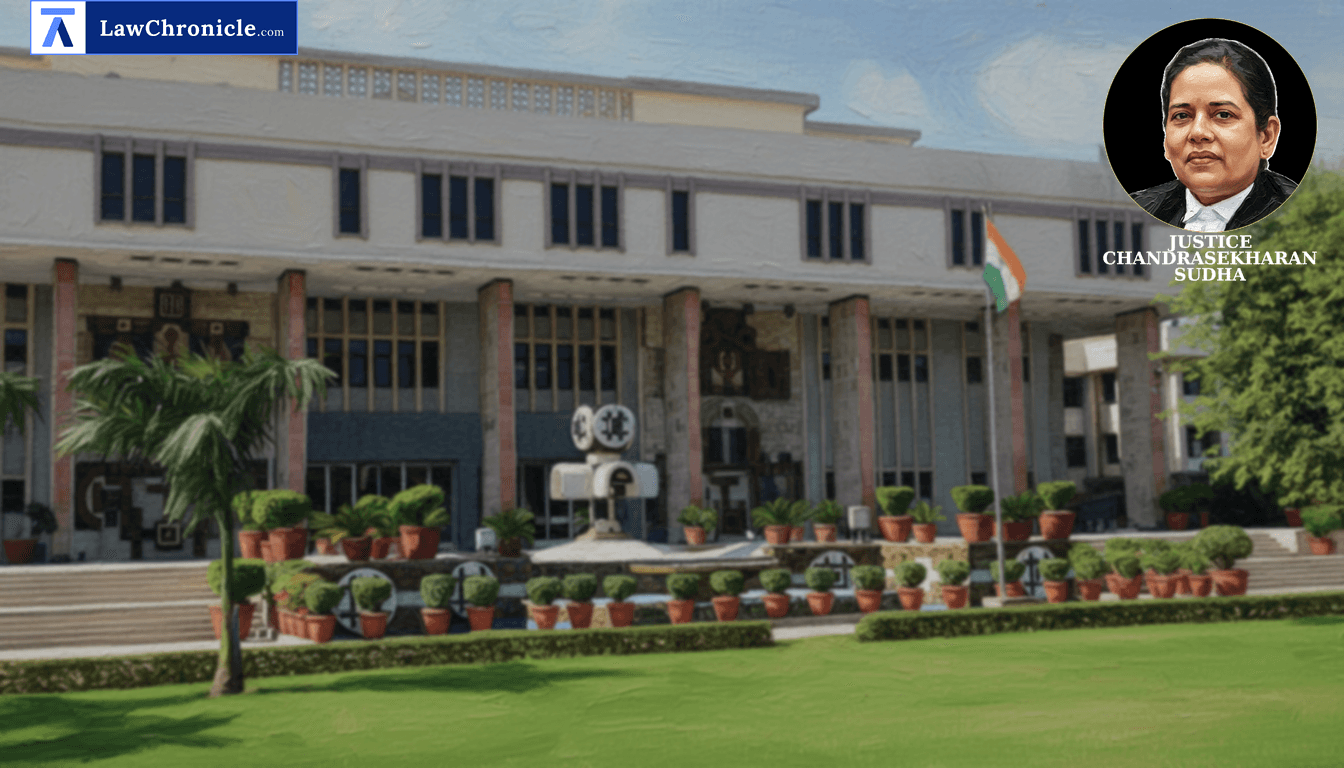
The Delhi High Court has affirmed that the uncorroborated, credible testimony of a child victim of sexual abuse is legally sufficient to sustain the conviction of her biological father, ruling that seeking corroboration as a rule adds insult to injury.
In an appeal challenging the conviction of a father for aggravated sexual assault upon his 10-year-old daughter, a single-judge bench of Justice Chandrasekharan Sudha upheld the judgment of the trial court, holding that minor discrepancies in testimony or delays owing to COVID-19 lockdown conditions do not undermine the prosecution's case.
Evaluating Minor Discrepancies and Prosecution Delay
The Court observed that delays caused by extraordinary circumstances, such as a lockdown, are natural and do not render the prosecution case fatal. Addressing the lack of physical injuries or detailed site plans, the Court noted that such factors are immaterial when the charge pertains to an attempt or non-penetrative sexual assault rather than penetrative assault.
The Court, in its reasoning, observed: "In the case on hand, with the available materials on record, I find that the prosecution has succeeded in establishing the prosecution case beyond reasonable doubt, whereas the defence setup has turned out to be highly improbable."
On the requirement of corroborative evidence, the High Court relied on Ganesan v. State ( "(2020) 10 SCC 573": 2020 CaseBase(SC) 1831), State of Madhya Pradesh v. Balveer Singh ( "2025 SCC OnLine SC 390": 2025 CaseBase(SC) 47), State of Rajasthan v. Chatra ( "2025 SCC OnLine SC 566": 2025 CaseBase(SC) 34), and Moidu K. vs. State of Kerala to emphasize that a child witness's reliable testimony requires no additional corroboration unless there is a clear indication of tutoring. Citing State of Punjab v. Gurmit Singh ( "1996 AIR SC 1393": 1996 CaseBase(SC) 1295), the Court further reiterated that a victim of sexual assault is not an accomplice, and testing her evidence with suspicion is unwarranted.
Key Takeaways
- Sole Testimony Sufficient: Convictions under child protection laws can rest entirely on the consistent, trustworthy testimony of a minor victim.
- No Presumption of Tutoring: The legal burden rests on the defense to establish tutoring or false implication on a preponderance of probabilities.
- Contextual Evaluation of Delays: Delays in reporting sexual offenses arising out of lockdowns or domestic intimidation do not fatalize the prosecution.
- Strict Judicial Scrutiny for Relatives: Sexual assault perpetrated by a immediate family member strictly attracts the aggravated provisions of the law.
Ratio
The testimony of a child victim of sexual assault, if found clear, cogent, and reliable, requires no corroboration to sustain a conviction. Seeking corroborative evidence as a matter of routine in sexual assault cases amounts to adding insult to injury, particularly when the accused fails to discharge the burden of proving defense claims of false implication or tutoring.
Background:
The dispute arose from an incident where the accused attempted to commit aggravated penetrative sexual assault on his 10-year-old daughter. The First Information Report was registered under Section 10 of the Protection of Children from Sexual Offences Act, 2012, alongside Section 354B and Section 506 of the Indian Penal Code, 1872.
During the trial, the accused pleaded not guilty, alleging false implication due to an ongoing property dispute, relying on procedural omissions such as non-compliance with Section 232 of the Code of Criminal Procedure, 1973. The trial court, following procedures under Section 207 and Section 313(1)(b) of the Code of Criminal Procedure, 1973 (now read under the Bharatiya Nagarik Suraksha Sanhita, 2023), convicted the appellant and sentenced him to seven years of rigorous imprisonment along with a fine.
Addressing the procedural objection under Section 232 of the Code of Criminal Procedure, 1973, the High Court cited Harbhajan Singh v. State of Punjab ( "AIR 1966 SC 97": 1965 CaseBase(SC) 268) to hold that non-compliance does not vitiate trial proceedings unless substantial prejudice is demonstrated. Considering standard principles on defense burdens under V.D. Jhingan v. State of U.P., Munshi Ram v. Delhi Administration ( "AIR 1968 SC 702": 1967 CaseBase(SC) 140), and Harbhajan Singh v. State of Punjab, the High Court found the property dispute defense unsubstantiated and dismissed the appeal.
Case Details:
Case No.: CRL.A. 1190/2025 & CRL.M.A. 25100/2025
Case Title: SHAH NAWAZ v. STATE OF NCT OF DELHI
Appearances:
For the Petitioner(s): Ms. Swati Verma and Ms. Aradhana Chaudhary, Advocates.
For the Respondent(s): Mr. Utkarsh, APP for the State with SI Nisha Sharma, P.S. Kalindi Kunj.
Source: 2026 CaseBase(DEL) 3706
Similar Articles
 Breaking News


