Children Born out of Void Marriage entitled to Railway Benefits: Bombay HC
 Copy Link
 Share
 Save
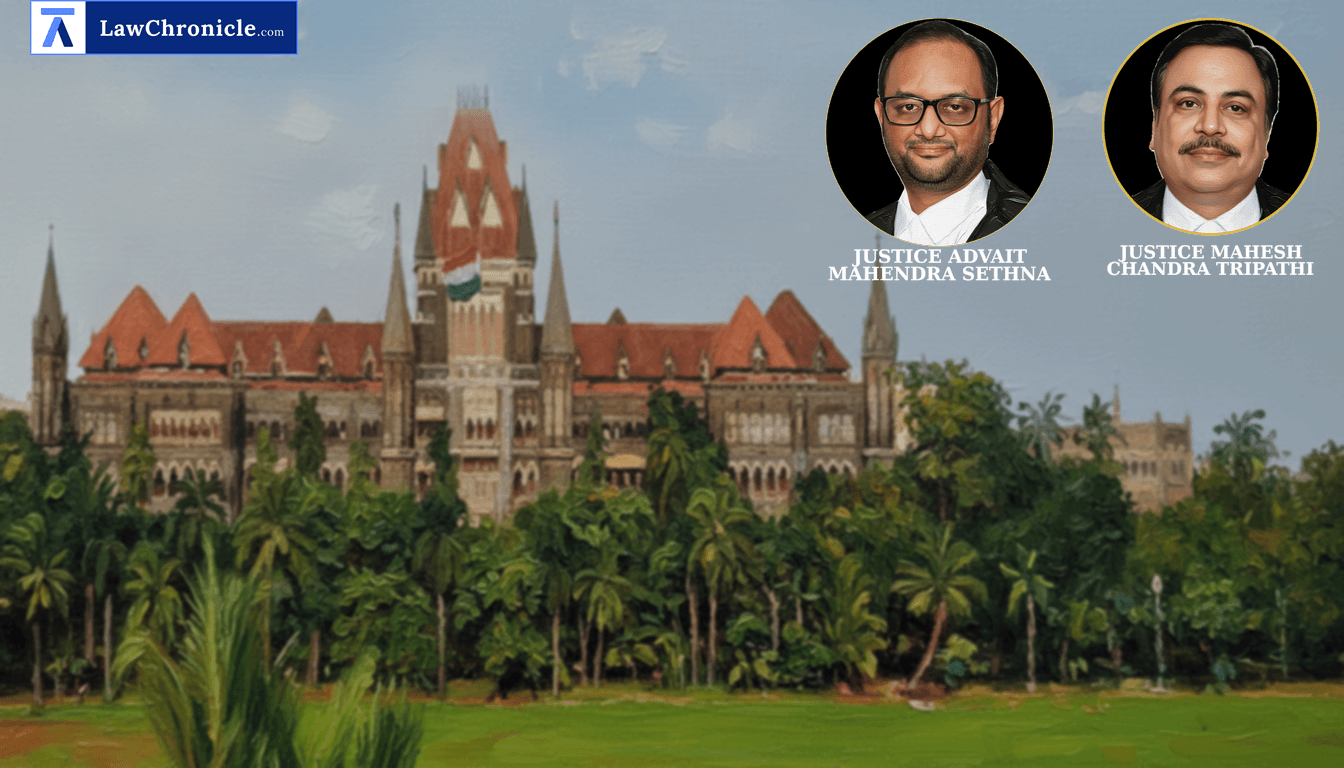
The Bombay High Court restricted the discriminatory practice of denying railway benefits based on ‘legitimacy’, ruling that children born out of void or voidable marriages cannot be excluded from welfare facilities like privilege passes and medical assistance.
In a definitive stance against descent-based discrimination, a bench comprising Chief Justice Mahesh Chandra Tripathi and Justice Advait M. Sethna quashed a restrictive Railway Board circular that barred children of second marriages from essential service benefits. The Bench held that such exclusion is not only contrary to the Hindu Marriage Act, 1955 but also a fatal violation of the constitutional guarantee of equality.
Key Takeaways
- Legitimacy Decoupled from Benefits: The court established that administrative benefits cannot be denied to children by labeling them 'illegitimate' due to the nature of their parents' marriage.
- Prohibition of Descent-Based Discrimination: The ruling reinforces that under Constitution of India, 1950, the state cannot discriminate against individuals based on their familial origins or the validity of their parents' union.
- Superiority of Statutes over Circulars: Administrative circulars (like RBE No. 39/2005) cannot override the legal protections granted to children under Section 16 of the Hindu Marriage Act, 1955.
- Protection of Welfare Rights: The judgment ensures that social security measures, including medical facilities and travel passes, must be extended to all biological children of a railway servant.
Invalidity of Restrictive Circulars
The Bench scrutinized the Railway Board's circular which had been used to deny facilities to the children of the petitioner. The Bombay High Court observed that the Railway authorities were incorrectly applying conduct rules meant for employees to penalize their children. It noted that the Parliament, through the Hindu Marriage Act, 1955, had already conferred legitimacy upon children of void marriages via a legal fiction.
The Bombay High Court discussed the legal standing that "A holistic reading of the applicable statutory provisions, including the Rules and Regulations, coupled with the decisions relied on make it clear that the law does not envisage any distinction, let alone any discrimination qua children born out of void marriages, in the context of their right to be eligible for benefits including railway passes... Depriving the child of such benefit would tantamount to discrimination, inter alia, in the teeth of Article 14 of the Constitution, which cannot be countenanced."
Therefore, the Bombay High Court directed the Railway Authorities to consider the case of petitioner for grant of benefits claimed, to be exercised within a period of 2 months.
Ratio
Children born out of void or voidable marriages are considered legitimate by legal fiction under Section 16 of the Hindu Marriage Act, 1955. Consequently, the State and its instrumentalities cannot create a classification between 'legitimate' and 'illegitimate' descendants to deny administrative or welfare benefits. Any policy that denies benefits to a child based on their descent or the validity of their parents' marriage is violative of the constitutional prohibition of discrimination under Articles 14 and 16(2) of the Constitution of India, 1950.
Background
The Petitioner, a Trackman in the Central Railway, challenged an order of the Central Administrative Tribunal (CAT) and a Railway Board circular. He had married for a second time after a mutual consent divorce from his first wife. However, three children were born from his relationship with the second wife, two during the subsistence of the first marriage and one prior to the formalization of the second marriage. The Railway administration denied these children service benefits like Privilege Passes and medical facilities, citing their 'illegitimacy' and the Petitioner’s alleged misconduct under the Railway Service (Conduct) Rules, 1966.
The Bombay High Court relied heavily on the Supreme Court's decisions in Union of India vs. V. R. Tripathi ( "(2019) 14 SCC 646": 2018 CaseBase(SC) 463) and Mukesh Kumar & Anr. vs. Union of India & Ors. ( "(2022) 14 SCC 161": 2022 CaseBase(SC) 271), which dealt with compassionate appointments. The Bench noted that the apex court had already struck down similar restrictive circulars, holding that children do not choose their parents and should not be deprived of dignity or rights due to their parents' marital status. The Bombay High Court also referred to Namita Goldar & Anr. vs. Union of India & Ors and K. Santhosha vs. Karnataka Power Transmission Corporation Limited & Ors ( "(2021) 3 KCCR 2401": 2021 CaseBase(KAR) 12432) to emphasize that once a statute treats children as legitimate, they must be treated as such for all purposes except for specific limitations in ancestral property succession.
Case Details:
Case No.: WRIT PETITION NO. 2874 OF 2020
Neutral Citation: 2020:BHC-AS:8298-DB
Case Title: Kiran Tukaram Shelke Versus Union of India & Ors.
Appearances:
For the Petitioner(s): Mr. S. N. Pillai, Advocate
For the Respondent(s): Mr. Suresh Kumar, Advocate
Source: 2026 CaseBase(BOM) 6526
 Breaking News