


Civil Disputes Cloaked as Crimes Cannot Proceed After 27 Years: Calcutta HC
 Copy Link
 Share
 Save
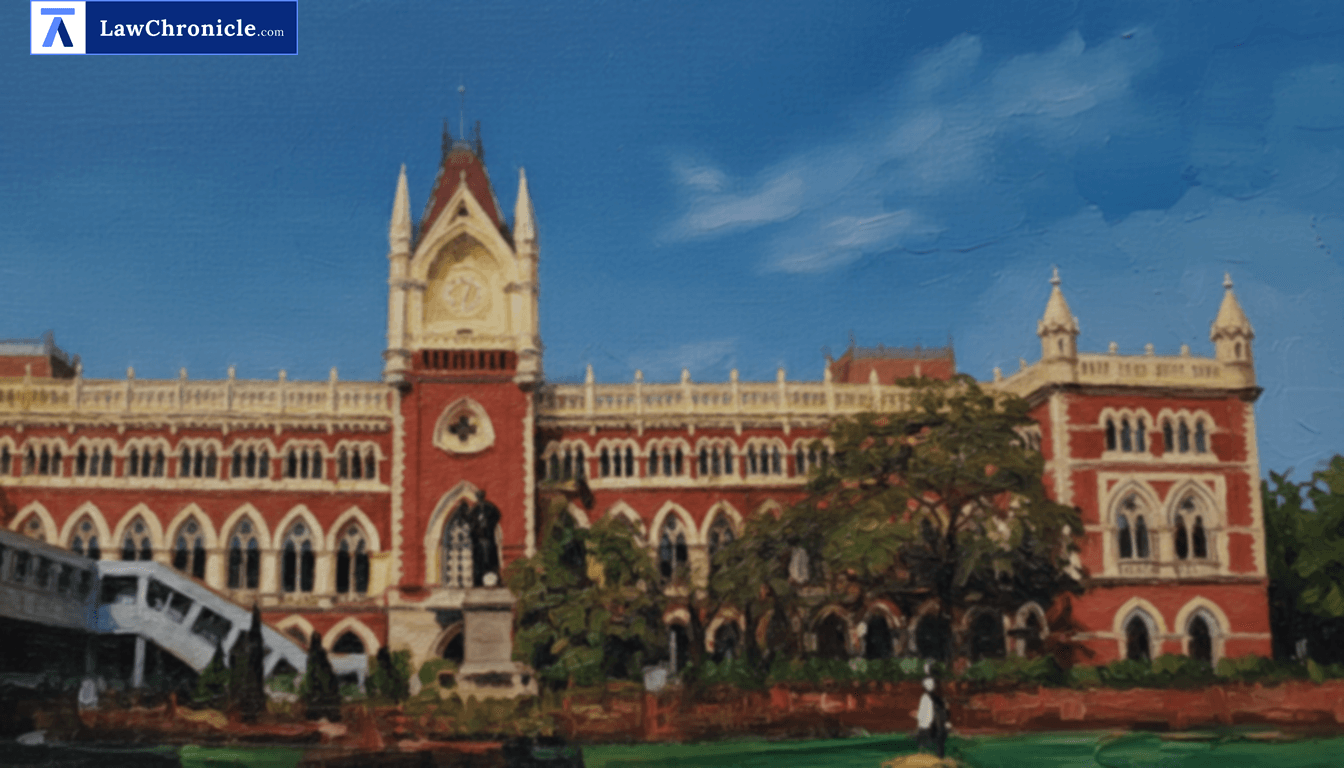
In a decisive check on malicious prosecution and procedural delay, the Calcutta High Court has quashed a 27-year-old criminal case against an enterprise executive, holding that civil disputes cannot be given a criminal colour to settle personal grudges. The decision underscores that criminal proceedings based on general, vague allegations without specific overt acts constitute a blatant abuse of judicial process.
Adjudicating the revisional application under Section 397 read with Section 401 and Section 482 of the Code of Criminal Procedure, 1973 alongside Article 227 of the Constitution of India, Justice Ajay Kumar Gupta set aside the trial court's refusal to discharge the petitioner and quashed the entire criminal proceeding.
Key Takeaways
- Protection Against Criminalization of Civil Disputes: Reiterates that commercial or tenancy conflicts cannot be converted into criminal prosecutions to harass opponents.
- Vague Allegations Insufficient for Trial: Mere presence at a scene without specific overt acts or attributed criminal roles cannot sustain criminal charges.
- Right to Speedy Justice Upheld: Kept criminal proceedings pending for nearly 27 years without meaningful progress where conviction is remote is a fatal abuse of court process.
- Application of Precedent Principles: Clarified the strict application of categories (3) and (7) of the landmark State of Haryana & Ors. vs. Bhajanlal & Ors. guidelines in quashing non-meritorious charges.
Court's Rationale on Vague Allegations and Civil Disputes
The High Court observed that the core dispute between the parties was essentially civil in nature regarding tenancy claims over a commercial complex, which the complainant attempted to cloak in criminality. Reviewing the case diary and witness statements recorded under Section 161 and Section 164 of the Code of Criminal Procedure, 1973, the Court found no direct evidence establishing a specific criminal act by the petitioner beyond his mere arrival at the scene.
The Court, in its reasoning, observed: "A criminal case cannot be allowed to continue merely on vague and general statements without any specific role attributed to the petitioner; otherwise, it would be a sheer abuse of process of law. The case was registered in the year 1999 against six accused persons, but after expiry of more than 26 years, the case survives only against the present petitioner. Considering the overall facts and circumstances and materials available in the case diary, this court is of the opinion that there is insufficient material against the petitioner. The disputes pending between the de facto complainant and the petitioner are essentially civil in nature, which the de facto complainant has sought to cloak in criminality."
The Court has following directions:
"Accordingly, CRR No. 560 of 2024 is, thus, allowed. Connected applications, if any, are also, thus, disposed of. The proceeding being G.R. Case No. 249 of 1999 and the charge sheet No. 129 dated 13.07.2001 under Sections 120B/448/379/461/417/109 of the India Penal Code arising out of Golabari P.S. Case No. 37 of 1999 dated 03.02.1999 under Sections 120B/448/379/461/417/109 of the India Penal Code pending before the Learned Judicial Magistrate, 7th Court at Howrah is hereby quashed and the impugned order dated 09.01.2024 passed by the Learned Judicial Magistrate, 7th Court at Howrah is also hereby set aside insofar as the petitioner is concerned."
Ratio
Where the uncontroverted allegations in an FIR, charge-sheet, and evidence collected do not disclose the commission of an offence against the accused, and where criminal prosecution is maliciously instituted to settle private civil disputes, the High Court must exercise its inherent powers under Section 482 of the Code of Criminal Procedure, 1973 to quash the proceedings and prevent the abuse of the judicial process.
Background
The dispute stemmed from a written complaint filed on June 22, 1998, by the de facto complainant, who claimed tenancy over certain commercial shop rooms in Howrah under M/s Khaitan Estate. He alleged that on June 20, 1998, the petitioner, along with police officers, forcibly broke open the padlocks, dispossessed him, and removed valuable equipment and cash. Consequently, a case was registered under Section 120B, Section 448, Section 379, Section 461, Section 417, and Section 109 of the India Penal Code.
The petitioner contended that the tenancy documents relied upon by the complainant were forged using a signed blank letterhead obtained fraudulently, leading to a counter criminal case against the complainant under Section 461, Section 420, and Section 471 of the India Penal Code. In parallel civil proceedings, the Supreme Court had earlier observed that the alleged informal tenancy was difficult to conceive and directed the restoration of possession pending suit. Furthermore, proceedings against co-accused police officials and another individual were quashed by the High Court in earlier revisional proceedings.
Despite three co-accused passing away and proceedings against two others being quashed, the trial court on January 9, 2024, rejected the petitioner's discharge application under Section 239 of the Code of Criminal Procedure, 1973. The petitioner then approached the High Court. Applying the principles set out in State of Haryana & Ors. vs. Bhajanlal & Ors., the High Court concluded that continuing the 27-year-old proceeding where conviction was remote and improbable would be an abuse of process, thereby setting aside the trial court order and quashing the prosecution against the petitioner.
Case Details:
Case No.: C.R.R. No. 560 of 2024
Neutral Citation: 2026:CHC-AS:1366
Case Title: Kishore Kumar Khaitan Versus The State Of West Bengal And Anr.
Appearances:
For the Petitioner(s): Mr. Sudipto Maitra, Sr. Adv., Mr. Vijay Verma, Adv., Mr. Dwaipayan Biswas, Adv., Mr. Anik Bhattacharya, Adv.
For the Respondent(s): Mr. Kumar Jyoti Tewari, Sr. Adv., Mr. Amrit Sinha, Adv., Mr. Aniruddha Tewari, Adv. (for O.P. No. 2); Mr. Krishnendu Bhattacharya, Adv., Mr. P. Karan Singh, Adv. (for State)
Source: 2026 CaseBase(CAL) 2303
Similar Articles


 Breaking News


