Clerks Cannot Avoid Corruption Charges Citing Lack of Decision-Making Authority: Jharkhand HC
 Copy Link
 Share
Share Save
Save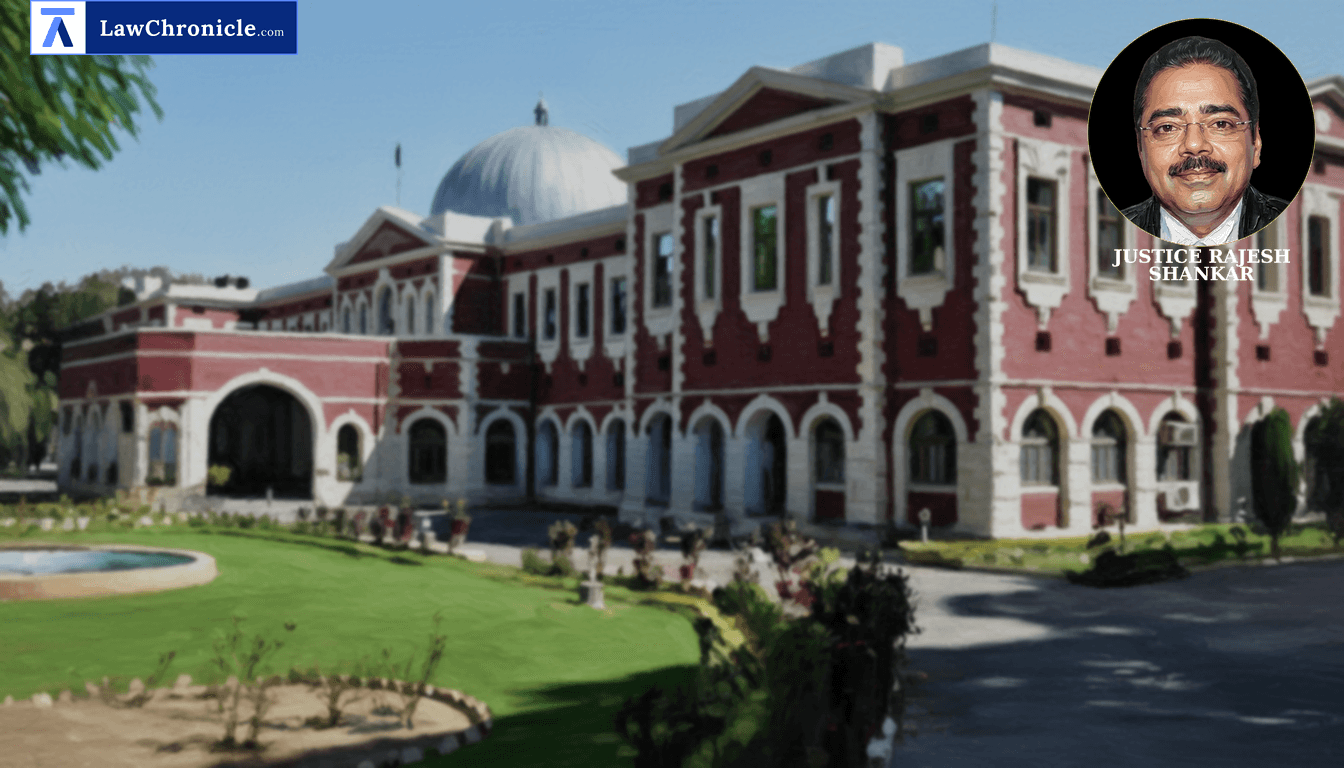
Subordinate staff handling administrative files cannot shield themselves from corruption charges by claiming they lack final decision-making powers. The Jharkhand High Court has slammed the door on such technical defenses, ruling that the physical handling and movement of files within a public office are sufficient to establish a prima facie case of gratification under the anti-corruption law.
A Single Judge bench of Justice Rajesh Shankar dismissed a criminal revision petition filed by a Head Clerk challenging the trial court's refusal to discharge him in a bribery case. The Court emphasized that at the stage of framing charges, the judiciary must not conduct a 'mini-trial' or deep-dive into the probability of conviction, but rather assess if the prosecution's material, taken at face value, discloses the ingredients of the alleged offense.
Primarily Allegations and Legal Challenge
The matter arose from a trap exercise conducted by the Anti-Corruption Bureau (A.C.B.) where the petitioner, a Head Clerk in the District Education Officer's office, was allegedly caught with tainted currency. The petitioner moved the High Court seeking to set aside an order passed under Section 227 of the Cr.P.C by the Special Judge (ACB), Dhanbad, which had rejected his discharge application for offenses under Sections 7 and 13(2) of the Prevention of Corruption Act, 1988.
Counsel for the petitioner argued that the prosecution's case was inherently flawed as the petitioner was not the 'competent authority' to revoke the complainant's suspension and thus had no occasion to demand a bribe. It was further contended that the recovery of the tainted notes was suspect due to the absence of independent witnesses.
Court Rejects 'Mini-Trial' at Discharge Stage
Invoking the principles laid down in State of T.N. by Inspector of Police Vigilance and Anti-Corruption Vs. N. Suresh Rajan & Others, the Court reiterated that during discharge proceedings, the bench must assume the prosecution's materials to be true. The Court noted that the petitioner was part of the administrative hierarchy and entrusted with moving files to the District Education Officer.
Referring to Jaspal Singh Kaural v. State (NCT of Delhi) & Another, Justice Rajesh Shankar noted that revisional jurisdiction is extremely limited and should not be used to interfere with the trial court's discretion unless the order is grossly erroneous or perverse. The Court, in its reasoning, observed: "Thus, at the time of framing of charge or consideration of discharge application, the trial court has to see as to whether there are grounds available on record to form prima facie opinion that the offence has been committed by the accused and not whether a ground for convicting the accused has been made out. The law does not permit a mini trial at this stage."
Regarding the lack of independent witnesses, the Court held that the prosecution case cannot be rejected solely on this ground at the preliminary stage. The Court has following directions:
"The present criminal revision is, accordingly, dismissed."
Key Takeaways
Hierarchy No Shield
Administrative staff involved in the movement of files can be prosecuted for corruption even if they lack final decision-making authority in the matter.
Limits of Revisional Power
High Courts will not interfere with orders framing charges or refusing discharge unless there is a blatant non-compliance with mandatory law or a finding based on no evidence.
Prima Facie Standard
At the stage of Section 227 of the Cr.P.C., the court is only required to see if a 'prima facie' case exists, not whether the evidence is sufficient for an ultimate conviction.
Ratio
The legal principle established is that a public servant’s lack of final decision-making power in a specific matter does not absolve them of liability under the Prevention of Corruption Act, 1988 if they occupy a position in the administrative hierarchy that allows them to influence or process the file related to the demanded gratification. Furthermore, the absence of independent witnesses during a trap exercise is a matter for trial and cannot form the sole basis for discharge under the Cr.P.C.
Background:
The case involved a complaint by a school clerk who alleged the petitioner demanded Rs. 35,000 to place his suspension revocation file before the District Education Officer. A trap was laid, and Rs. 5,000 in phenolphthalein-treated notes were allegedly recovered from the petitioner's palm. The petitioner challenged the trial court's refusal to discharge him, arguing the case was a result of personal grudge and that he had no power to grant the relief requested by the complainant. The High Court, however, upheld the trial court's view, noting that the petitioner's role as a Head Clerk involved the specific responsibility of placing files, which provided sufficient grounds for a prima facie corruption charge.
Case Details:
Case No.: Criminal Revision No.1171 of 2025
NeutralCitation: 2026:JHHC:21111
Case Title: Gopal Sharma Vs. The State of Jharkhand
Appearances:
For the Petitioner(s): Mr. Rishi Pallav, Advocate
For the Respondent(s): Mr. Vineet Kr. Vashistha, Spl. P.P.
Source: 2026 CaseBase(JHKD) 23
 Breaking News