

Co-Accused Confessions Inadmissible For Bail Under BNS: Himachal HC
 Copy Link
 Share
Share Save
Save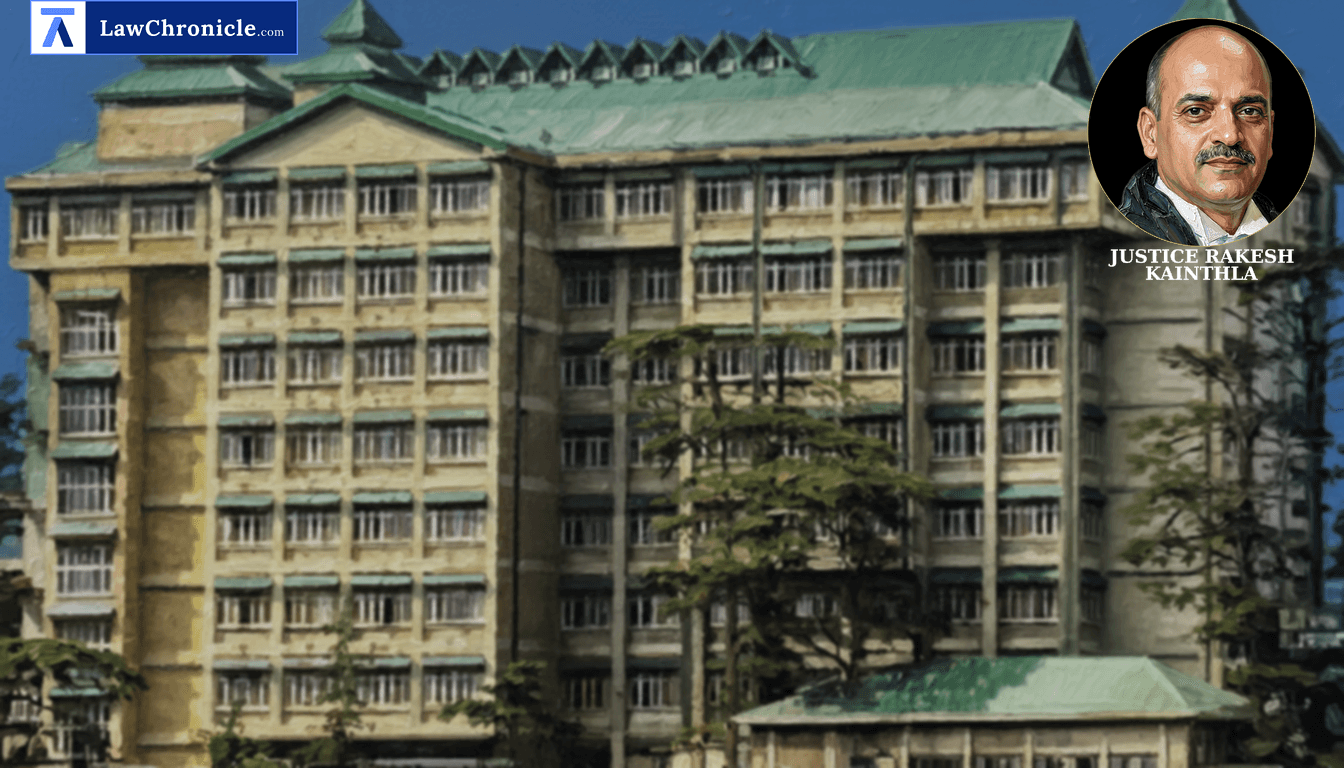
Confessions made by co-accused during investigation hold no weight as substantive evidence to curtail personal liberty, reinforcing the 'bail is the rule' doctrine even in heinous murder charges. The Himachal Pradesh High Court has underscored that statements hit by statutory bars cannot form the primary basis for detaining an individual when no direct recovery or incriminating material exists.
Justice Rakesh Kainthla presided over the matter, hearing a regular bail plea filed by an individual accused of murder and conspiracy. The Court was tasked with determining whether the custodial detention of the petitioner was justified solely based on the disclosure statements of other co-accused in a case involving multiple stab wounds and theft.
Key Takeaways
Inadmissibility of Co-Accused Statements
Confessional statements made by co-accused to the police are inadmissible under the Indian Evidence Act, 1872 and cannot be used as substantive evidence against another accused.
Bail as the Primary Rule
Even in cases involving heinous offences punishable by death, bail remains the norm unless there is a clear risk of the accused fleeing justice or tampering with evidence.
Requirement of Prima Facie Connection
Mere suspicion or statements hit by Section 162 of the Code Of Criminal Procedure are insufficient to establish a prima facie connection to the crime for the purpose of denying bail.
Admissibility of Evidence and Judicial Discretion
The Court observed that the prosecution primarily relied on the statements of co-accused alleging the petitioner remained in a vehicle while the crime was committed. Justice Kainthla noted that such statements are hit by Section 162 of the Code Of Criminal Procedure and Section 25 of the Indian Evidence Act, 1872. Citing Surinder Kumar Khanna vs Intelligence Officer Directorate of Revenue Intelligence, the Court reiterated that a confession by a co-accused can only be utilized to lend assurance to other evidence and not as a standalone basis for conviction or detention.
The Court, in its reasoning, observed: "The status report does not show how the police have concluded that the petitioner is involved in the commission of a crime. The police are relying upon the statements made by the co-accused to the effect that the petitioner had remained in the vehicle... The statements made by the co-accused are inadmissible. It was laid down by the Hon’ble Supreme Court in Dipakbhai Jagdishchandra Patel v. State of Gujarat ( "(2019) 16 SCC 547: (2020) 2 SCC (Cri) 361: 2019 SCC OnLine SC 588": 2019 CaseBase(SC) 3174) that a statement made by an accused during the investigation is hit by Section 162 of Code Of Criminal Procedure and cannot be used as a piece of evidence."
Court Directions
The Court has the following directions:
"(i) The petitioner will not intimidate the witnesses, nor will he influence any evidence in any manner whatsoever.
(ii) The petitioner shall attend the trial on each and every hearing and will not seek unnecessary adjournments.
(iii) The petitioner will not leave the present addresses for a continuous period of seven days without furnishing the address of the intended visit to the SHO concerned, the Police Station concerned and the Trial Court.
(iv) The petitioner will surrender his passport, if any, to the Court; and
(v) The petitioner will furnish his mobile number and social media contact to the Police and the Court and will abide by the summons/notices received from the Police/Court through SMS/ WhatsApp/ Social Media Account. In case of any change in the mobile number or social media accounts, the same will be intimated to the Police/Court within five days from the date of the change."
Ratio
Statements made by an accused to a police officer during investigation are inadmissible under Section 25 of the Indian Evidence Act, 1872 and are hit by the bar under Section 162 of the Code Of Criminal Procedure. A confession made by a co-accused is not substantive evidence against another and cannot justify the denial of bail when no other prima facie material connects the applicant to the alleged crime.
Background
The case arose from the death of Borsar Chhoki, who was found with multiple stab wounds in her room on March 3, 2026. The police registered an FIR under Sections 103, 307, 331(8), 61(2) and 238 of the Bharatiya Nyaya Sanhita, 2023. The petitioner was arrested based on suspicion and statements from co-accused Gagan Sharma and Vishal, the latter of whom led to the recovery of weapons. The petitioner argued that no recovery was made from him and that his custodial interrogation was unnecessary as the charge sheet had already been filed.
The Court relied on principles laid down in Pinki v. State of U.P. regarding the judicious exercise of bail discretion and State of Rajasthan v. Balchand regarding the 'bail not jail' rule. Finding no prima facie connection between the petitioner and the crime, the Court allowed the petition.
Case Details:
Case No.: Cr. MP(M) No. 1658 of 2026
Neutral Citation: 2026:HHC:45692
Case Title: Gaurav Sharam v. State of HP
Appearances:
For the Petitioner(s): Mr Sunil Kumar Banyal, Advocate.
For the Respondent(s): Mr Ajit Sharma, Deputy Advocate General.
Source: 2026 CaseBase(HP) 9474
 Breaking News